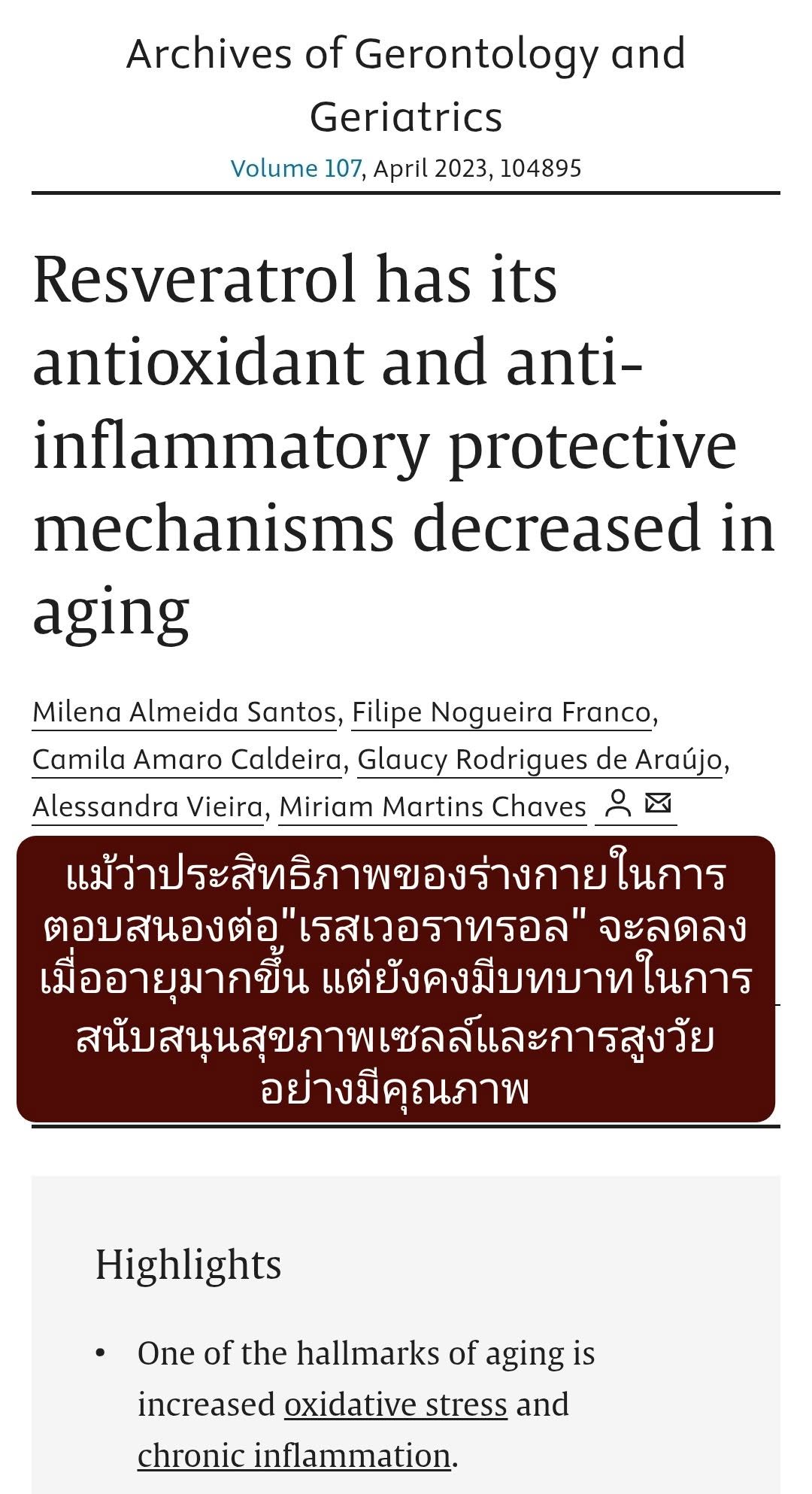
: “Resveratrol has its antioxidant and anti-inflammatory protective mechanisms decreased in aging” (ScienceDirect, 2023)
Article summary: “Resveratrol has its antioxidant and anti-inflammatory protective mechanisms decreased in aging” (ScienceDirect, 2023)
This research studied whether resveratrol Is Resveratrol, a polyphenol found in red grapes and mulberries, still as effective as an antioxidant and anti-inflammatory in the elderly as in middle-aged people?
Purpose
Comparing the effects of Resveratrol on white blood cells (PBMCs) of two groups of people.
- Middle-aged people, ages 40–59 years
- Elderly people aged 60–80 years
By stimulating cells to experience oxidative stress (Oxidative Stress) and then see how much Resveratrol can reduce inflammation and free radicals.
Study results
1. Resveratrol can help reduce oxidative stress.
Resveratrol can reduce substances associated with free radical damage, such as Nitric Oxide (NO) and Peroxynitrite (ONOO⁻), but the effect was more pronounced in middle-aged people.
2. Can reduce inflammation But its effectiveness decreases with age.
Resveratrol reduces levels of key inflammatory factors including TNF-α, IL-6.
which is a substance that usually increases with age and is related to "Inflammaging" or chronic inflammation from aging But the reduction of these substances occurs more strongly in middle-aged people than in the elderly.
3. Helps increase immune balance
Resveratrol promotes an anti-inflammatory state. There was a trend towards increased anti-inflammatory cytokine responses (such as IL-10) in both age groups. But efficiency is still higher in middle-aged people.
Important findings
Although Resveratrol still has antioxidant and anti-inflammatory effects in the elderly,
> "Resveratrol's biological effectiveness decreases with age."
Researchers found that the mechanism of how cells respond to Resveratrol changes as we age. This causes the activation of various cell protection pathways to not be as effective as in middle-aged people.
health meaning
This research does not suggest that resveratrol is not beneficial in the elderly. But pointed out that
It can also help reduce inflammation and free radicals.
May help slow down the process of cell degeneration.
But the results may not be as severe as in younger people.
Sentences that are consistent with the scientific evidence from this research are:
> "Resveratrol reduces inflammation and oxidative stress. which is an important factor of age-related deterioration Although the body's ability to respond to Resveratrol decreases with age, But it still plays a role in supporting cellular health and quality aging.”