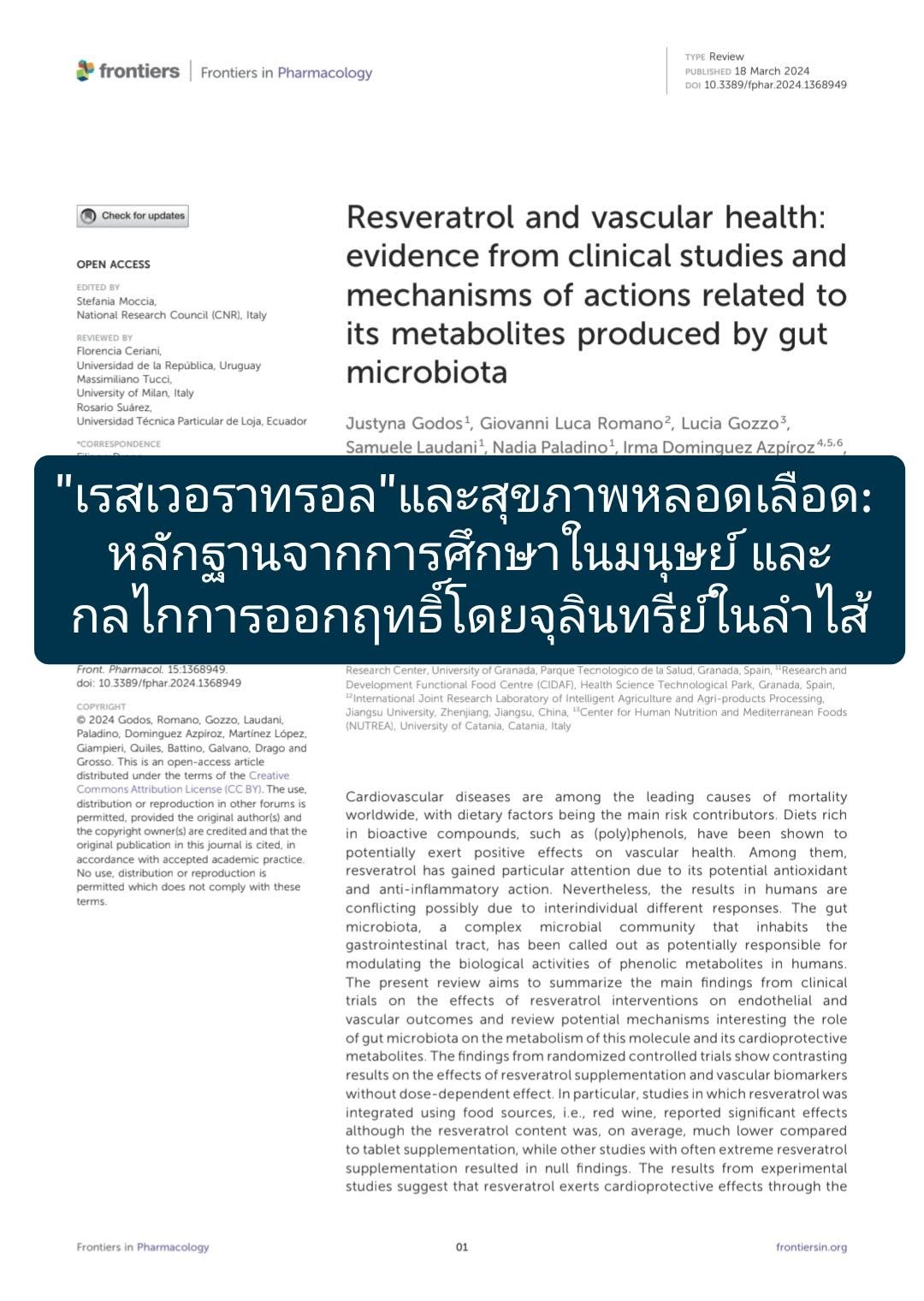
“Resveratrol and vascular health: evidence from clinical studies and mechanisms of actions related to its metabolites...
Summary of the article “Resveratrol and vascular health: evidence from clinical studies and mechanisms of actions related to its metabolites produced by gut microbiota” is an academic review article summarizing research on resveratrol. (Resveratrol) for cardiovascular health Including the role of gut microbiota that helps convert resveratrol into more active metabolites.
The essence of the article
1. What is Resveratrol?
Resveratrol is a polyphenol found in:
red grapes, mulberry
It has outstanding features:
● Antioxidants
● Anti-inflammatory.
● Helps protect blood vessels and heart.
2. Effects on cardiovascular health
Article collecting results from human trials (Randomized Controlled Trials)
Resveratrol has been found to help:
■ Increases endothelial function.
■ Increases the production of nitric oxide (NO), causing blood vessels to expand better.
■ Reduce blood pressure.
■ Reduce inflammation of blood vessels.
■ Reduce oxidative stress.
3. Why are the results different?
The article suggests that The important causes are:
“Gut Microbiota” or microorganisms in the intestines
This is because Resveratrol is not absorbed well by the body and is rapidly changed in the liver and intestines.
Gut bacteria help convert Resveratrol into potentially more effective metabolites, such as:
- Dihydroresveratrol
- Piceatannol
- Lunularin
4. Important mechanism that protects blood vessels
The article explains that Resveratrol stimulates many systems in the body, such as stimulating SIRT1 and AMPK.
Help:
• Increase energy metabolism.
• Reduce cell degeneration.
• Protect blood vessels.
• Increase eNOS and Nitric Oxide (NO).
Helps blood vessels:
• Better flexibility.
• Expands well.
• Reduce blood pressure.
Reduces NF-kB and inflammation
Helps reduce:
▪︎ Inflammatory cytokines
▪︎ VCAM-1 / ICAM-1, which is involved in atherosclerosis. (atherosclerosis)
Stimulates Nrf2
Helps increase antioxidant enzymes in the body.
5. Relationship with intestinal microflora
Resveratrol helps to improve the microbiota balance, such as:
> Add beneficial bacteria
> Reduce bacteria that cause inflammation
> Reduce TMAO substances related to heart disease
Bacteria involved in Resveratrol replacement include:
- Bifidobacterium
- Lactobacillus
- Slackia equolifaciens
6. Conclusion of the researcher
The researcher concludes:
Resveratrol has the potential to help care for the blood vessels and heart.