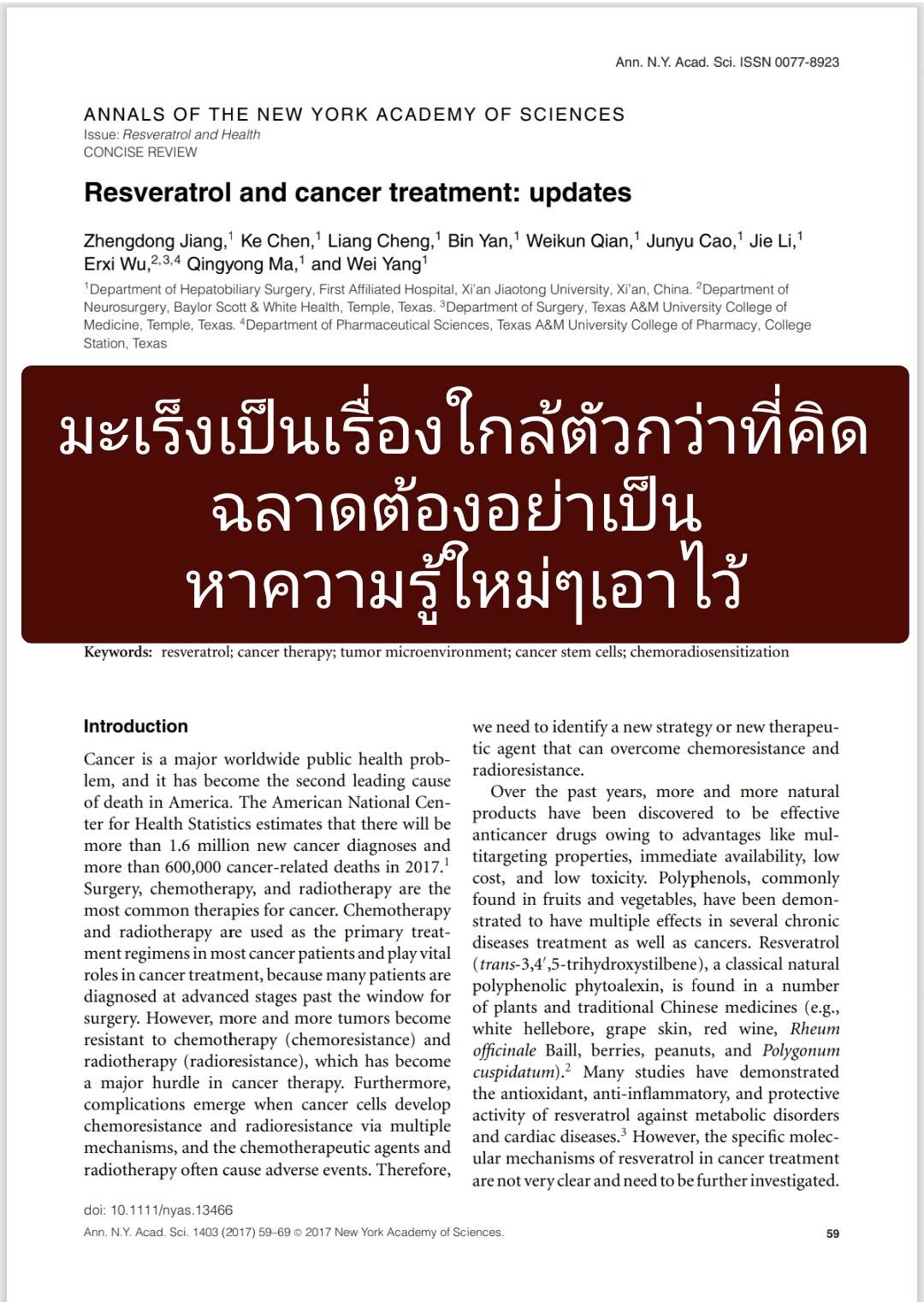
Summary of "Resveratrol and cancer treatment: updates" summarizes the role Molecular mechanism and application of resve...
Summary of "Resveratrol and cancer treatment: updates" summarizes the role Molecular mechanism and application of resveratrol (Resveratrol) in cancer treatment The main points are as follows:
1. Resveratrol Overview and Potential:
Cancer is a global health problem. And the main obstacle to treatment is that cancer cells develop resistance to chemotherapy and radiotherapy (chemo- and radioresistance).
Resveratrol It is a natural polyphenolic compound (natural polyphenolic phytoalexin) found in some plants. It has an interesting effect in inhibiting the proliferation and progression of cancer cells in various cancer tumor models.
2. Mechanism of action against cancer
Apoptosis and growth inhibition: Resveratrol can inhibit cancer cell survival and proliferation, induce cell cycle arrest, and induce cancer cell death.
Main molecular mechanism:
Controls free radical levels Acts as an antioxidant by modulating the activity of antioxidant enzymes. This leads to accumulation in the mitochondria and triggers cancer cell death. It also reduces oxidative stress to protect normal cells.
Regulating signaling pathways: activating the caspase enzyme system and inhibiting signaling pathways involved in survival and drug resistance.
3. Role in the tumor microenvironment (Tumor Microenvironment (TME))
Resveratrol can alter that plays an important role in the progression and drug resistance of cancer
Anti-inflammatory: Inhibits COX-2, which is the core of inflammation, reduces the secretion of inflammatory factors such as IL-1, IL-6, TNF, and increases anti-inflammatory factors such as IL-10.
Anti-angiogenic: Inhibits blood vessel formation in tumors. (angiogenesis) by reducing the expression of VEGF through down-regulation of HIF-1
Inhibits cancer-associated cells: Suppresses the activation of cancer-associated fibroblast cells CAFs.
4. Strengthening the effect of treatment (Sensitization)
Chemotherapy: Resveratrol can be used as a chemotherapy enhancer. It increases the toxicity of anticancer drugs, induces cell cycle arrest in the S phase, and induces cancer cell death through inhibiting proteins involved in drug resistance. It also inhibits drug resistance caused by cancer stem cells (CSCs) by suppressing the self-renewal pathway of CSCs.
Radiotherapy: Increases sensitivity to radiotherapy by increasing ROS, stimulating cell death and autophagy, and reducing DNA repair. In cancer cells.
Radiation protection (Radioprotective Agent): On the other hand, resveratrol acts as a radioprotective agent to normal tissues. It reduces side effects of radiation, such as dry mouth (xerostomia) and mucositis, by reducing ROS and inflammation in normal tissues.
5. Safety and clinical application
Safety: Human trials have shown resveratrol to be safe, with doses of 0.5 or 1.0 grams/day being well tolerated. Higher doses (2.5 and 5.0 grams) may cause mild to moderate gastrointestinal adverse reactions.
Clinical effects: Studies have shown potential to prevent cancer (e.g. reducing DNA methylation of cancer tumor suppressor genes).
CONCLUSION: Resveratrol shows promising efficacy in the treatment and prevention of cancer.