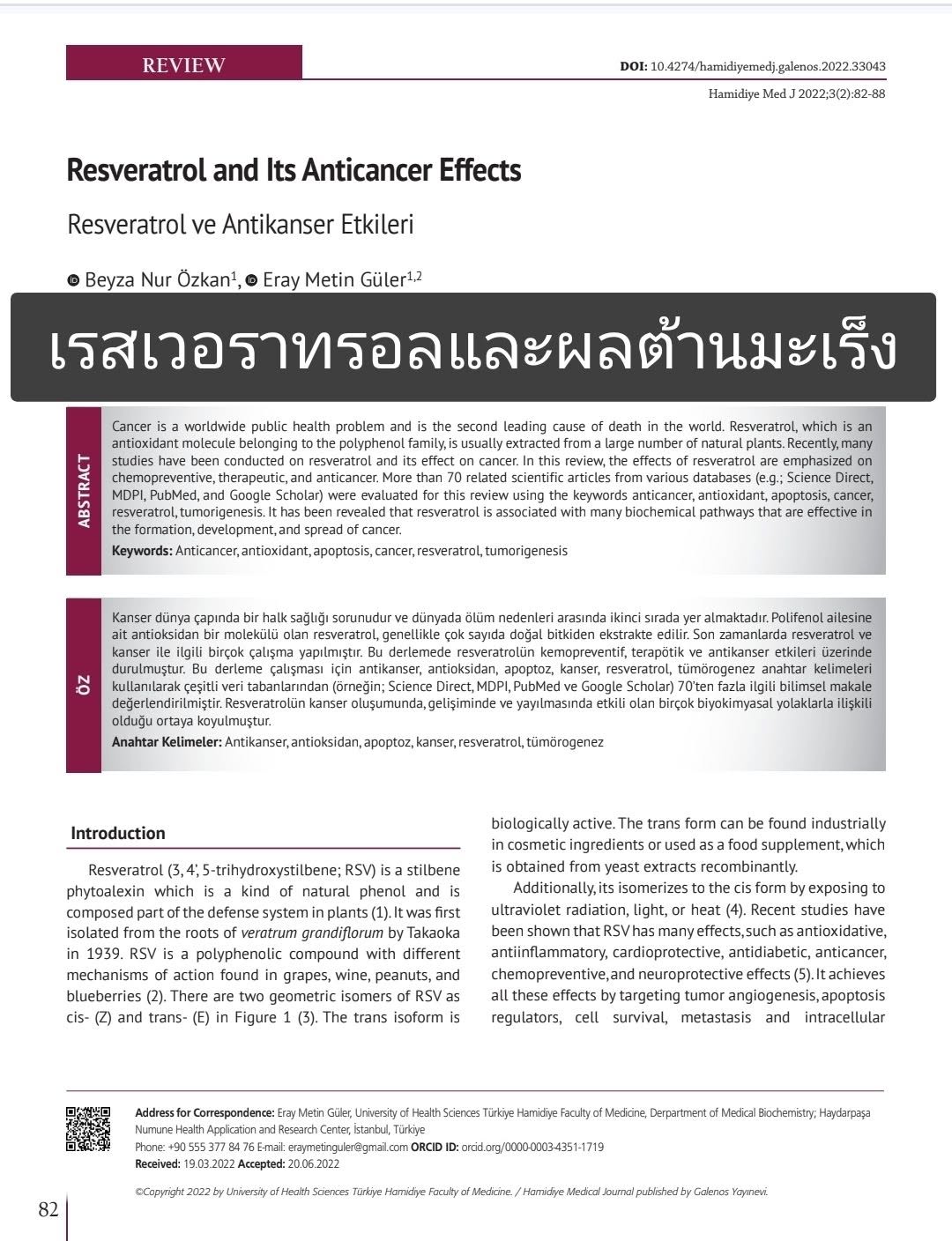
The article “Resveratrol and Its Anticancer Effects” published in the Hamidiye Medical Journal (2022) summarizes the main points...
The article “Resveratrol and Its Anticancer Effects” published in Hamidiye Medical Journal (2022) summarizes the main points as follows:
Purpose and background:
Cancer is a global public health problem and the second leading cause of death in the world.
Resveratrol is a natural polyphenol (stilbene phytoalexin) found in some plants such as red grapes, mulberries, etc.
This article is a review of more than 70 studies from various databases (ScienceDirect, PubMed, Google Scholar) using search terms such as “anticancer, antioxidant, apoptosis, tumorigenesis, resveratrol” to look at the role of Resveratrol on the occurrence and development of cancer.
Important content:
The article discusses the role of resveratrol in two main contexts:
1. Prevention (chemopreventive)
Resveratrol has antioxidant properties. (antioxidant) and anti-inflammatory (anti-inflammatory) which reduces the risk of cancer.
Helps inhibit processes related to the development of cancerous tumors. (tumorigenesis), such as the creation of new blood vessels in cancer tumors (angiogenesis) and cell transformation (epithelial-mesenchymal transition) that allows cancer cells to spread.
2. Treatment (therapeutic/anticancer effects)
Resveratrol affects a variety of biochemical pathways involved in cell survival. cell division and cell death (apoptosis) in cancer cells.
Research has shown that resveratrol can help stop cancer cell growth and metastasis. (metastasis).
The article suggests that the use of resveratrol will be “part” of a cancer prevention/treatment strategy.
Summary:
This article points out that resveratrol is a natural substance with very good biological potential. Both in terms of antioxidants Inhibition of inflammation and affecting cancer-related processes such as angiogenesis, metastasis, apoptosis