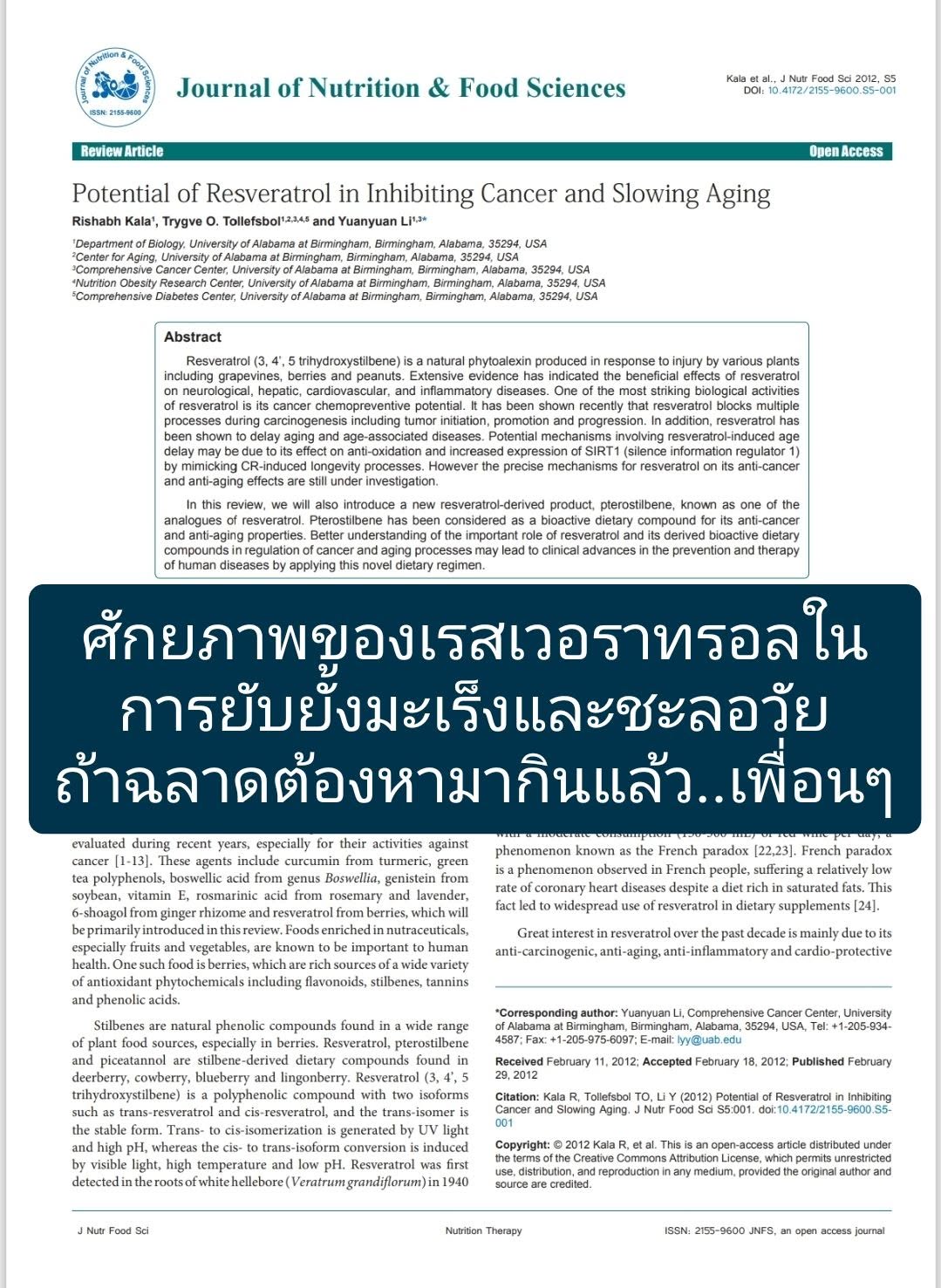
Potential of Resveratrol in Inhibiting Cancer and Slowing Aging
Potential of Resveratrol in Inhibiting Cancer and Slowing Aging
Resveratrol's potential to inhibit cancer and delay aging
Abstract
Resveratrol (3, 4', 5 trihydroxystilbene) is a natural phytoalexin that is produced in response to injury of certain plants including red grapes, mulberries, etc. There is substantial evidence of resveratrol's beneficial effects on neurological diseases, liver diseases, cardiovascular diseases, and inflammatory diseases. One of the most notable biological effects of resveratrol is its potential to prevent cancer. It has recently been shown that resveratrol inhibits several processes during carcinogenesis. including the initiation, promotion, and progression of cancerous tumors. Resveratrol has also been shown to delay aging and age-related diseases. The mechanism involved in resveratrol-induced aging is due to its antioxidant effect and increased SIRT1 gene expression, mimicking the process of fasting-induced longevity (CR). In this article, we will introduce a new product derived from resveratrol, pterostilbene, which is one of the substances similar to resveratrol. Pterostilbene is considered a biological compound with anti-cancer and anti-aging properties. A better understanding of the important role of resveratrol and resveratrol-derived biological compounds in regulating cancer and the aging process. Leading to clinical advances in the prevention and treatment of human diseases through this application.