In real life, the carcinogenic aflatoxin is contaminated with the food we eat every day. Especially in Thailand, which is in the hot-humid region. Avoiding...
In real life, the carcinogenic aflatoxin is contaminated with the food we eat every day. Especially in Thailand, which is in the hot-humid region. Some avoidance is possible. Therefore, resveratrol is used to prevent and fight cancer. So it's a smart choice.
Conclusion: “Resveratrol (Resveratrol)” in preventing cancer
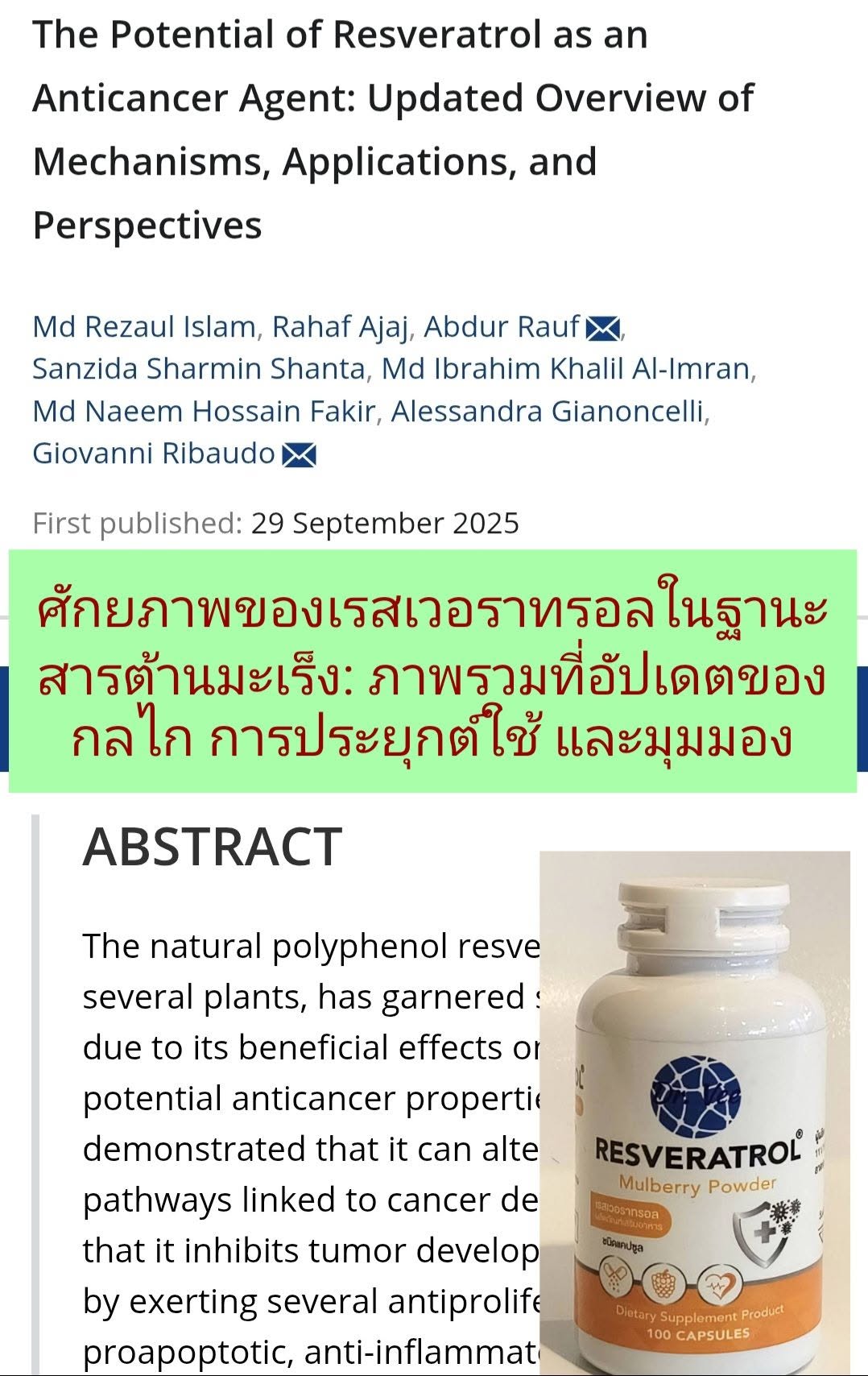
From the article “The Potential of Resveratrol as an Anticancer Agent: Updated Overview of Mechanisms, Applications, and Perspectives” (2025)
The main advantages of resveratrol in cancer prevention
1. Prevent cancer from its early stages (Cancer Chemoprevention)
Resveratrol can Inhibits the carcinogenic process at all stages including
Initiation: Reduces DNA damage from toxins or radiation.
Promotion: Inhibits abnormal cell division.
Progression: Prevents cells from mutating and becoming fully cancerous.
It is classified as a "chemopreventive agent" that reduces the risk of many types of cancer, such as colon cancer, breast cancer, lung cancer, and liver cancer.
2. Antioxidant Activity
Resveratrol has Powerful antioxidant effect (ROS scavenger)
Helps reduce oxidative stress (oxidative stress), which is one of the causes of cell mutation.
It also helps stimulate enzymes that protect against free radicals within the body, such as SOD, catalase, glutathione peroxidase.
This results in less damage to DNA, proteins, and cell membranes.
3. Reduce chronic inflammation (Anti-inflammatory Effect)
Chronic inflammation accelerates cancer. By resveratrol can
Inhibits COX-2 and iNOS enzymes
Reduced production of cytokines such as TNF-α, IL-6
Blocks NF-κB signals that stimulate inflammation.
The result is to reduce inflammation in tissues and reduce the chance of cells turning into cancer cells.
4. Stimulate the destruction of abnormal cells (Apoptosis Induction)
Resveratrol helps the body Get rid of mutated or abnormal cells faster.
Stimulates proteins that cause cell death such as Bax, caspase-3, caspase-9
along with inhibiting anti-apoptotic proteins such as Bcl-2
It helps prevent cells with damaged DNA from developing into cancer cells.
5. Inhibits the activation of carcinogenic signal pathways (Signal Pathway Inhibition).
Inhibits many pathways involved in the growth of cancer cells, such as
PI3K/Akt/mTOR, MAPK, Wnt/β-catenin, and STAT3
This makes cancer cells unable to divide or spread easily.
Effective in both "preventing" and "slowing down" the development of tumors.
6. Prevents the formation of blood vessels to support cancer. (Anti-angiogenesis)
Cancer must create new blood vessels to support itself.
Resveratrol can inhibit VEGF (Vascular Endothelial Growth Factor).
Reduces endothelial cell movement and the formation of new blood vessels.
Helps prevent tumors from growing in the early stages.
7. Adjust genetic balance and Epigenetic Regulation
Affects the regulation of genes involved in cancer prevention such as p53, SIRT1.
Helps control methylation/acetylation of DNA and proteins.
It also affects the expression of microRNAs that play a role in inhibiting carcinogenesis.
8. Synergize with other drugs and anti-cancer substances (Synergistic Effect)
Resveratrol helps Increases the efficiency of chemotherapy drugs and reduces toxicity to normal cells.
There is research that found that When used in combination with medicines such as doxorubicin, cisplatin, or 5-fluorouracil It will increase the effect of inhibiting cancer cells better than using a single drug.
Summary of key ideas:
Resveratrol not only “cures” but has great potential to “prevent” cancer through a combination of mechanisms — antioxidants, reducing inflammation, modulating gene activity. and eliminate abnormal cells Therefore, it is seen as a very valuable natural substance for long-term health care and reducing the risk of cancer.