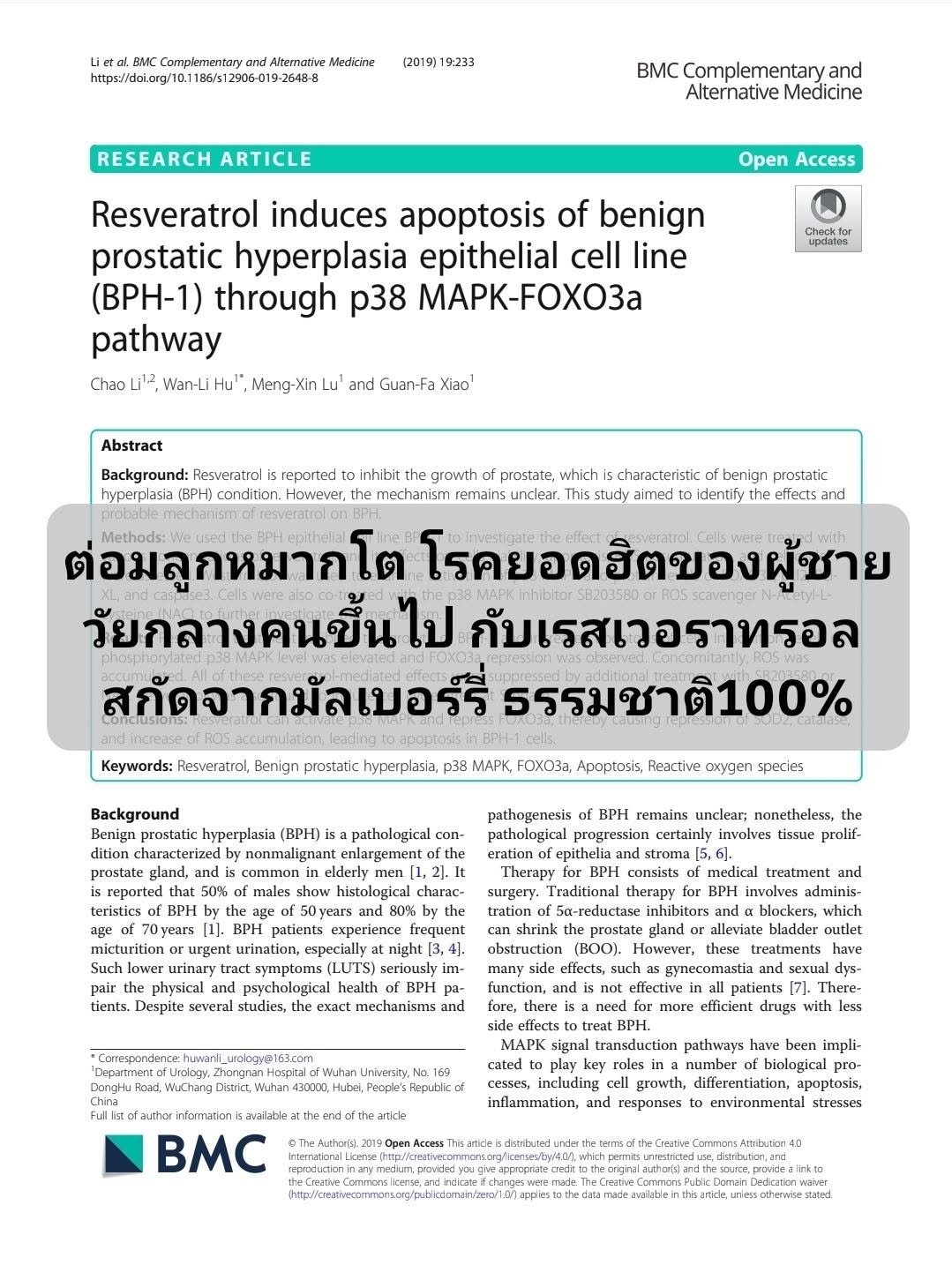
From the article Resveratrol induces apoptosis of benign prostatic hyperplasia epithelial cell line (BPH-1) through p38 MAPK...
From the article Resveratrol induces apoptosis of benign prostatic hyperplasia epithelial cell line (BPH-1) through p38 MAPK-FOXO3a pathway
Background:
Benign Prostatic Hyperplasia (BPH) is a common disease in middle-aged to elderly men. Caused by abnormal growth of prostate cells
Traditional treatments such as 5α-reductase inhibitors and α-blockers, while helpful, have side effects (such as enlarged breasts, decreased sexual function) and are not responded to in all patients.
Resveratrol, a polyphenol from red grapes, mulberries, and some plants. It has anti-proliferative effects and stimulates cell death (apoptosis), making it interesting to use as an adjuvant treatment in benign prostatic hyperplasia.
Resveratrol and enlarged prostate
Research has found that Resveratrol plays a role in inhibiting the growth of Prostate cells (BPH-1)
Found results
Stimulates abnormal cell death (Apoptosis)
Causes cells to stop dividing in S phase.
Increases oxidative substances (ROS) in cells until cells die.
It works through the p38 MAPK pathway and represses FOXO3a, which is involved in cell survival.
Conclusion: Resveratrol is natural alternatives That can help delay or relieve symptoms of enlarged prostate in men.