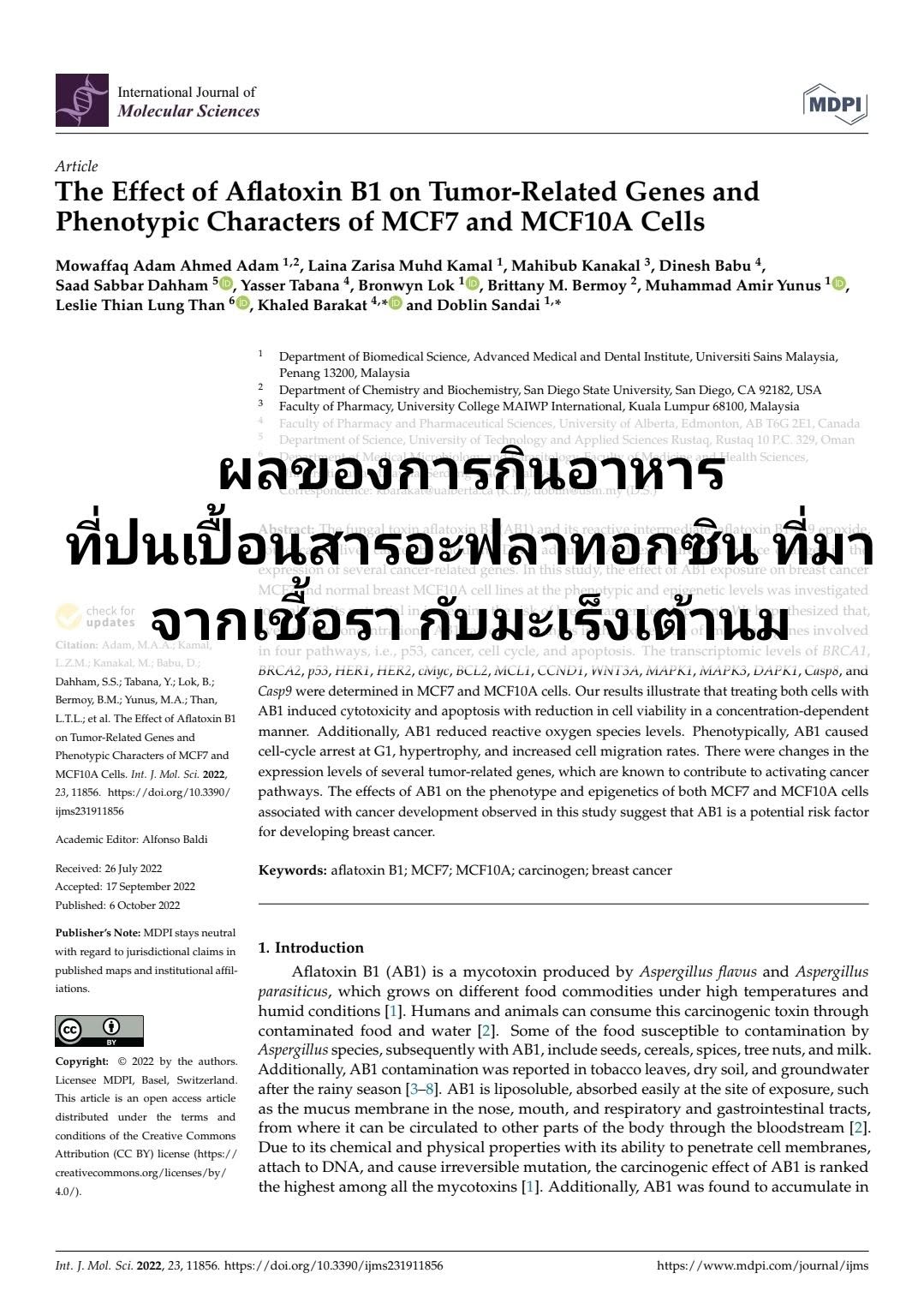
The main points of the article “The Effect of Aflatoxin B1 on Tumor-Related Genes and Phenotypic Characters of MCF7 and MCF10A Ce...
Summary of the main points of the article “The Effect of Aflatoxin B1 on Tumor-Related Genes and Phenotypic Characters of MCF7 and MCF10A Cells” is as follows:
The essence of the article
1. Background
Aflatoxin B1 (AFB1) is a toxin from the fungi Aspergillus flavus and A. parasiticus that often contaminate foods such as grains, peanuts, spices, dried chilies, and chili powder.
It is the most carcinogenic of all mycotoxins because it can penetrate the body, bind to DNA and cause severe mutations.
2. Purpose
Studied the effect of AFB1 on breast cancer cells (MCF7) and normal breast cells (MCF10A).
Focuses on changes in both phenotypic (morphology, cell cycle, migration) and expression of cancer-related genes such as p53, BRCA1/2, HER1/2, cMyc, BCL2, MCL1.
3. Main experimental results
Cytotoxicity (Cytotoxicity):
AFB1 decreased the survival of both cell types in a concentration-dependent manner. and stimulate apoptosis.
ROS: Reactive Oxygen Species levels are decreased, which contradicts some research that has found that they tend to increase.
Phenotypic changes:
Cell-cycle arrest occurs at the G1 stage.
enlarged cells (hypertrophy)
The rate of cell movement increases. (which is related to the invasion and spread of cancer)
Gene expression:
MCF7 (cancer cells):
BRCA2 and p53 increased, BRCA1 decreased.
HER1/HER2 decreased, cMyc increased.
MAPK1 and WNT3A increased, but CCND1 and MAPK3 decreased.
BCL2 and DAPK1 increased, MCL1 and Casp8 decreased.
MCF10A (normal cell):
BRCA1/2 and p53 were clearly decreased.
HER1, HER2, cMyc decreased
MAPK1 increased, MAPK3 and CCND1 decreased.
Apoptosis genes such as BCL2, Casp8, Casp9 increased.
4. Summary and key findings
AFB1 affects tumor suppressors, oncogenes, cell cycle genes, and apoptosis genes.
Causes cell cycle arrest, shape changes, and increased cell motility.
Collectively, these results suggest that AFB1 is a risk factor for breast cancer.
The article proposes that AFB1 should be considered a Carcinogens associated with breast cancer, as well as confirmed liver cancer