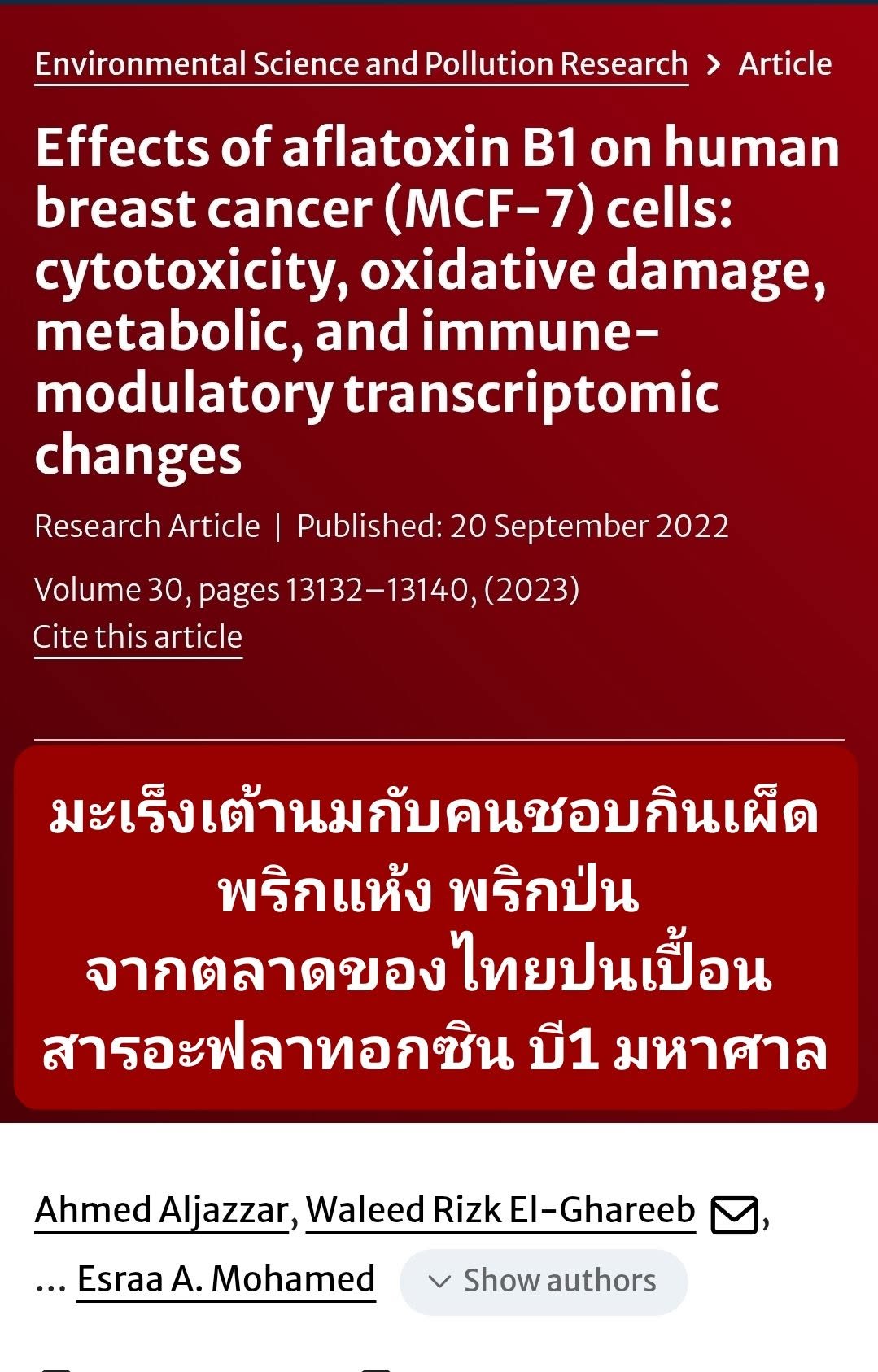
From the article “Effects of aflatoxin B1 on human breast cancer (MCF-7) cells: cytotoxicity, oxidative damage, metabolic, a...
Summary from the article “Effects of aflatoxin B1 on human breast cancer (MCF-7) cells: cytotoxicity, oxidative damage, metabolic, and immune-modulatory transcriptomic changes”
Environmental Science and Pollution Research, Jan 2023
Effects of aflatoxin B1 on human breast cancer cells (MCF-7): cytotoxicity. Oxidative damage, metabolism, and transcriptome changes that modulate immunity.
The essence of the article
1. Cytotoxicity
Aflatoxin B₁ (AFB₁) is a deadly mycotoxin produced by Aspergillus flavus and A. parasiticus that has carcinogenic and mutagenic potential.
When tested on the MCF-7 breast cancer cell line, AFB₁ was found to have a significant effect on the levels of Increased oxidative stress
2. Oxidative Stress
AFB₁ increases the production of free radicals (ROS) and reduces the antioxidant system that cells have. This is one mechanism that leads to the induction of cancer cells.
3. Metabolic changes (Transcriptomic Alterations)
AFB₁ causes change Gene expression levels (transcriptome) related to:
Enzymes involved in the metabolism of foreign substances (xenobiotics metabolism), such as enzymes in the substance conversion system (drug-metabolizing enzymes)/transporters
Antioxidant enzymes, which affect cell protection from oxidative stress
4. Immune system adaptation (Immunomodulation)
AFB₁ increases the expression of inflammatory substances such as:
tumor necrosis factor-α (TNF-α)
cyclooxygenase-2 (COX-2)
At the same time, it reduces the expression of genes related to the immune system, such as:
interleukin-8 (IL-8)
**interleukin-10 (IL-10)**
Conclusion:
AFB₁ stimulates MCF-7 cancer cells through a mechanism involving oxidative stress. and affects the management of foreign substances and the oxidation protection of cells. It also promotes inflammation while reducing immune function — making AFB₁ potentially promoting cancer or cellular dysfunction.