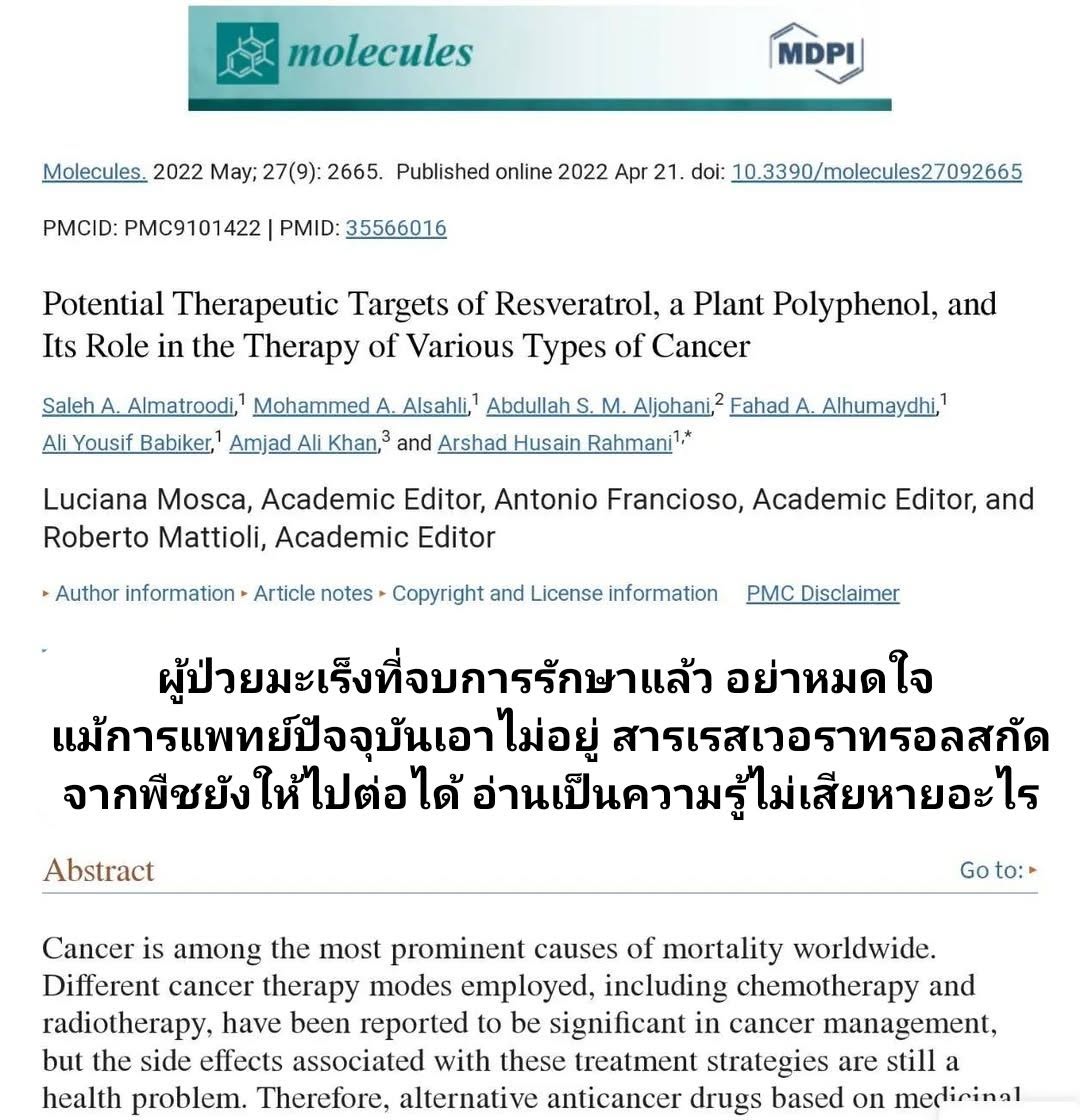
Potential therapeutic targets of resveratrol, plant polyphenols, and the role of resveratrol in treating various types of cancer.
Potential therapeutic targets of resveratrol, plant polyphenols, and the role of resveratrol in treating various types of cancer.
Potential Therapeutic Targets of Resveratrol, a Plant Polyphenol, and Its Role in the Therapy of Various Types of Cancer
Abstract: Cancer is one of the most prominent causes of death worldwide. It has been reported that different cancer treatment modalities used include chemotherapy. and radiation therapy It is reported to be important in cancer management. But side effects associated with these treatment strategies remain a health concern. So what are the alternatives? Anticancer drugs using medicinal plants or active compounds have gained attention because they have fewer serious side effects. Medicinal plants are an excellent source of phytochemicals that are recognized to have health effects by modulating cell signaling pathways. Resveratrol - a known polyphenolic molecule that has antioxidant effects. anti-inflammatory and stimulate health Its role in cancer prevention is best defined. Moreover, this polyphenol confirms its role in cancer management as it stimulates cancer tumor suppressor genes. Inhibits the spread of cancer cells Causes the death of cancer cells Inhibits angiogenesis and modulates other cell signaling molecules. The anti-cancer potential of resveratrol has been recognized in experimental studies. lots of testing Previous trial data suggest that resveratrol has value in managing cancer or improving drug efficacy when given in combination with anticancer agents. This review highlights the role of resveratrol as an anticancer drug by modulating numerous cellular signaling pathways in various types of cancer.
https://www.ncbi.nlm.nih.gov/pmc/articles/PMC9101422/