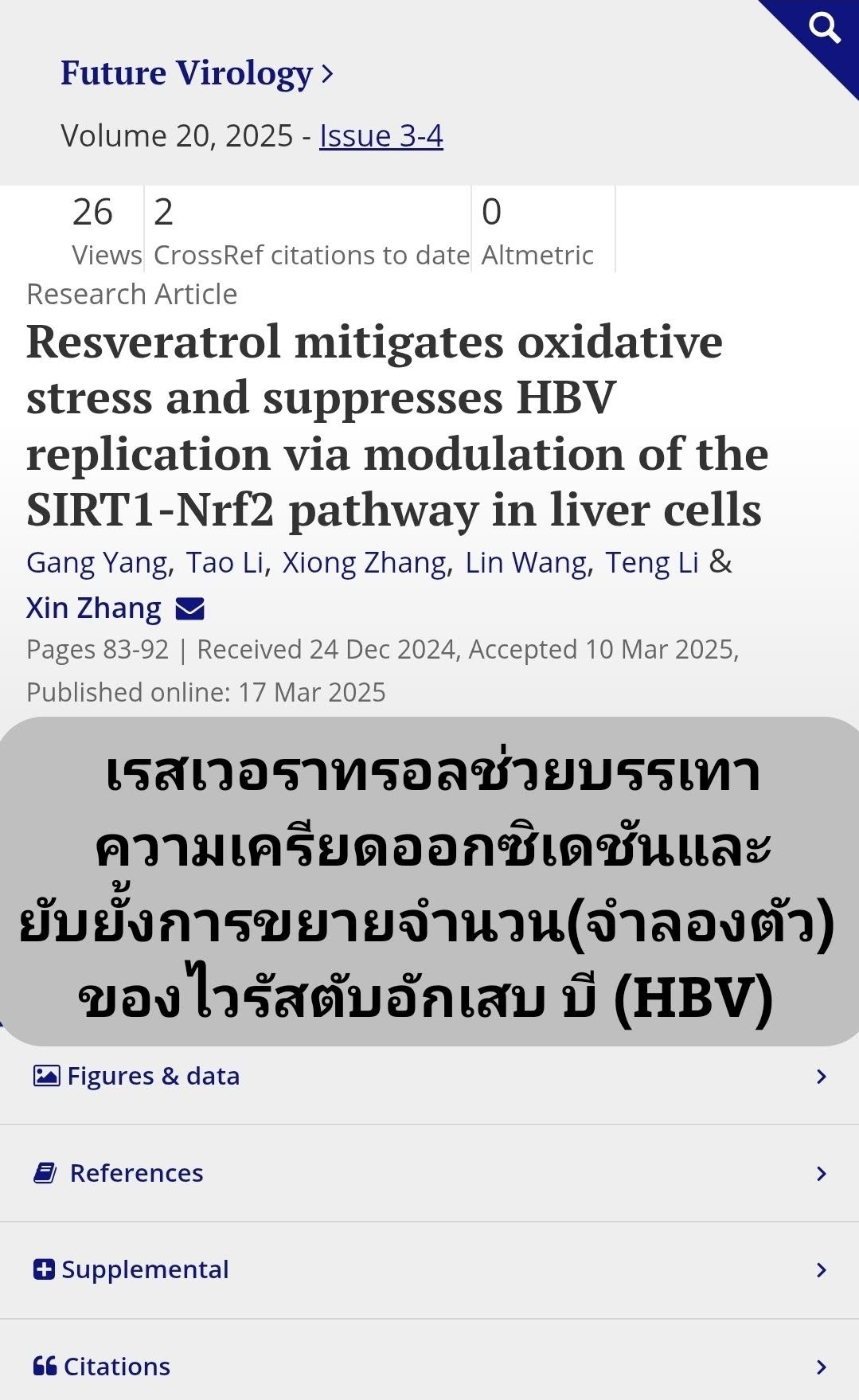
of the article “Resveratrol mitigates oxidative stress and suppresses HBV replication via modulation of the SIRT1‑Nr...
Summary of the article “Resveratrol mitigates oxidative stress and suppresses HBV replication via modulation of the SIRT1‑Nrf2 pathway in liver cells” (Future Virology, Vol. 20, No. 3‑4, 2025):
Summary of article content Resveratrol alleviates oxidative stress and inhibits the replication (replication) of hepatitis B virus (HBV) through modulating the SIRT1-Nrf2 pathway in liver cells.
1. Goals and importance of the research
This research studied the effects of resveratrol on oxidative stress and HBV virus replication in liver cells.
Emphasis on the mechanism of action via the SIRT1‑Nrf2 signaling pathway as a potential therapeutic target.
2. Main experimental results
Resveratrol reduces oxidative stress in liver cells and impairs HBV virus replication by activating the SIRT1 and Nrf2 proteins.
Research indicates that resveratrol Can strengthen the oxidation protection system and inhibits HBV spread through regulating SIRT1‑Nrf2.
3. Context from previous research
An old work (year 2016) reported that sometimes Resveratrol may accelerate HBV replication through the SIRT1‑PGC‑1α‑PPARα pathway, a result contrary to this recent work.
This research indicates that SIRT1-Nrf2 is an important pathway that should be further studied to assess its efficacy and safety. Resveratrol and HBV patients
Summary:
Topic: Effect of resveratrol on oxidative stress and HBV replication in liver cells. Main mechanism: Activation of SIRT1 and Nrf2 to increase antioxidant defense and reduce virus replication. Results: Reduce oxidative stress and HBV replication.