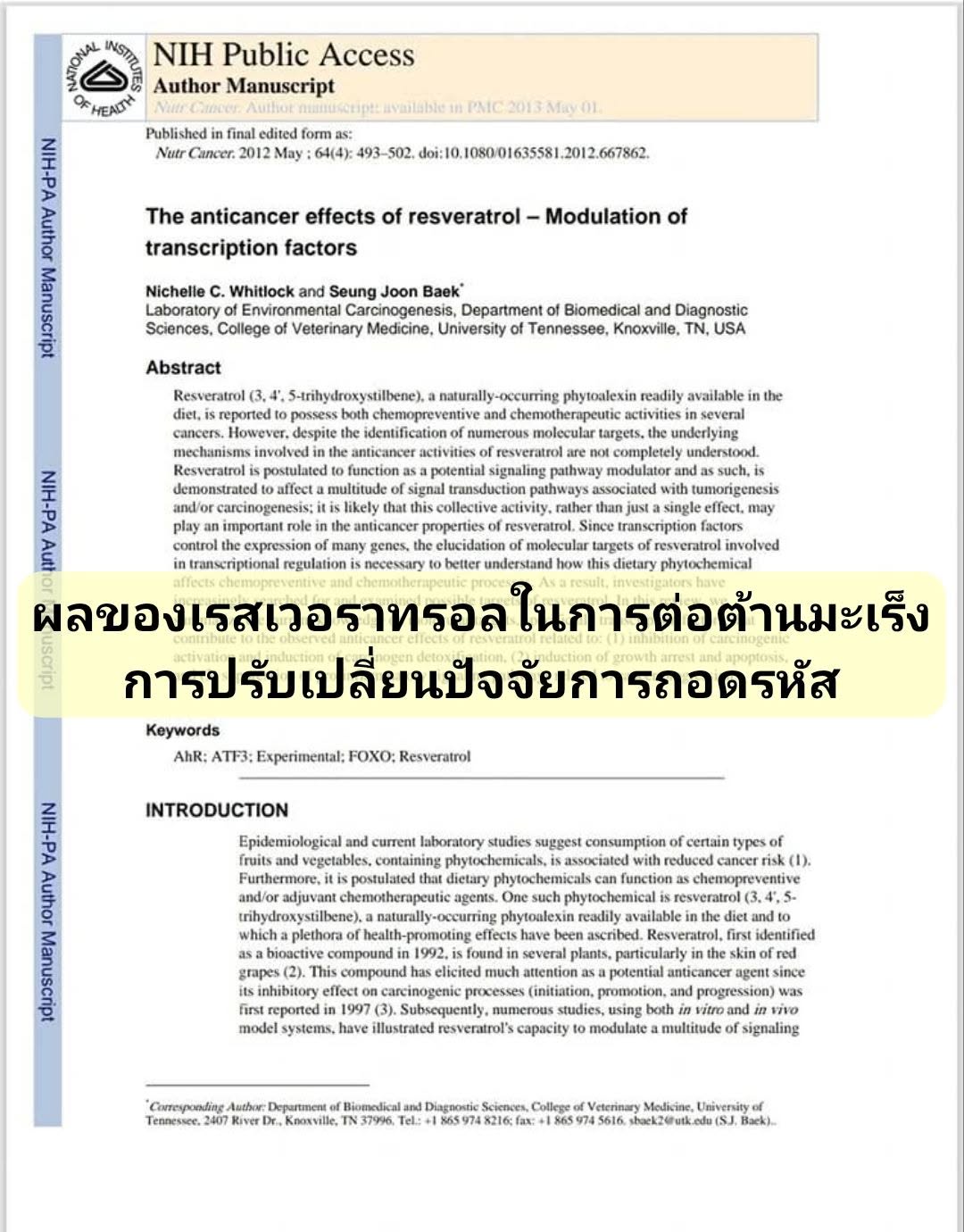
The anticancer effects of resveratrol – Modulation of
The anticancer effects of resveratrol – Modulation of
transcription factors
Effects of Resveratrol in Anti-Cancer – Modulation of Transcription Factors.
Abstract:
Resveratrol (3, 4', 5-trihydroxystilbene), a phytoalexin that can be found in some plants It has been reported to have both anti-cancer and cancer-therapeutic effects in a variety of cancers. However, although several molecular targets have been identified, But the basic mechanisms underlying resveratrol's anticancer effects are not fully understood. It is hypothesized that resveratrol acts as a potent regulator of signaling pathways. and therefore It has therefore been shown to affect many signal transduction pathways involved in carcinogenesis and/or carcinogenicity. It is likely that this joint activity Instead of just one result It may play an important role in resveratrol's anti-cancer properties. This is because transcription factors control the expression of many genes. Clarifying the molecular targets of resveratrol involved in transcriptional regulation is necessary to better understand how this dietary phytochemical affects protective and chemotherapeutic processes.
More and more potential targets for resveratrol are being discovered and investigated. In this review We summarize the current knowledge on molecular targets, especially the transcription factors that
This contributes to resveratrol's observed anti-cancer effects. This involves: (1) inhibiting activation and inducing the elimination of carcinogens, (2) inducing growth arrest and death of cancer cells, and (3) inhibiting inflammatory signaling pathways involved in cancer progression.
#ResveratrolDrVee