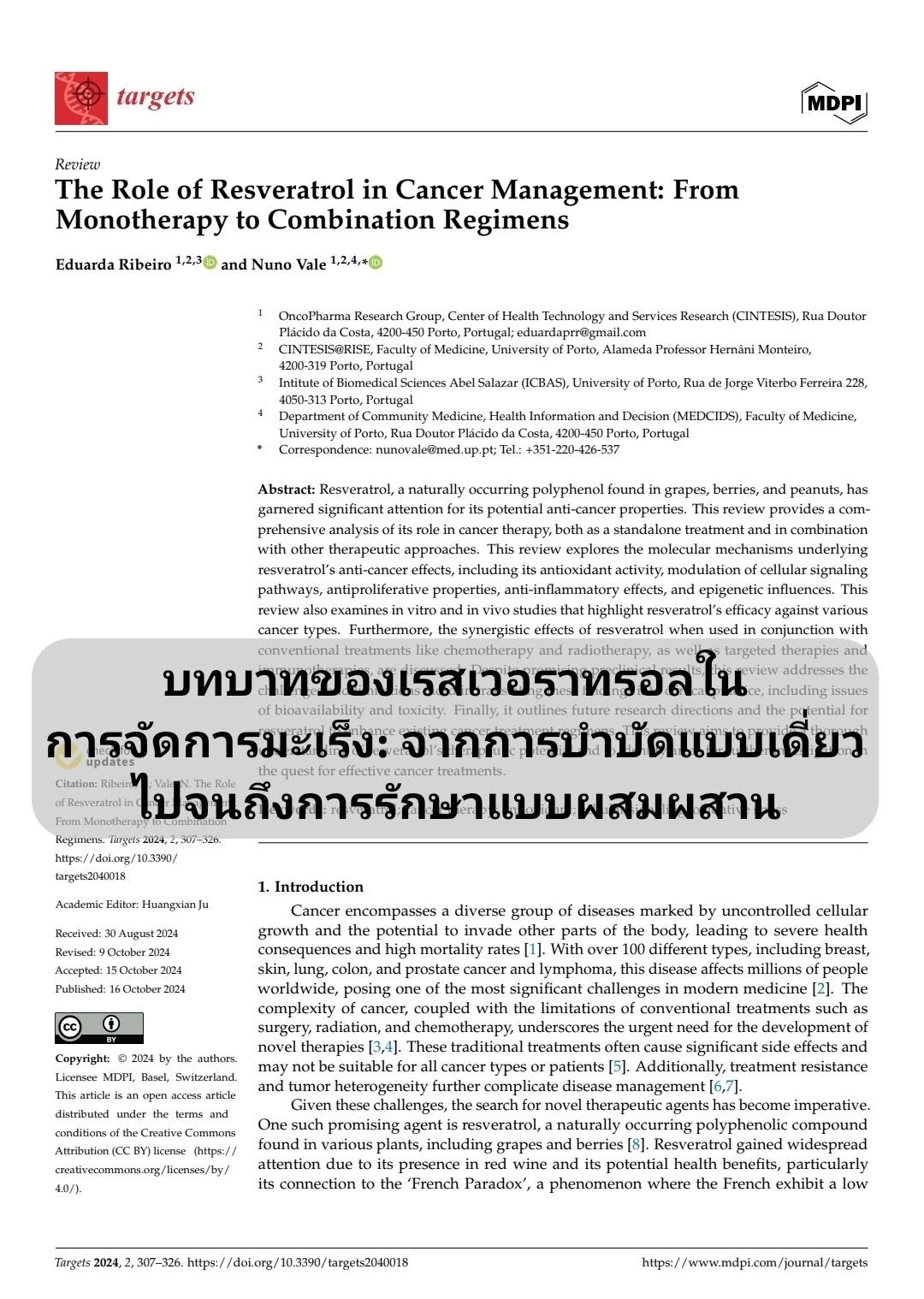
The main content of the article: The Role of Resveratrol in Cancer Management: From Monotherapy to Combination Regimens
Summary of the main points of the article The Role of Resveratrol in Cancer Management: From Monotherapy to Combination Regimens
The role of resveratrol in cancer management: from monotherapy to combination therapy.
Essence
1. Introduction
Cancer is a serious disease caused by abnormal cell growth and resistance to treatment.
Traditional treatments (surgery, chemotherapy, radiation) often have high side effects and are inadequate in some patients.
Resveratrol, which is found in red grapes and mulberry It is a polyphenol substance that has received attention because of its antioxidant and anti-cancer properties.
2. The main mechanism of action of resveratrol
Antioxidants: Reduce ROS/RNS and increase protective enzymes (SOD, CAT) → Reduce DNA damage and cancer.
Control cell signals: activate SIRT1, inhibit NF-κB and PI3K/Akt → delay cancer cell growth and induce apoptosis.
Inhibits division: causes cells to stop at G1/G2 and induces apoptosis.
Anti-inflammatory: Reduce TNF-α, IL-6, COX-2 → Reduce the carcinogenic environment.
Epigenetic modification: affects methylation and microRNA → represses the expression of oncogenic genes.
3. Educational evidence
In vitro: inhibits the growth of lung, prostate, breast, colon, liver, and pancreatic cancer cells.
In vivo: In laboratory animals, it can reduce the occurrence and growth of cancer tumors. Including enhancing the treatment effect
4. Use in combination with other treatments
Chemotherapy: reduces side effects (such as cardiotoxicity from doxorubicin) and enhances the effects of drugs such as cisplatin, paclitaxel, 5-FU.
Radiation therapy: Helps protect normal tissue and increases the sensitivity of cancer cells to radiation.
Targeted therapy and immunotherapy: inhibiting the PI3K/Akt/mTOR, reduce PD-L1, stimulate T-cell/NK cell → enhance the effect of checkpoint inhibitors
Summary:
Resveratrol is a natural substance that has anticancer potential through multiple mechanisms. Antioxidants, reduce inflammation, and control cell signals and stimulate the death of cancer cells It gives interesting results, especially when used in combination with chemotherapy or radiotherapy.