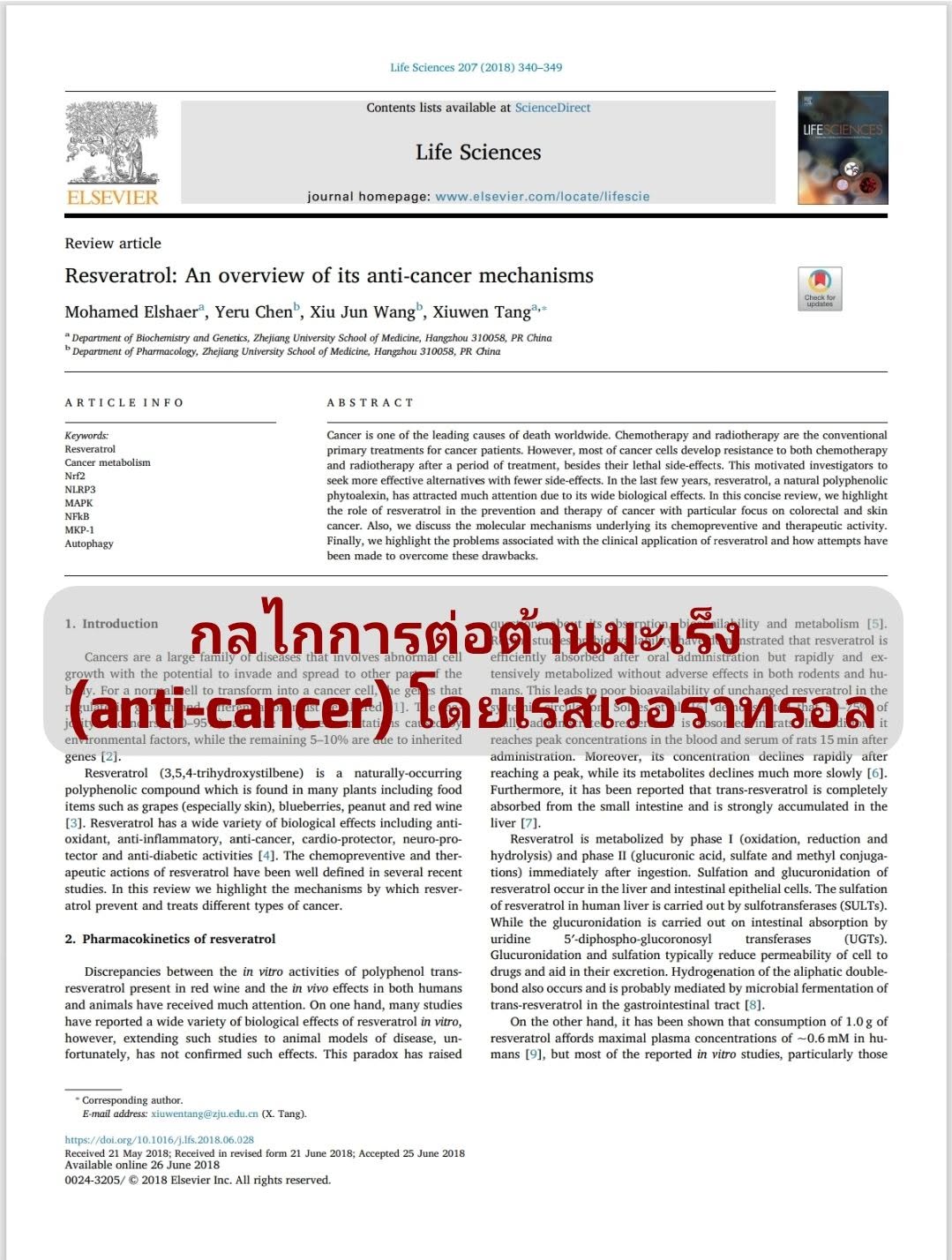
Resveratrol: An overview of its anti-cancer mechanisms
Summary of the article Resveratrol: An overview of its anti-cancer mechanisms (Resveratrol: review of anti-cancer mechanisms)
Important overview
Resveratrol is a natural polyphenol found in red grapes, mulberries, and some other plants.
Has antioxidant properties Anti-inflammatory, protects the heart, nervous system, diabetes and fights cancer.
This article focuses on the mechanism of action against cancer, especially colorectal cancer (CRC) and skin cancer.
Pharmacokinetics (Pharmacokinetics)
Well absorbed but rapidly metabolized. Makes the concentration in the blood low
It has been transformed by glucuronidation and sulfation in the liver and intestines
Biological effects come from Resveratrol metabolites, or hydrolysis, return to precursors.
Anti-cancer
1. Colorectal Cancer
Prevent colon cancer by:
Reduces the formation of aberrant crypt foci (ACF).
Inhibits cell division and stimulates apoptosis.
Treatment:
Inhibits the growth of colon cancer cells
Reduces the activity of telomerase, NF-κB and increases Bax (pro-apoptotic protein).
Clinical trials have found that Can reduce the proliferation of cancer cells.
2. Skin Cancer
Protected by:
Inhibits cancer induction from chemicals and UVB rays.
Reduces the expression of cyclins and cdk related to cell cycle.
Treatment:
Stimulate p53-dependent apoptosis
Inhibits Wnt signaling
Reduce the occurrence and size of cancer tumors
Main anti-cancer mechanisms
1. Inhibition of inflammation
Reduce the activity of NLRP3 inflammasome, NF-κB, COX-2
Stimulates Nrf2 and MKP-1
2. Induction of Apoptosis and Autophagy
Stimulate p53, Bax, Caspase-3/9
Inhibits Bcl-2 (anti-apoptotic protein)
Stimulates autophagy through SIRT1/AMPK/mTOR pathway
3. Inhibit Angiogenesis and Metastasis
Reduced VEGF, HIF-1α
Inhibits EMT (epithelial-mesenchymal transition) and proliferation.
4. Reprogramming Metabolism of Cancer Cells
Reverses the Warburg effect by increasing the activity of pyruvate dehydrogenase complex (PDHc).
Inhibits glycolysis through Hexokinase II inhibition.
Problems and development
Limitations: poor stability, poor water solubility, poor bioavailability.
Solution:
Develop new derivatives of resveratrol that are more powerful.
Use of co-ingredients (e.g. piperine, curcumin, genistein) to increase bioavailability and enhance anti-cancer effects
Summary
Resveratrol has high potential in both Prevents and treats cancer through many mechanisms such as anti-inflammatory, stimulating the death of cancer cells, and inhibiting metastasis. and alter the metabolism of cancer cells