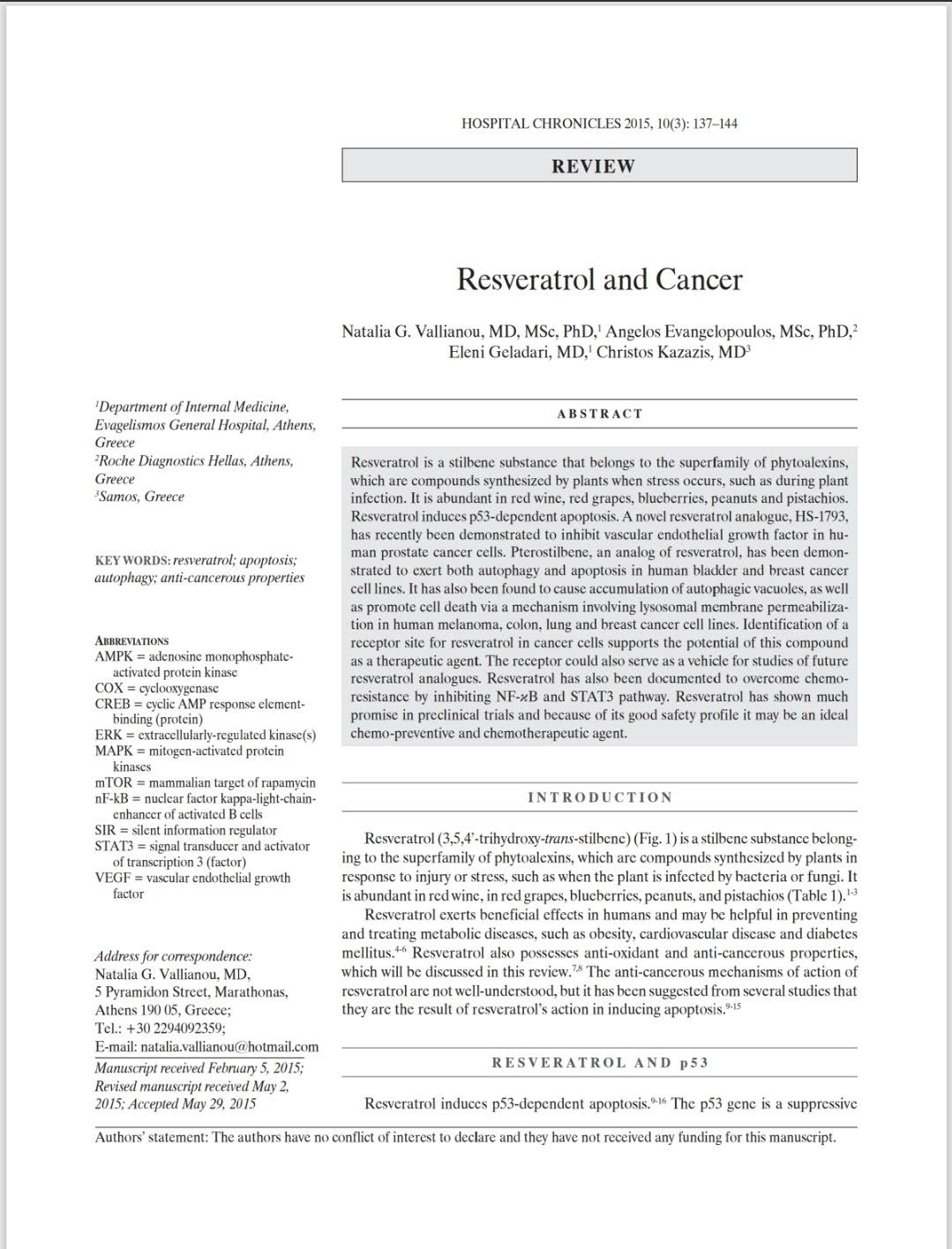
The article Resveratrol and Cancer summarizes the main points as follows:
The article Resveratrol and Cancer summarizes the main points as follows:
General information about Resveratrol
It is a plant substance from the stilbene group, which is a phytoalexin synthesized when plants are exposed to stress such as infection.
Found in some plants such as red grapes, mulberries, peanuts, etc.
Has antioxidant properties anti-inflammatory and has the potential to fight cancer
Anti-cancer mechanism of resveratrol
1. Stimulate the death of cancer cells (Apoptosis) through p53.
It stimulates phosphorylation and acetylation of p53 to increase DNA binding and induce apoptosis.
2. Effect on COX-2
Resveratrol stimulates the accumulation of COX-2 in some cancer cells. which is associated with p53 activation and cell death.
3. Stimulate Sirtuins (especially SIRT1)
Helps mimic the effects of calorie restriction which is related to delaying aging and reducing cancer.
4. Affects MAPK/ERK Pathway
Activation of ERK1/2 associated with p53 and cancer cell apoptosis.
5. Inhibits NF-κB and STAT3
It is a transcription factor involved in chemotherapy resistance, survival, and proliferation of cancer cells.
6. Stimulate Autophagy
especially through resveratrol derivatives such as pterostilbene. which results in the death of many types of cancer cells
7. Inhibits VEGF and PI3K/Akt Pathway
Inhibits the creation of new blood vessels in cancer cells such as prostate and breast cancer.
8. Stimulate ATF3 (Activating Transcription Factor 3)
It reduces the growth of colon cancer cells and promotes cell death.
Summary:
Resveratrol appears to be a good anticancer agent from preclinical trials with a high safety profile.