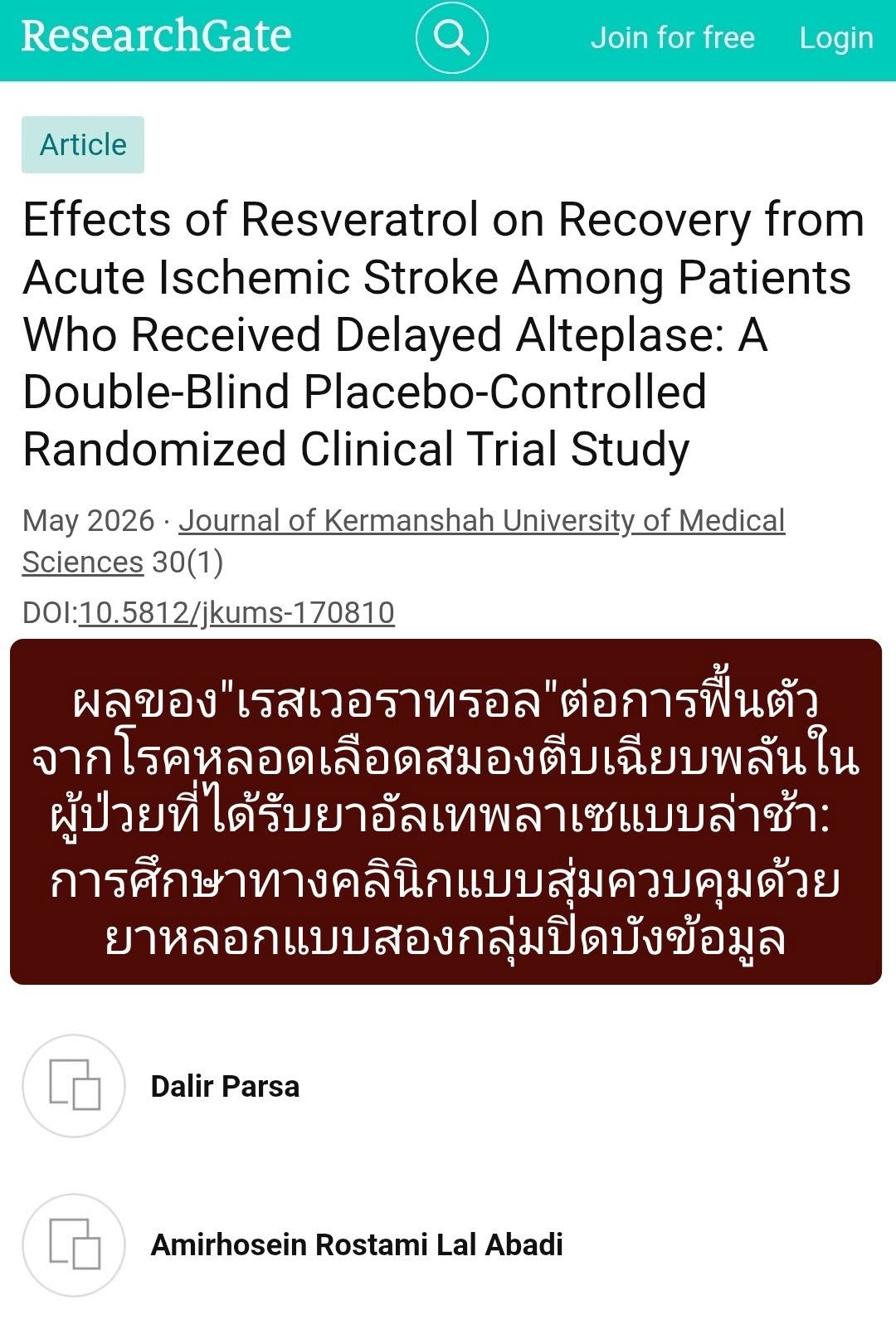
This study investigated the effect of Resveratrol on the recovery of patients with acute ischemic stroke (Acute Ischemic Stroke) ...
Summary: This article studies the effect of Resveratrol on the recovery of patients with Acute Ischemic Stroke who received Alteplase (RT-PA) later than the standard golden period. that is, given within 3–4.5 hours after the onset of symptoms This was a randomized, double-blind, placebo-controlled trial. (double-blind placebo-controlled randomized trial)
Purpose of study
Want to see if resveratrol can help improve brain recovery and life after stroke? This was especially true in patients who received rt-PA later than the optimal time point.
Method of study
Total 60 patients
All received rt-PA within 3–4.5 hours of symptom onset.
Divided into 2 groups:
Resveratrol group: received 450 mg/day for 30 days and placebo group
Evaluate with:
NIHSS = Brain Symptom Severity Scale.
mRS = disability after stroke
Barthel Index = ability to use daily life
Resveratrol and Alteplase were used together in this trial.
Study results
1. Short-Term Encephalopathy Syndrome (NIHSS)
Both groups improved with time.
But resveratrol “did not” improve symptoms significantly more than placebo.
The summary is:
> Not clearly helping during short-term acute periods
2. Long-term recovery (3–6 months)
The group receiving resveratrol had:
mRS score improves → disability decreases
Higher Barthel Index → Help yourself more.
It means:
> Patients recover better in their daily life in the long term.
Mechanisms that are expected to be involved
The researchers explain that resveratrol may help:
● Reduce inflammation.
● Reduce oxidative stress.
● Protects the blood-brain barrier.
● Reduces brain cell damage after reperfusion.
Brief summary
This research found:
> Resveratrol does not immediately improve stroke symptoms, but it "improves long-term recovery" in patients who receive Alteplase later than the golden hour. Especially in the area of ability to use daily life and reduce disability.