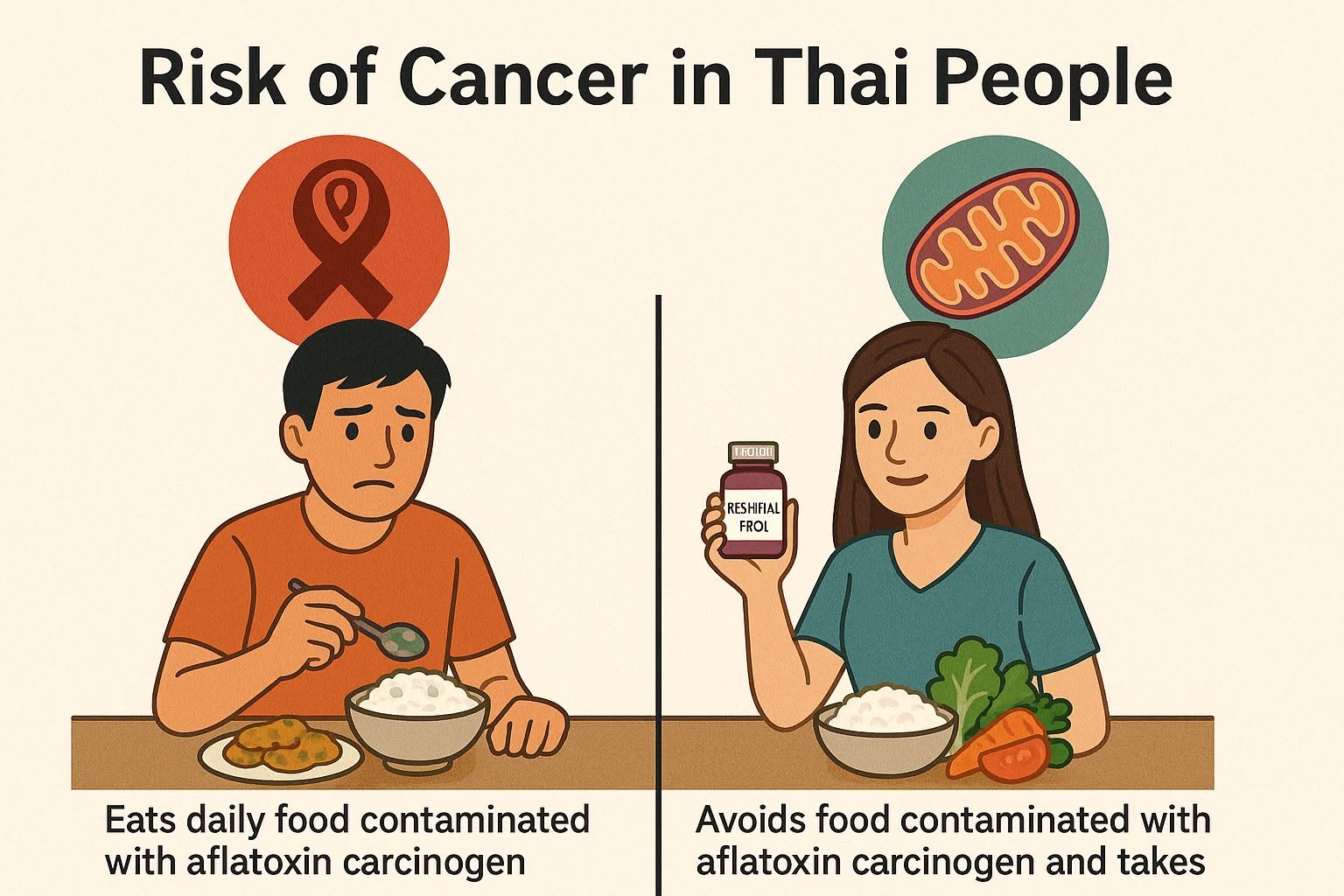
The assessment of cancer risk between two Thai groups analyzed the probability and relative risk as follows.
The assessment of cancer risk between two Thai groups analyzed the probability and relative risk as follows.
Group 1: Eat food contaminated with aflatoxin daily.
* Aflatoxin is an extremely dangerous fungal toxin. and is a strong carcinogen Especially liver cancer (Hepatocellular Carcinoma (HCC), which is a common and highly severe cancer in Thailand.
* Common sources of contamination: Aflatoxins are commonly found in agricultural products such as spices, dried chilies, grains, coffee, and animal products that have been contaminated (such as milk).
* Situation in Thailand: Thailand is an area with high humidity and subtropical temperatures. which facilitates the growth of aflatoxin-producing fungi. Aflatoxin contamination has been reported in many foods in Thailand at alarming levels. And Thailand has one of the highest rates of liver cancer in the world.
* Carcinogenic mechanism: Aflatoxin, especially Aflatoxin B1 (AFB1), is a genotoxic carcinogen that causes genetic changes (DNA adducts) in liver cells, leading to mutation and eventual development into cancer.
* Contributing factors: If a person is also a carrier of the Hepatitis B virus, the risk of developing liver cancer is significantly higher.
Risk for Group 1: Very high risk of liver cancer and other types of cancer. related to continuous exposure to toxins accumulated in the body High and continuous exposure to aflatoxin increases the chance of DNA damage in liver cells. which is the initial step of cancer.
Group 2: Avoid food contaminated with aflatoxin. and consume resveratrol extracted from mulberries to strengthen the mitochondria.
* Avoiding Aflatoxin: This is the most important and most effective preventive measure to reduce the cancer risk caused directly by Aflatoxin. Not ingesting carcinogens reduces the chance of damage to cells and DNA.
* Resveratrol from Mulberry:
* Properties: Resveratrol is a polyphenol compound found in some plants. and mulberry Its outstanding feature is that it is an antioxidant. (antioxidant) and has properties that are beneficial in fighting cancer.
*Mechanisms involved in cancer and mitochondrial protection:
* Antioxidants: Resveratrol reduces damage from free radicals (Reactive Oxygen Species (ROS), which can damage DNA and lead to cancer.
* Mitochondrial strengthening: Several studies have suggested that resveratrol plays a role in promoting mitochondrial function, such as stimulating the formation of new mitochondria. (mitochondrial biogenesis) and improve the performance of mitochondria Well-functioning mitochondria are important in maintaining cell health and regulating the cell death cycle (apoptosis), which is important in protecting against cancer cells.
* Direct anti-cancer effects: Resveratrol has also been studied for its ability to inhibit the growth of many types of cancer cells. reduce spread and stimulate the death of cancer cells Through a variety of mechanisms, such as modulating the activity of genes related to the cell cycle and inflammation.
Risk for group 2: The risk of developing cancer is significantly lower than in the first group. This is because the main risk factors are avoided. (Aflatoxin) and also receive substances that have properties to prevent and fight cancer. (Resveratrol), which helps strengthen the body's defense mechanisms at the cellular level.
Additional considerations:
* Dosage and consumption pattern: The effectiveness of resveratrol depends on the dosage, absorption, and bioavailability in the body. Consuming the extract will provide a more concentrated dose than consuming the mulberry directly.
Summary of risk comparisons:
* Group 1 (eating food contaminated with aflatoxin): has a very high risk of liver cancer and other cancers, especially in Thailand where aflatoxin contamination is a problem.
* Group 2 (avoid aflatoxin + resveratrol): had a significantly lower risk of cancer than the first group. Avoiding carcinogens is the most important thing. And supplementing with resveratrol is a good additional factor in preventing cancer at the cellular level.