Explain the biological mechanism of Resveratrol from mulberry in strengthening the mitochondria (mitocho...
Explain the biological mechanism of Resveratrol from mulberry to strengthen mitochondria (mitochondrial biogenesis) to inhibit cancer. Can be summarized as follows. Linked to the Warburg Effect mechanism related to the cause of cancer:
Biological mechanism of resveratrol extracted from mulberry to the creation of mitochondria
1. Basics: Mitochondrial dysfunction in cancer cells.
Many cancer cells have dysfunctional or reduced numbers of mitochondria.
Mitochondria cannot create energy from Cellular respiration process (oxidative phosphorylation) well
The cell then switched to using Anaerobic breakdown of glucose into energy. Even in the presence of oxygen (called the Warburg Effect)
Resulting in a significant metabolism of glucose and glutamine. to nourish uncontrolled cell growth
2. The role of resveratrol (Resveratrol)
Resveratrol is a plant polyphenol that stimulates the production of mitochondria through key biological pathways:
2.1. Stimulate SIRT1 (Sirtuin 1)
Resveratrol activates the SIRT1 protein, which is a key enzyme in regulating cellular aging and energy.
SIRT1 deacetylates the protein PGC-1α, a master regulator of mitochondrial biogenesis.
2.2. Stimulate PGC-1α (Peroxisome proliferator-activated receptor gamma coactivator 1-alpha)
When stimulated by SIRT1 and AMPK, PGC-1α switches on the cell to begin the process of making new mitochondria.
Promotes the expression of genes involved in the formation of mitochondria and cellular respiration.
2.3. Stimulate AMPK (AMP-activated protein kinase)
Resveratrol also increases the activity of AMPK, which is an energy sensor in cells.
AMPK stimulates PGC-1α and mitochondrial formation.
AMPK also inhibits mTOR, which plays a role in cancer cell growth.
3. Results: Restoration of mitochondrial function.
Increase the number of mitochondria in cells
Promotes energy generation through oxidative phosphorylation (better use of O₂)
Reduces the need to use the Warburg pathway (reduces reliance on glucose and glutamine).
Inhibits abnormal cell growth (anti-proliferative)
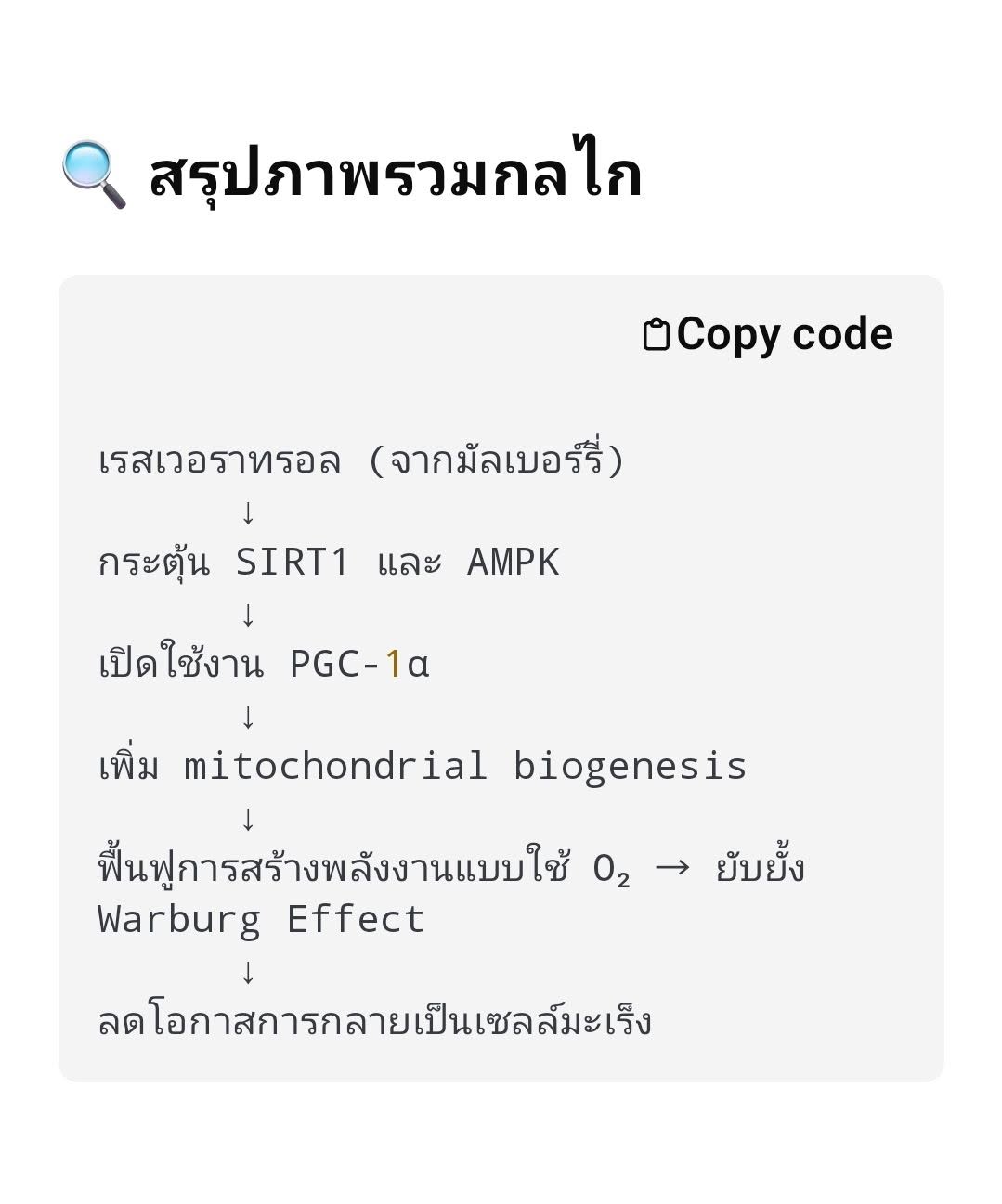
Summary of mechanism overview
Resveratrol (from mulberry)
↓
Stimulates SIRT1 and AMPK
↓
PGC-1α activated
↓
Increases mitochondrial biogenesis
↓
Restores O₂ based energy generation → Inhibits the Warburg Effect.
↓
Reduce the chance of becoming cancer cells.
Benefits of preventive medicine
Reduce the risk of cancer cells occurring at the metabolic level.
Increases cell tolerance to stress (oxidative stress)
Boosts energy in the elderly or those with mitochondrial degeneration.