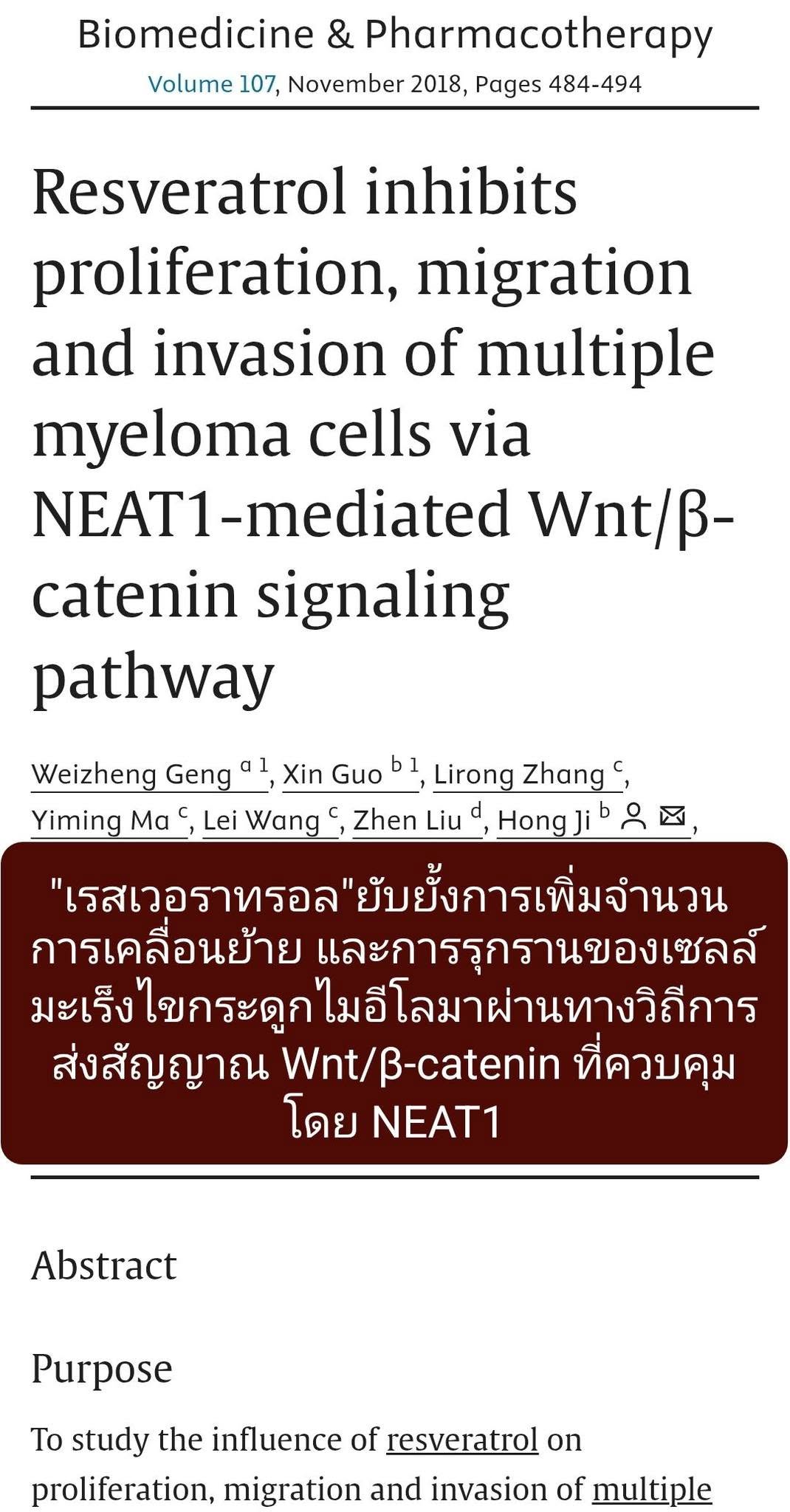
From the research article "Resveratrol inhibits proliferation, migration and invasion of multiple myeloma cells via NEAT1-...
From the research article "Resveratrol inhibits proliferation, migration and invasion of multiple myeloma cells via NEAT1-mediated Wnt/β-catenin signaling pathway" the main points of the research can be summarized as follows:
Research objectives
To study the effects and mechanism of action of resveratrol, a natural immune system substance found in plants (such as red grapes and mulberries), in inhibiting multiple myeloma (MM) leukemia cells. Focusing on the article on long strands of RNA that do not transcribe into proteins called lncRNA NEAT1 and the signal transduction pathway. Wnt/β-catenin
Experimental method
* Microarray technique was used to screen lncRNAs that were abnormally expressed in MM cancer cells compared to normal cells.
* Tested on MM cancer cell lines (U266 and LP1) divided into groups that induce overexpression. (Overexpression) or reduced expression (Silencing) of NEAT1 in combination with treatment with Resveratrol.
* Measure growth movement and invasion of cancer cells through CCK-8, Wound healing, and Transwell invasion assays.
* Measure protein levels in the pathway Wnt/β-catenin and the response to abnormally folded protein (Unfolded Protein Response: UPR) by Western blot method.
Important experimental results
1. NEAT1 stimulates cancer: Researchers found that lncRNA NEAT1 is highly expressed in MM cancer cells. Too much NEAT1 stimulates cancer cell growth. (Proliferation), movement (Migration) and spread (Invasion) better.
2. Resveratrol inhibits NEAT1: When Resveratrol is given to cancer cells It was found to significantly reduce the expression level of NEAT1. As a result, the cancer-promoting effect of NEAT1 is erased.
3. Mechanism through Wnt/β-catenin and UPR: NEAT1 normally increases the activity of signaling pathways. Wnt/β-catenin (which is related to cancer growth), but Resveratrol blocks this pathway. Including helping to stop the response. abnormally folded protein (UPR) in cancer cells This makes cancer cells unable to withstand stress and unable to multiply.
Summary of results (Conclusion)
Resveratrol is effective against multiple myeloma (MM) cancer. The main mechanism is by reducing the level of lncRNA NEAT1, which results in blocking the signaling pathway. Wnt/β-catenin and inhibits the UPR system, preventing cancer cells from dividing, moving, or spreading deeper. This research therefore suggests that resveratrol can be developed as an alternative or adjuvant for treating this type of cancer.