Resveratrol is a polyphenol that is naturally found in some plants. Including Mulberry (Mulberry), which is...
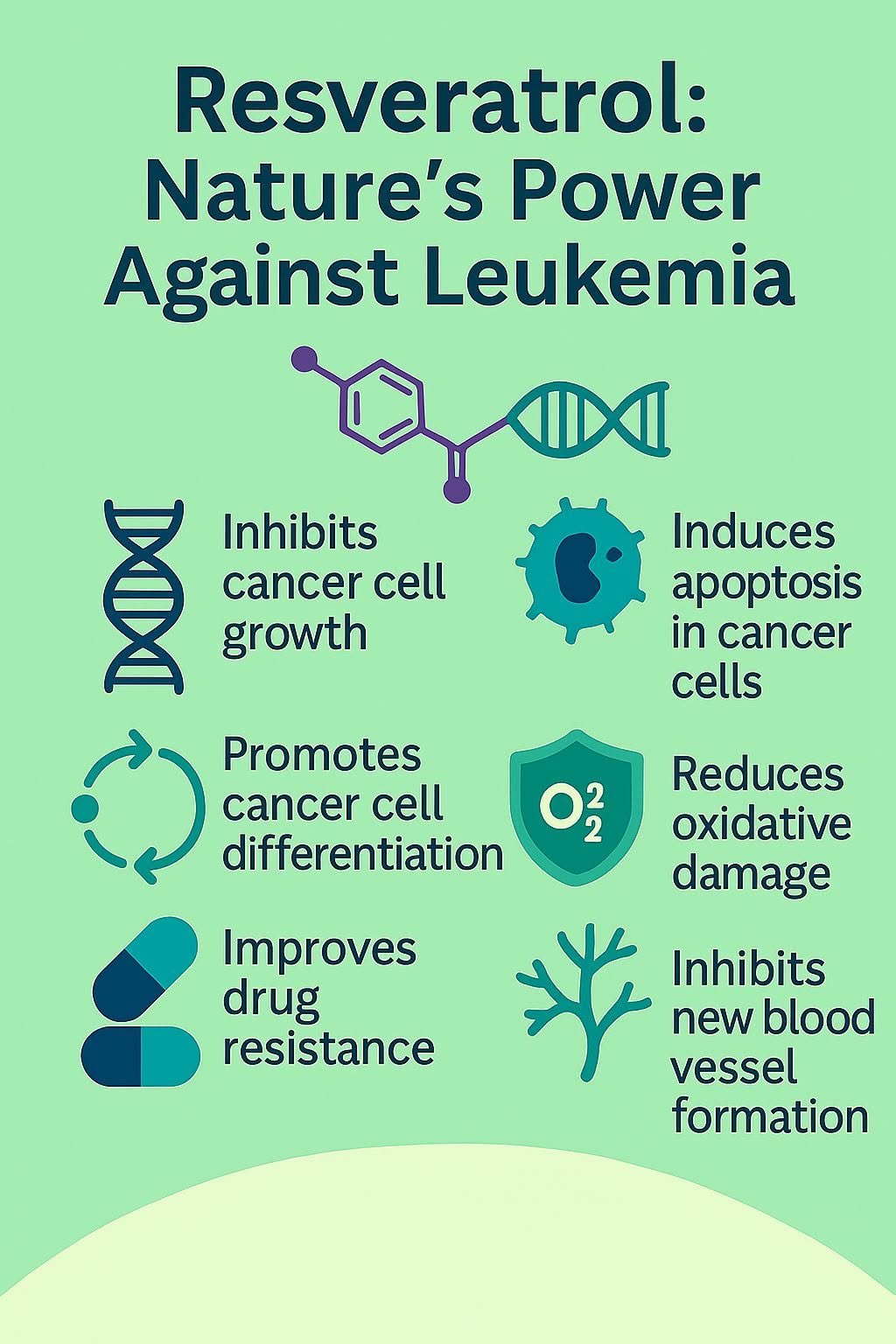
Resveratrol is a polyphenol that is naturally found in some plants. Including Mulberry, which is well known for its various biological properties. Especially in the prevention and treatment of leukemia (Leukemia). The main mechanisms of action of resveratrol are as follows:
* Inhibition of Cancer Cell Proliferation:
* Resveratrol can inhibit the division and proliferation of leukemia cells. By disrupting the cell cycle (Cell Cycle Arrest) in various phases such as S-phase, which is the phase in which cells synthesize DNA.
* Stimulating the death of cancer cells by apoptosis (Induction of Apoptosis):
* Apoptosis is the process of programmed cell death. This is an important mechanism that the body uses to get rid of abnormal cells or cancer cells. Resveratrol can trigger leukemia cells to undergo apoptosis in several ways, including:
* P53 gene regulation: Resveratrol can activate the p53 gene, an important tumor suppressor gene. When p53 is activated, it stimulates cancer cells to enter apoptosis.
* Modulation of Bax/Bcl-2 protein balance: Resveratrol can increase the ratio of Bax protein (a protein that promotes apoptosis) to Bcl-2 protein (a protein that inhibits apoptosis), signaling cell death.
* Stimulation of Caspases: Resveratrol can stimulate the activity of Caspases, which are key enzymes in apoptosis. cause cells to decay
* Inhibition of Ribonucleotide Reductase or DNA Polymerase: Resveratrol can inhibit DNA synthesis in cancer cells. By inhibiting enzymes involved in creating genetic material. This causes cells to be unable to divide and lead to death.
* Induction of Cell Differentiation:
* Leukemia cells often develop abnormally and are unable to develop into normal functioning blood cells. Resveratrol can induce these cancer cells to "differentiate" into more mature cells. This may cause those cells to lose their cancerous properties and eventually die.
* Antioxidant Properties:
* Resveratrol is a powerful antioxidant. Can reduce damage from free radicals in cells which is one factor that leads to cell mutation and cancer.
* Improving drug resistance (Overcoming Drug Resistance):
* Studies have shown that resveratrol may reduce the expression of MDR1 (Multidrug Resistance Protein 1), a protein involved in cancer cells' resistance to chemotherapy. Reducing MDR1 may increase the effectiveness of chemotherapy in treating leukemia.
* Inhibition of new blood vessel formation (Anti-angiogenesis):
* Cancer needs blood and nutrients to grow by creating new blood vessels. Resveratrol can inhibit the angiogenic process. (angiogenesis) in tumors, which helps limit the growth and spread of cancer cells
* Modulation of Signaling Pathways:
* Resveratrol affects several cellular signaling pathways involved in cancer development and progression, such as the PI3K/Akt pathway, NF-κB, and SIRT1, a protein involved in cell cycle regulation and stress response.