From direct experience, why do I feel in a good mood every day? The answer lies in happy hormones.
From direct experience, why do I feel in a good mood every day? The answer lies in happy hormones.
An in-depth biological explanation of how eating resveratrol extracted from mulberries makes you feel good.
How many types of Happy Hormone are there and what do they do?
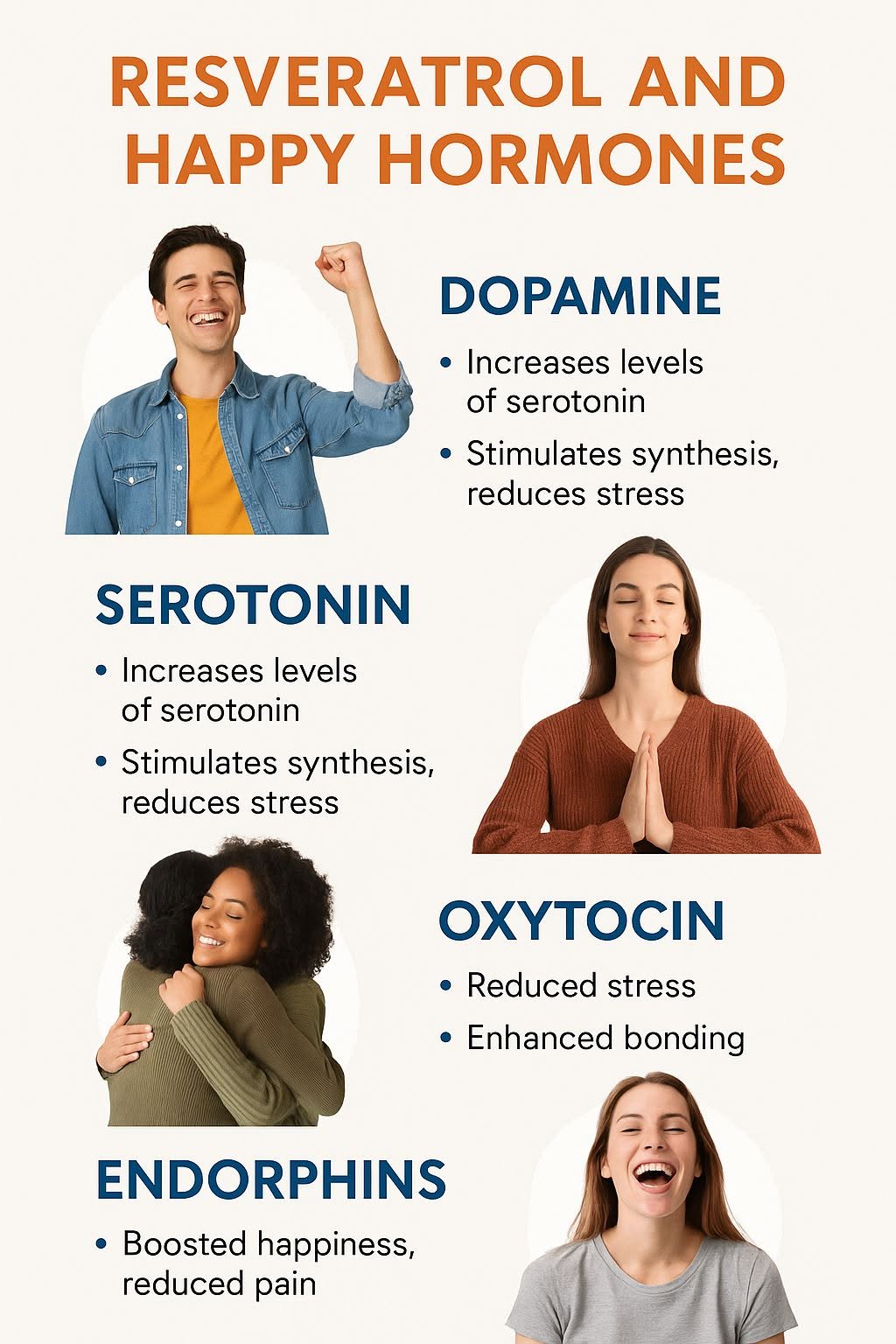
Happy Hormone is a group of chemicals in the brain associated with happiness, contentment, and relaxation. There are four main types:
1. Dopamine (Dopamine)
Function: related to happiness when successful Satisfaction from achieving goals Enthusiasm and motivation
Example: The good feeling you feel when you complete a task. or get a prize
2. Serotonin
Function: Regulates emotions, makes you feel calm, relaxed, reduces stress, and is also involved in sleep. appetite and digestion
Example: Feeling calm after meditation. or exercise
3. Oxytocin
Function: Hormone of love and relationships Helps stimulate bonding, trust, and warmth in social relationships.
Example: The feeling of warmth when hugged. or close to loved ones
4. Endorphins
Function: Help reduce pain and create a feeling of happiness after exercising or laughing
Example: The feeling of satisfaction after finishing a run. Or while watching a comedy movie
The mechanism of action of resveratrol extracted from mulberry and Happy Hormone.
Resveratrol is a natural polyphenol. Found in mulberry and has the qualities of Antioxidants (Antioxidant) and anti-inflammatory substances (Anti-inflammatory) There are many studies that explain the mechanism of enhancing the functioning of Happy Hormone as follows:
1. Stimulate the secretion of serotonin (Serotonin)
Resveratrol affects the activity of enzymes involved in making serotonin (such as Tryptophan Hydroxylase).
Helps increase serotonin levels in the brain, calms the brain, and reduces anxiety. and enhance sleep
2. Increase the function of dopamine (Dopamine)
Resveratrol reduces brain inflammation. (Neuroinflammation) and increases the sensitivity of dopamine receptors (Dopamine Receptor)
As a result, the brain responds better to happiness and motivation.
3. Protect nerve cells, reduce degeneration (Neuroprotection)
With antioxidant properties Resveratrol reduces oxidative stress (Oxidative Stress).
Protects brain cells involved in making and regulating happy hormones.
4. Strengthen hormonal balance (Hormonal Balance)
Resveratrol indirectly stimulates oxytocin secretion. By reducing the stress hormone (Cortisol) and causing the brain to enter a more relaxed state.
5. Helps stimulate the creation of endorphins (Endorphins).
Research has shown that resveratrol can enhance the effects of endorphins. Helps you feel happy and reduces symptoms of depression.