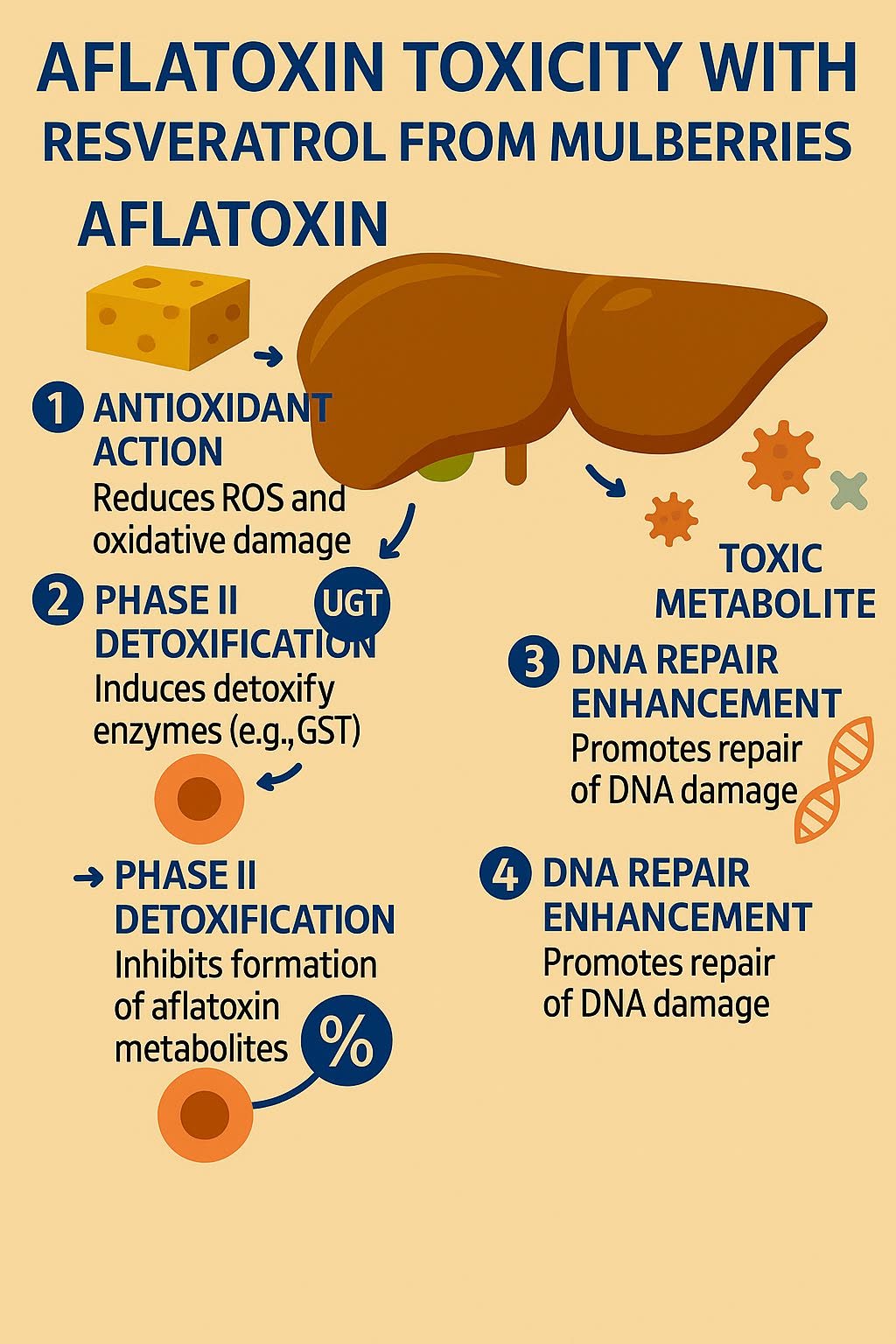
Explain the biological mechanism for reducing the toxicity of the carcinogen aflatoxin with resveratrol extracted from mulberry:
Explain the biological mechanism for reducing the toxicity of the carcinogen aflatoxin with resveratrol extracted from mulberry:
What is Aflatoxin?
Aflatoxin is Mycotoxins (Aspergillus flavus, A. parasiticus) found contaminated with foods such as peanuts, dried chilies, chili powder, grains, coffee, and dried food.
Main dangers:
It is a severe carcinogen. (especially liver cancer)
DNA damage
destroys liver cells
Causes free radicals (oxidative stress)
Resveratrol is extracted from mulberries.
Resveratrol is a polyphenol that contains:
Antioxidant effect (Antioxidant)
Anti-inflammatory effect (Anti-inflammatory)
stimulate DNA repair
Enhances the function of detox enzymes in the liver
Mechanism by which resveratrol reduces aflatoxin toxicity.
1. Antioxidant Action
Aflatoxin causes ROS (Reactive Oxygen Species) to damage cells.
Resveratrol reduces ROS → reduces DNA and cell membrane damage.
Increase glutathione levels (Glutathione, GSH), which is the main antioxidant in the liver.
2. Stimulate detox enzymes (Phase II Detoxification)
Resveratrol activates enzymes such as:
Glutathione-S-Transferase (GST) → Helps capture and expel toxins from cells.
UDP-glucuronosyltransferase (UGT) → helps convert aflatoxin to be highly water soluble. Easily excreted through urine
As a result, the body eliminates aflatoxin faster.
3. Inhibit the formation of toxic derivatives (Toxic Metabolite Inhibition)
Aflatoxins are converted to toxic derivatives. (Aflatoxin-8,9-epoxide) by liver enzyme (CYP450)
Resveratrol inhibits the enzymes CYP1A2, CYP3A4 → reduces the production of toxic derivatives.
4. Enhance DNA repair (DNA Repair Enhancement)
Aflatoxin causes DNA adducts (abnormal bonds in DNA).
Resveratrol stimulates the p53 and SIRT1 genes → accelerates the repair of damaged DNA.
Reduce the chance of mutation and cancer.
5. Reduce inflammation (Anti-inflammatory Effect)
Resveratrol reduces the secretion of inflammatory substances such as IL-6, TNF-α.
Reduce inflammation in liver cells that are destroyed by aflatoxin.
Brief summary
> Resveratrol from Mulberry Reduce aflatoxin toxicity through 5 main mechanisms:
Antioxidants, accelerate detox, inhibit toxins, repair DNA, and reduce inflammation, resulting in reducing the chance of cancer and improving liver function.