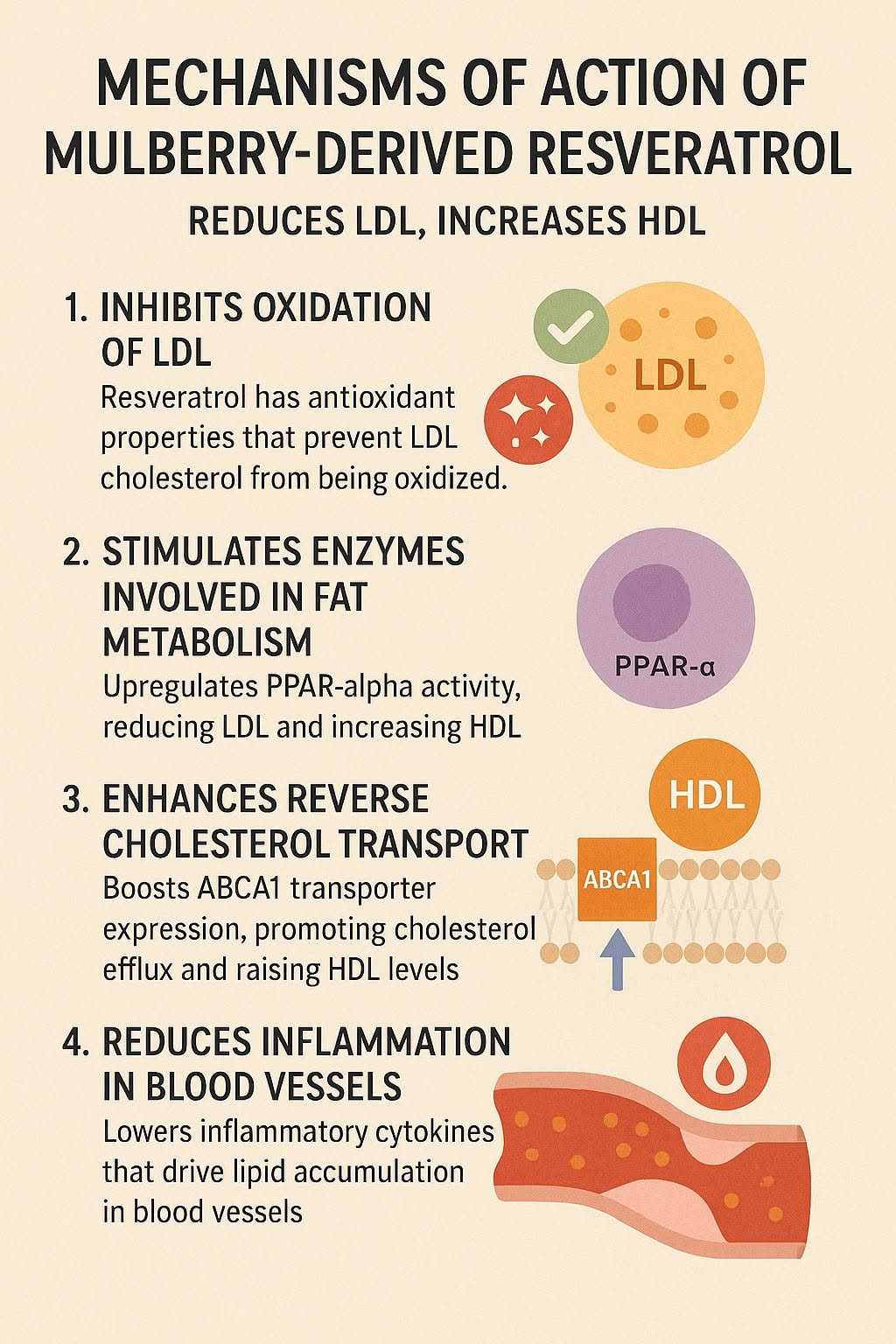
Mechanism of action of resveratrol extracted from mulberry fruit. In reducing bad cholesterol (LDL) and increasing good cholesterol (HDL), there are many mechanisms that work...
Mechanism of action of resveratrol extracted from mulberry fruit. In reducing bad cholesterol (LDL) and increasing good cholesterol (HDL), there are several mechanisms that work together as follows:
1. Inhibits the oxidation of LDL (Oxidized LDL).
Resveratrol has high antioxidant activity.
Helps prevent LDL from being oxidized, which is what causes fatty plaque to adhere to artery walls. (atherosclerosis)
2. Stimulates the activity of enzymes involved in fat burning.
For example, the PPAR-alpha enzyme that promotes triglyceride metabolism and reduces LDL levels.
At the same time, it is also effective. Increases the expression of ApoA-I, a key component of HDL.
3. Increase the reverse transport of cholesterol (Reverse Cholesterol Transport)
Resveratrol increases the activity of the ABCA1 transporter, which helps transport excess cholesterol from tissues and blood vessels back to the liver for excretion.
This results in an increase in HDL levels.
4. Anti-inflammatory in blood vessels
Reduce the secretion of inflammatory substances such as TNF-α and IL-6 that are involved in stimulating the accumulation of fat in the artery walls.
Makes blood vessels more flexible and has a more balanced flow of fat.
Summary:
Resveratrol from mulberry works in both ways. Antioxidants, regulate gene expression, promote fat burning and reduce inflammation, thus effectively reducing LDL and increasing HDL without relying on chemical drugs.