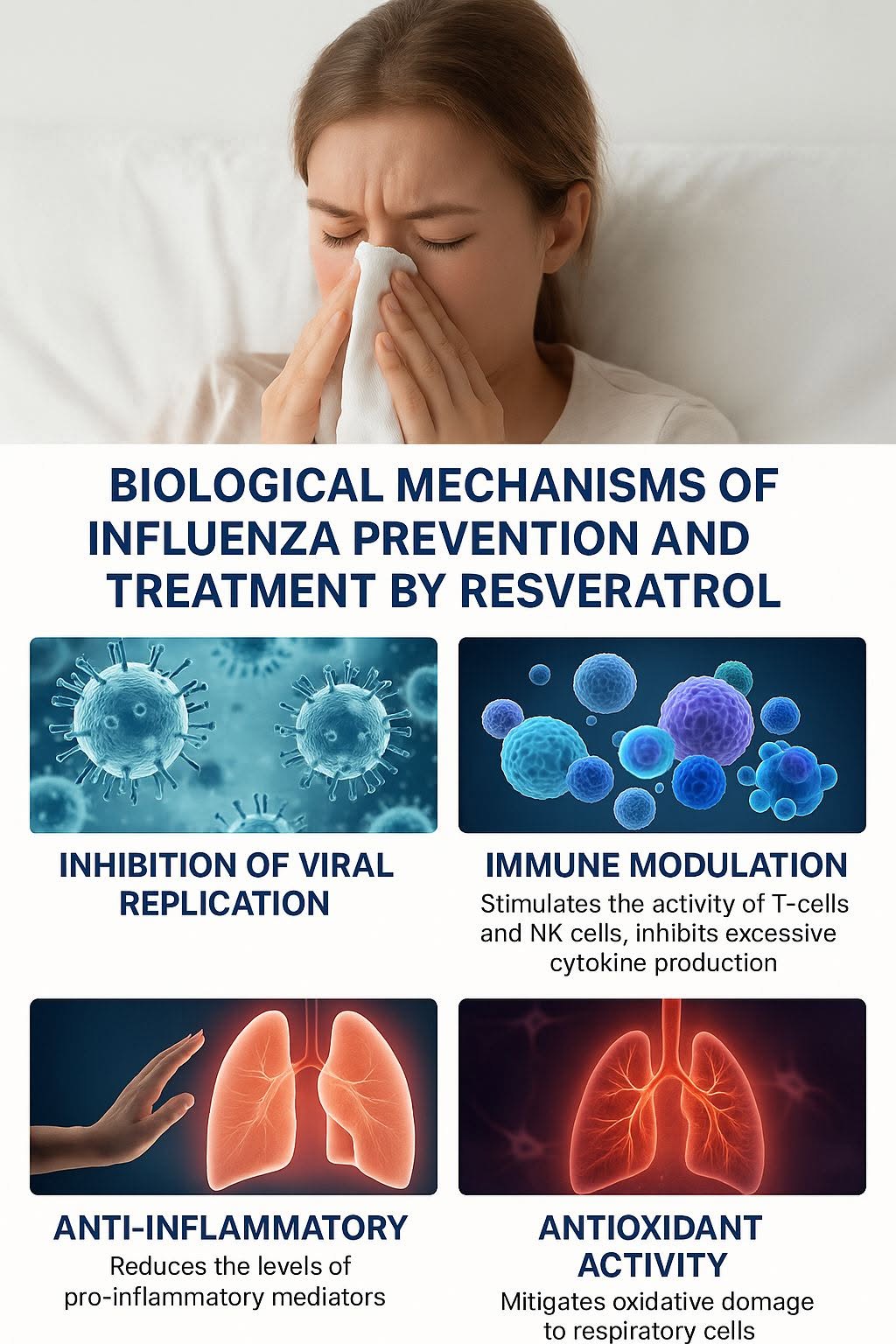
Biological mechanisms for preventing and treating influenza using resveratrol extracted from mulberry fruit.
Biological mechanisms for preventing and treating influenza using resveratrol extracted from mulberry fruit.
Influenza is caused by the Influenza virus, which severely affects the respiratory system. Especially in the elderly, children and people with weakened immune systems. Studies have shown that resveratrol, which is found in mulberries, It has an anti-influenza virus effect through the following mechanisms:
1. Inhibition of Viral Replication
Resveratrol interferes with the process of replicating the genetic material of the virus in lung cells. Specifically, blocking the activity of viral proteins (such as neuraminidase and RNA polymerase) prevents the virus from replicating.
2. Balancing the immune system (Immune Modulation)
Helps stimulate the activity of immune cells such as T-cells and NK cells to respond faster and more accurately to viruses. Ready to prevent "cytokine storm" from occurring, which is a condition of the immune system working too much to the point of danger.
3. Anti-inflammatory (Anti-inflammatory Effect)
Reduces the secretion of inflammatory substances such as TNF-α and IL-6, which often spike when the body is infected with influenza. Helps reduce the severity of symptoms such as high fever, muscle pain, and fatigue.
4. Antioxidant Activity
Reduce damage to airway cells from oxidative stress, which often results from an excessive immune response during infection.
--> Why do people often get the flu during the rainy season, early winter, and when the weather changes?
1. Colder temperatures help viruses live longer:
Influenza viruses can survive in cold environments for long periods of time. causing the spread to increase
2. Excessively dry or humid air:
Affects the nasal mucosa Dry or dissolve mucus to prevent infection. As a result, the infection can enter the body more easily.
3. People's behavior changes:
People often stay in enclosed spaces such as school buildings, offices, and public buses. More in the rainy and cold seasons Increase the risk of spreading infection
4. Decreased immunity from external factors:
For example, little rest, stress, and little exposure to sunlight. (Vitamin D source) weakens the immune system.