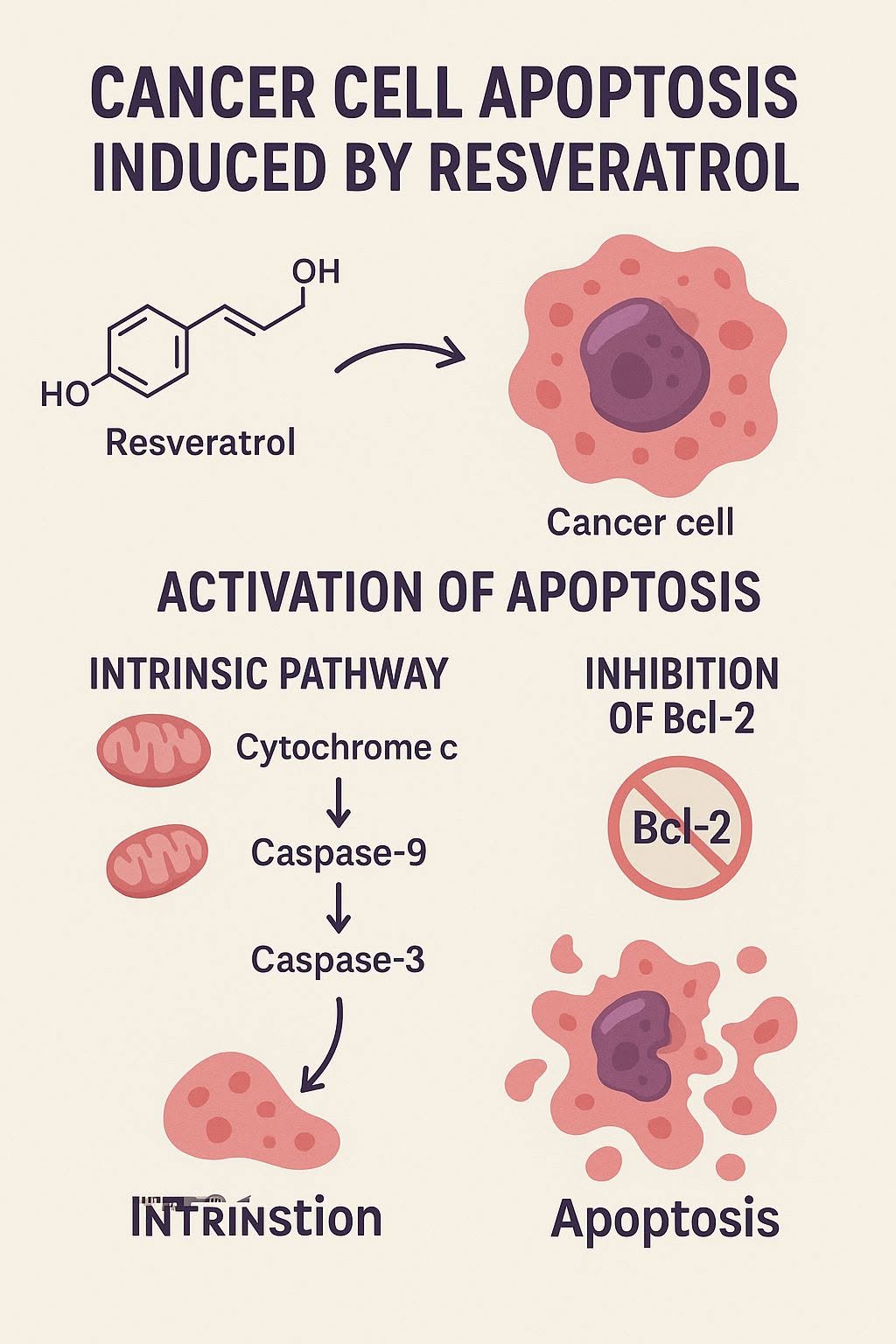
Suicide of cancer cells stimulated by Resveratrol, which is extracted from Mulberry, is a process...
The suicide of cancer cells induced by resveratrol, which is extracted from mulberry, is a process that involves the activation of Apoptosis is a natural biological process the body uses to get rid of abnormal or damaged cells. The main process can be summarized as follows:
1. Absorption of resveratrol into cancer cells
Resveratrol is a type of polyphenol that can easily penetrate cell membranes and enter cancer cells.
When it enters the cell, it affects the cell signaling pathways.
2. Stimulation of the Apoptosis Pathway (Intrinsic Pathway)
Resveratrol stimulates Mitochondrial stress which is the source of cellular energy
Causes the release of Cytochrome c from the mitochondria.
Cytochrome c combines with other proteins to activate caspase-9 and downstream to caspase-3.
Caspase-3 is the main enzyme that “acts” to kill cells by destroying DNA and structural proteins within the cell.
3. Inhibition of proteins that prolong the life of cancer cells
Resveratrol inhibits the activity of Bcl-2 family proteins, which play a role in preventing apoptosis.
As a result, cancer cells are unable to resist death.
4. Inhibition of cell growth (Anti-proliferative Effect)
Resveratrol also has an effect on Stopping the cell cycle (cell cycle arrest) in the G1 or G2/M phase.
This causes cancer cells to be unable to divide or multiply.
5. Inhibition of inflammation and free radicals
Resveratrol is effective Antioxidants (antioxidant) and reduces inflammation (anti-inflammatory)
Helps reduce stimulating factors that cause cells to mutate into cancer.