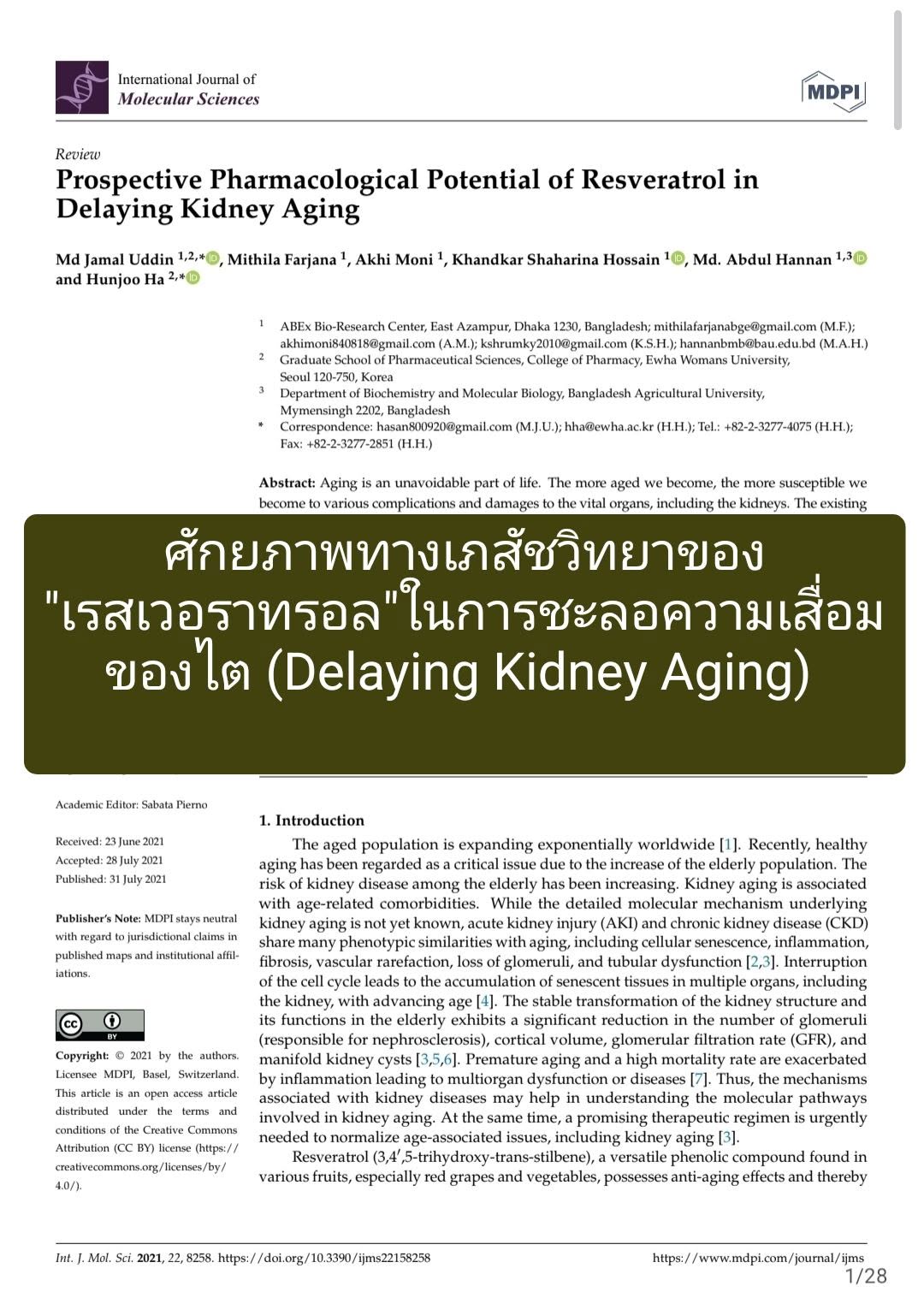
Academic subject: "Prospective Pharmacological Potential of Resveratrol in Delaying Kidney Aging" (Pharmacological Potential of...
Summary of the academic article "Prospective Pharmacological Potential of Resveratrol in Delaying Kidney Aging" published in the MDPI journal is a Review Article that collects study data on the effects of Resveratrol on kidney function and delaying kidney aging. Which can be summarized as follows:
1. Origin and importance
● Kidney problems associated with age: As we age, The human body will deteriorate. The kidneys are one of the important organs that are sensitive to deterioration. Leading to acute kidney disease (AKI) or chronic kidney disease (CKD), modern synthetic chemical drugs often have side effects. The medical community has therefore turned their attention to natural extracts.
● Resveratrol: It is a polyphenol naturally occurring in red grapes. and some plants Has outstanding antioxidant properties. anti-inflammatory and resists the activity of aging cells (Anti-senescence) which has a mechanism similar to calorie restriction (Calorie Restriction) in extending the lifespan of cells.
2. Factors accelerating and characteristics of "kidney aging" (Kidney Aging)
The article points out that Kidney aging is caused by a number of molecular factors, including:
■ Kidney Fibrosis and atrophy of kidney tissue.
■ Cells stop dividing but do not die (Cellular Senescence) and secrete inflammatory substances that destroy neighboring cells (SASP).
■ Mitochondria (the cell's energy source) deteriorate, producing large amounts of free radicals (ROS).
■ Stress occurs in the endoplasmic reticulum (ER Stress) and the elimination of waste in the cell (Autophagy) is impaired.
3. Main mechanism of resveratrol in slowing down kidney degeneration
Resveratrol helps protect and delay kidney aging through 3 important molecular signaling pathways (Three Main Signaling Pathways):
1. SIRT1 (Sirtuin type 1) Activation: stimulates longevity genes Helps reduce the death of kidney tubular cells. Reduce oxidative stress and reduce fibrosis in the kidney tissue
2. AMPK Activation:
Stimulates enzymes that control cellular energy. It inhibits the mTOR process, reducing fibrosis and cell changes that lead to kidney disease.
3. NF-κB Inhibition: Inhibits the main inflammatory substances in the body. Resulting in reducing inflammation in the kidneys Reduce damage to urine screening cells (Podocyte) and reduce ER Stress.
4. Therapeutic efficacy
* Laboratory results: Helps reduce symptoms of protein leakage in the urine. (Proteinuria), reduce abnormal blood lipids, protect the kidneys from lack of blood supply. (Ischemia-Reperfusion Injury), and reduce kidney damage that is stimulated by toxins or high sugar (such as in diabetic kidney disease).
* Safety: Resveratrol is a natural substance with very low side effects compared to conventional synthetic drugs.
Summary
This article highlights that resveratrol has great potential for development as a treatment or dietary supplement for "Slow down the aging of the kidneys" by blocking and restoring inflammatory mechanisms. Accumulation of free radicals and kidney fibrosis