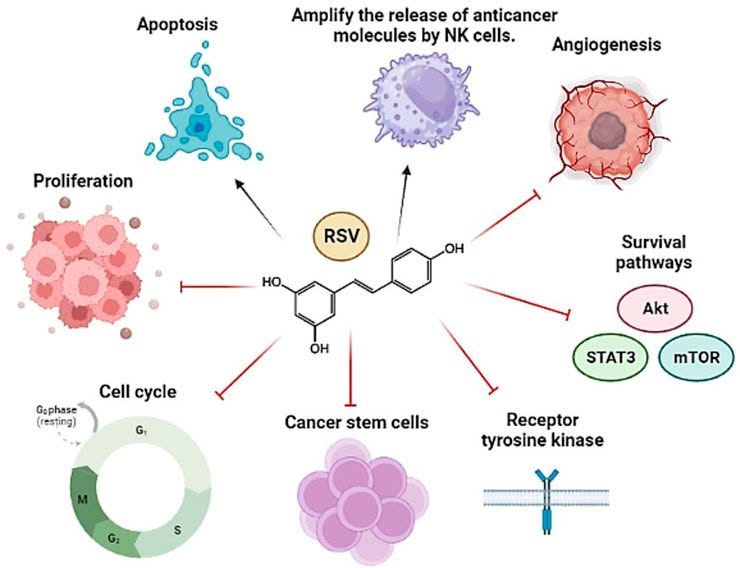
Resveratrol, a polyphenol found in red grapes, mulberries, and some plants will inhibit the work of **Aflatoxin B1 (AFB1...
Resveratrol, a polyphenol found in red grapes, mulberries, and some plants will inhibit the work of **Aflatoxin B1 (AFB1)** turns into carcinogenic epoxide. (**AFB1-8,9-epoxide, AFBO**) through several linked mechanisms:
---
### **1. Inhibition of the enzyme cytochrome P 450**
AFB1 is activated primarily by **CYP3A4** and **CYP1A2** (cytochrome P450 enzymes) in the liver. Resveratrol blocks this process by:
- **Competitive inhibition**: Resveratrol binds to the active sites of CYP enzymes, preventing these enzymes from metabolizing AFB1 to AFBO - **Reducing CYP expression**: Resveratrol inhibits the transcriptional activity of nuclear receptors (e.g., pregnane X receptor, PXR) that control the expression of CYP3A4 and CYP1A2.
---
### **2. Increasing the detoxification route**
Resveratrol promotes the detoxification of AFBO through **Phase II enzymes**:
- **Induction of Glutathione S-transferases (GSTs)**: Resveratrol increases the activity of GST, which couples AFBO with **glutathione (GSH)**, producing a soluble, nontoxic metabolite (AFBO-GSH) that is excreted in the bile or urine.
- **Increasing the level of UDP-Glucuronosyltransferases (UGTs)**: Resveratrol increases UGT activity, facilitating the glucuronidation of the AFB1 metabolite for elimination.
---
### **3. Stimulation of the antioxidant pathway Nrf2**
Resveratrol activates the Nrf2-Keap1** pathway, a key regulator of the antioxidant response and cellular detoxification, resulting in:
- expression of **Antioxidant enzymes** are increased (e.g. heme oxygenase-1, NADPH quinone oxidoreductase 1), which reduces oxidative stress caused by AFB1.
- Increased **GSH** synthesis, which is important for neutralizing AFBO.
---
### **4. Antioxidant effects**
Resveratrol directly scavenges reactive oxygen species (ROS)** produced during AFB1 metabolism, helping to prevent oxidative damage to DNA and cellular components that may promote AFBO-induced mutations.
---
### **5. Genetic modification**
Resveratrol influences genetic pathways (e.g., inhibition of histone deacetylase Modifying DNA methylation) to inhibit oncogenic signaling and increase the expression of tumor suppressor genes, indirectly reducing the toxic effects of AFB1.
---
### **Summary of impacts**
Resveratrol reduces AFBO formation and accelerates AFBO elimination by inhibiting CYP activity, stimulating detoxification through GST/UGT, activating Nrf2, and providing antioxidant support. This will reduce the burden of **Substances added to DNA** (e.g. AFB1-N7-guanine) and subsequent mutations (e.g. *p53* R249S) thus reduce the carcinogenicity caused by AFB1.
**Important evidence**:
- Studies in human liver cells and animal models show that resveratrol reduces AFB1 DNA insertion and the development of hepatocellular carcinoma (HCC).
- Effects used in combination with other antioxidants (such as quercetin) will increase protection further.
**Significance**: Resveratrol is a promising chemopreventive agent against AFB1-induced cancers, especially in populations with high dietary exposure to AFB1 (e.g., regions with poor grain storage practices).
Compiled from DeepSeek