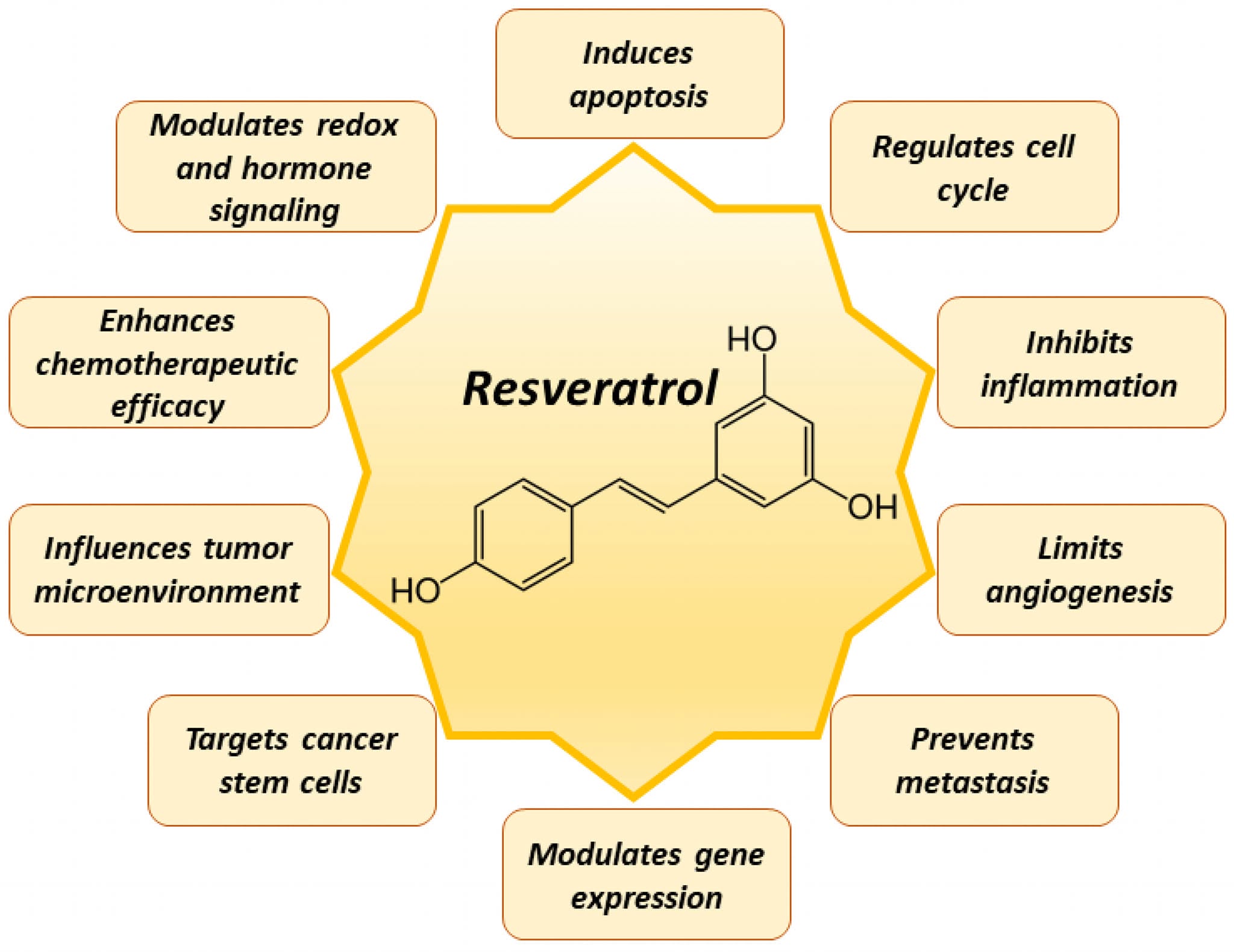
Explain the benefits of resveratrol in apoptosis and autophagy in cancer treatment.
Explain the benefits of resveratrol in apoptosis and autophagy in cancer treatment.
Resveratrol, a natural compound found in certain plants such as grapes, mulberries, etc., has gained attention due to its beneficial effects in treating cancer. Research shows that resveratrol can affect both the apoptosis process. Autophagy (programmed cell death) and autophagy (cell recycling) make it an attractive compound for fighting cancer. The following are the effects of resveratrol on these processes:
---
1. Resveratrol and apoptosis (programmed cell death)
Increasing apoptosis in cancer cells: Resveratrol can induce apoptosis. especially in cancer cells It does this by activating certain proteins and pathways that signal cells to self-destruct. This process involves:
Activates key proteins: Resveratrol increases the activity of proteins such as p53, which are known to inhibit cancer tumors by promoting apoptosis. Cancer cells often have mutations that prevent this process. But resveratrol can help stimulate this process even in resistant cells.
Blocking anti-apoptotic proteins: Cancer cells often produce high levels of proteins that block apoptosis, such as Bcl-2. Resveratrol has been shown to reduce the levels of these anti-apoptotic proteins. This makes it easier for cells to enter programmed death.
Benefits in treating cancer: Resveratrol can help shrink cancer tumors and prevent the spread of cancer. By stimulating the self-destruction process in cancer cells. This action increases the effectiveness of conventional treatments such as chemotherapy and radiation. Because of resveratrol It can make cancer cells more sensitive to these treatments.
---
2. Resveratrol and Autophagy (cell recycling)
Autophagy regulation: Resveratrol can stimulate and regulate autophagy. This is beneficial because cancer cells sometimes use autophagy to survive under stress. The effects of resveratrol depend on the context:
Promotes protective autophagy: In some cases, resveratrol can stimulate autophagy to reduce damage in normal cells. Protecting cells during cancer treatment
Induces cancer cell death: when used in high doses or in combination with other treatments. Resveratrol can push cancer cells into excessive autophagy. Which eventually leads to self-destruction.
Benefits in treating cancer: Resveratrol can help. It can "starve" cancer cells, or cause cells to break down their own important components. by fine-tuning autophagy This makes it a useful tool in treatments that combine modulation of autophagy with stimulation of apoptosis.
---
Overall Benefits of Resveratrol in Cancer Treatment
Selectively targeting cancer cells: Resveratrol has a greater effect on cancer cells than normal cells. This helps to increase the efficiency of cancer treatment with minimal toxicity.
Combination with other therapy: Resveratrol's effects on apoptosis and autophagy make it useful when combined with standard therapy. Resveratrol can help make cancer cells more responsive to treatment and reduce drug resistance.
Potential for prevention: in addition to treatment Resveratrol's effects on cellular health and antioxidant properties may also help prevent cancer development. This makes it an attractive compound for both cancer treatment and prevention.
---
In summary, resveratrol supports cancer treatment by promoting apoptosis. Autophagy (cell death) in cancer cells and modulates autophagy (recycling), which can make cancer cells more vulnerable to treatment while preserving healthy cells Its natural origin and relatively low toxicity make resveratrol an attractive option for ongoing research into cancer therapy.