Explain the mechanism of cancer arising from contamination with ochratoxin A in coffee.
Explain the mechanism of cancer arising from contamination with ochratoxin A in coffee.
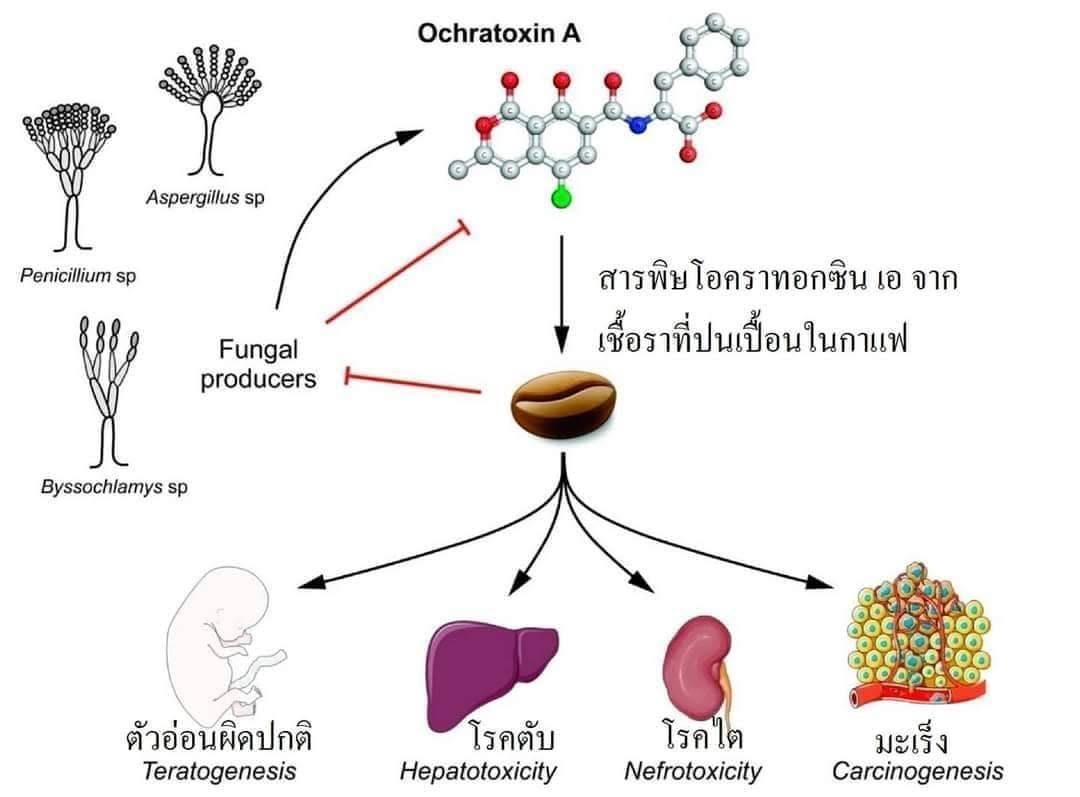
Ochratoxin A (OTA) is a mycotoxin produced by Aspergillus and Penicillium fungi that can contaminate coffee beans. (including other dry food) during storage Especially in hot and humid climates, OTAs are known for their nephrotoxic effects and have been linked to an increased risk of cancer. Especially kidney and liver cancer. Here's information on how OTA contamination in coffee can affect cancer:
1. DNA damage and mutation: OTA is a genotoxic compound. This means that they can directly damage DNA, causing mutations. OTA can create oxidative stress by creating reactive oxygen species (ROS), which damage cellular components, including DNA. These ROS can cause base pair mutations and strand breaks in DNA, which can lead to cancer if cells cannot effectively repair the damage.
2. Epigenetic changes: OTAs can cause epigenetic changes. These are changes in gene expression that are not related to changes in the DNA sequence, methylation patterns, or histone modifications. OTAs turn off tumor suppressor genes or activate oncogenes. Promote the growth of cancer cells
3. Interference with Cellular Processes: OTAs disrupt important cellular functions such as cell cycle control. Programmed cell death (apoptosis) and OTA protein synthesis help damaged cells live longer by interfering with apoptosis. This makes these cells more likely to become cancerous in the long term.
4. Kidney and liver toxicity: OTA accumulates mainly in the kidneys and liver. Prolonged exposure to toxins It can damage kidney cells. That's why OTAs are considered nephrotoxins. As time passes Continuous injury and cell repair cycles in these organs lead to cell mutation and cancerous transformation. especially in kidney cells
5. Carcinogenic Pathways: OTA stimulates various signaling pathways. that are involved in cell proliferation and survival, such as the PI3K/Akt and MAPK pathways. These pathways are often involved in cancer development because they regulate cell growth and division. And OTA disruption can cause abnormal cell growth.
6. Synergistic effect: other compounds in coffee may act synergistically with OTA, resulting in increased carcinogenic potential. In addition, metabolic changes and individual genetic susceptibility affect how an individual processes OTA, which in turn affects risk.
Because of these risks Strict regulations and quality control measures are in place to limit OTA contamination in coffee and other foods. (Developed countries have very strict requirements for this. For Thailand, the importance of this contamination in both coffee and food has not yet been highlighted. This can be seen from the empirical results of Thai people with cancer reaching a critical stage.)