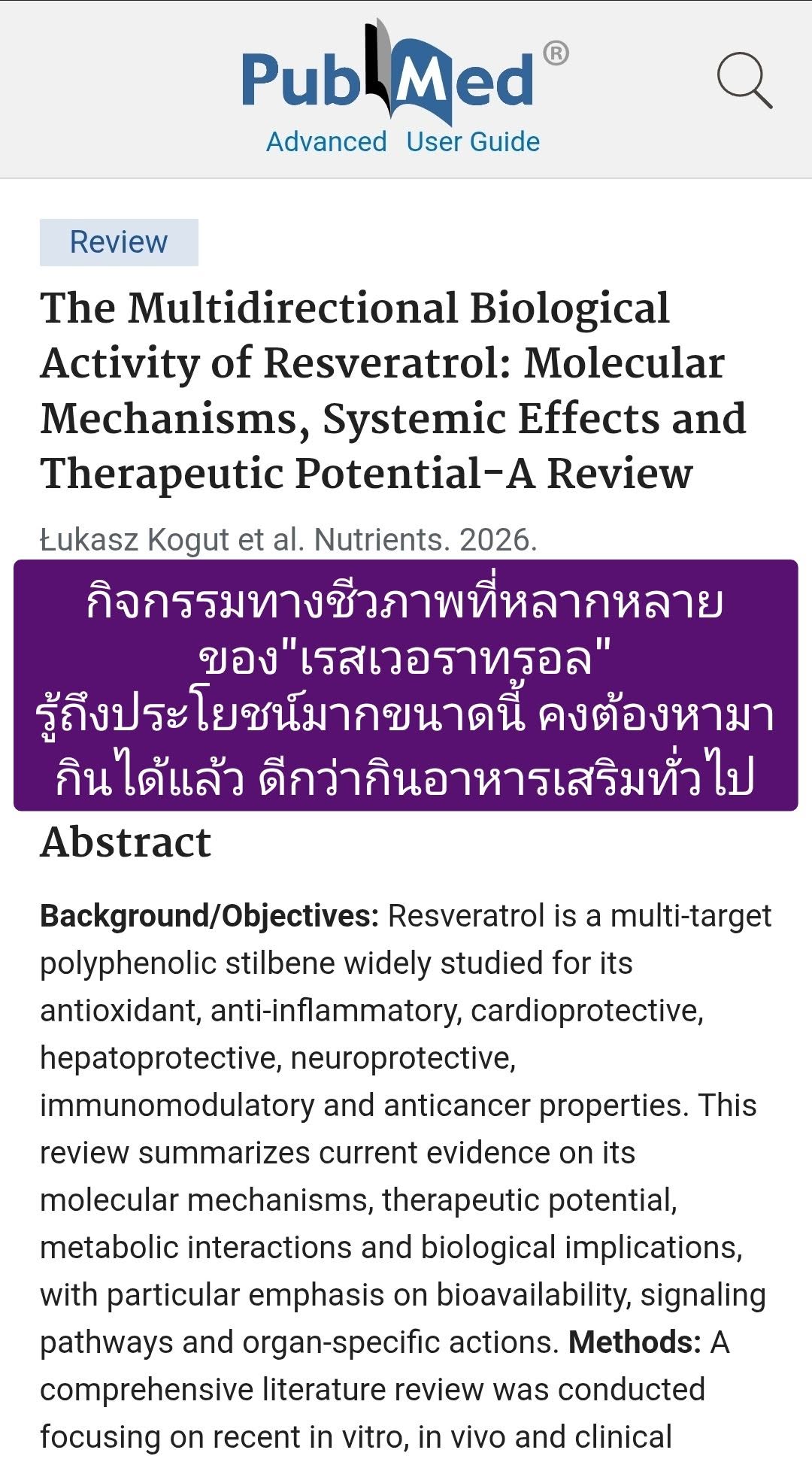
“The Multidirectional Biological Activity of Resveratrol: Molecular Mechanisms, Systemic Effects and Therapeutic Pote...
Summary of the article “The Multidirectional Biological Activity of Resveratrol: Molecular Mechanisms, Systemic Effects and Therapeutic Potential – A Review” is an academic review article that summarizes research on “Resveratrol” is a polyphenol found in red grapes, mulberries and some plants. with emphasis on molecular mechanisms Effects on various body systems and potential for medical use
What is resveratrol?
Resveratrol is a substance in the stilbene family that plants produce to protect themselves from stress such as UV rays, pathogens, or inflammation. The highlight is that it has high antioxidant and anti-inflammatory effects.
The article states that resveratrol can regulate multiple signaling pathways simultaneously. Therefore it is called “multidirectional biological activity”
1. Reduce inflammation (Anti-inflammatory)
Resveratrol helps inhibit inflammatory substances such as
-TNF-α
-IL-1β
-IL-6
-COX-2
- NF-κB
It helps reduce chronic inflammation associated with cardiovascular disease, diabetes, cancer, and dementia.
One of the key mechanisms is the inhibition of NF-κB, which is the body's main inflammatory trigger.
2. Antioxidants (Antioxidant)
Resveratrol helps eliminate Reactive Oxygen Species (ROS) that destroy cells. and stimulate antioxidant enzymes such as
- SOD
- Catalase
- Glutathione peroxidase
Including stimulating the Nrf2 pathway, which helps protect cells from oxidative stress.
3. Stimulates SIRT1 and AMPK
The article emphasizes that resveratrol stimulates two important proteins:
SIRT1 → related to longevity cell repair
AMPK → Regulates energy and metabolism.
This mechanism involves
- Burning fat
- Reducing sugar
- Mitochondria function
- Slowing down cell degeneration
Good effects on various systems of the body
1. Cardiovascular system
Resveratrol helps
- Increases the creation of Nitric Oxide (NO).
- Makes blood vessels expand
- Reduce blood pressure
- Reduce the occurrence of hard blood vessels.
- Reduce oxidative stress in the heart
2. Nervous system and brain
Resveratonol has neuroprotective effects. Helps protect brain cells from
● Alzheimer's disease
● Parkinson's disease
● Mitochondrial degeneration.
● Inflammation of the brain.
It also helps stimulate autophagy, which is a system for eliminating waste proteins in brain cells.
3. Anti-cancer
Resveratrol has an effect on many types of cancer cells by helping
■ Stimulates apoptosis (death of cancer cells).
■ Inhibits cell division.
■ Reduce angiogenesis (creation of blood vessels to support cancer).
■ Reduce the spread of cancer.
It has been studied in many types of cancer, such as liver, lung, breast, colon, and blood.
4. Immune system
Resveratrol helps balance the immune system, for example.
▪︎ Reduce hyper-inflammatory immunity
▪︎ Increase Treg cells
▪︎ Reduce Th17 response
▪︎ Helps reduce the chance of autoimmune diseases.
5. Metabolic system and fat help
▪︎ Increase fat burning.
▪︎ Reduce triglyceride
▪︎ Reduce LDL
▪︎ Increase HDL
▪︎ Reduce fat accumulation in the liver.
It involves the AMPK/SIRT1 pathway and lipophagy.
6. Effects on intestinal microorganisms (Gut Microbiota)
New articles have found that resveratrol can balance the microbiome, for example.
• Add good bacteria.
• Reduce inflammation of the intestines.
• Helps the metabolism.
This article concludes that “Resveratrol” is a natural substance that has great potential in preventing and enhancing the treatment of chronic diseases. Because it can control many systems simultaneously Including inflammation, free radicals, cellular energy, immunity, and cell death.