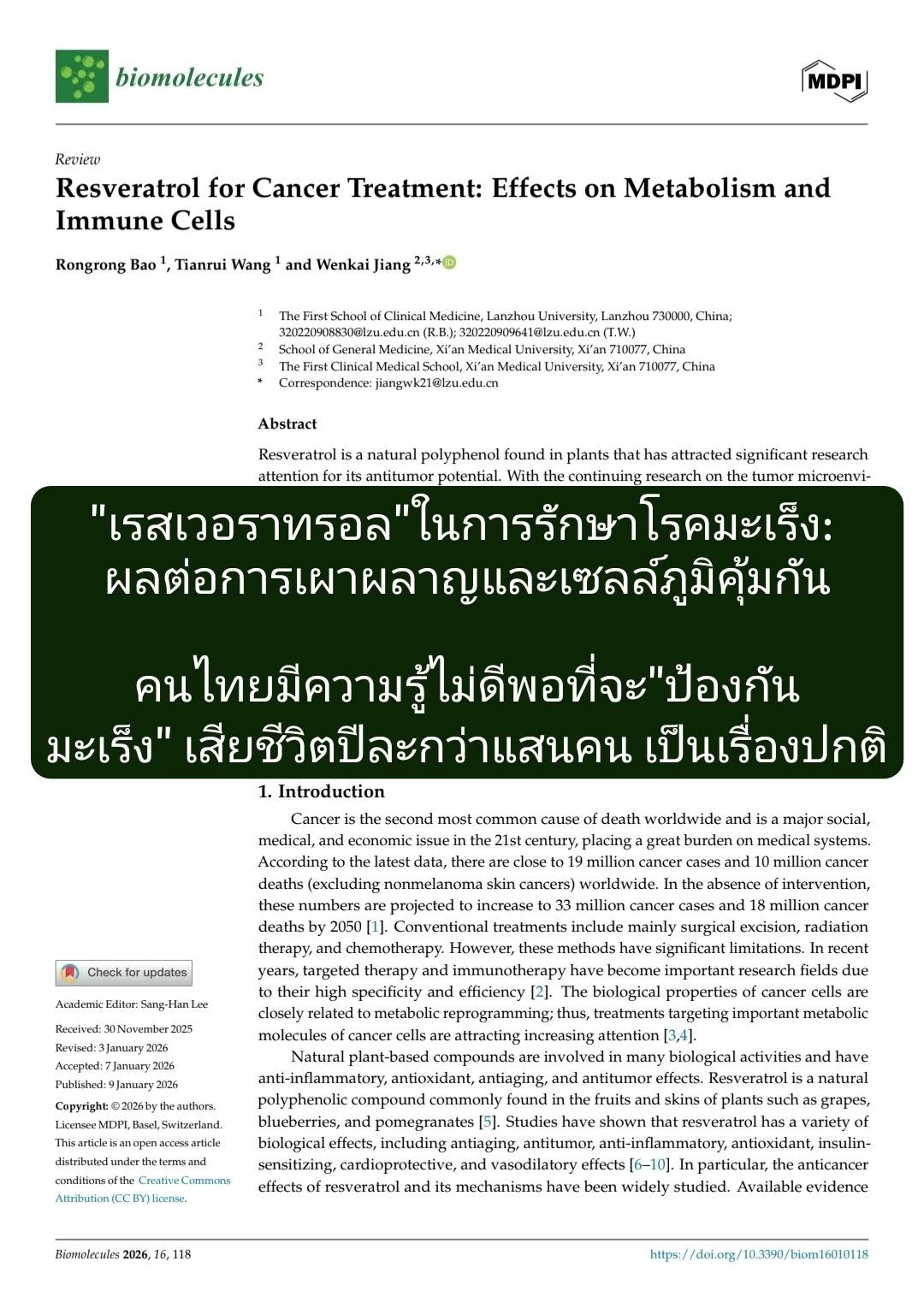
Academic article titled "Resveratrol for Cancer Treatment: Effects on Metabolism and Immune Cells" (published in the journal Biomo...
The academic article "Resveratrol for Cancer Treatment: Effects on Metabolism and Immune Cells" (published in the journal Biomolecules in 2026) is a review article that compiles the latest advances in the use of resveratrol, a natural polyphenol found in plants such as red grapes and mulberries. For use in the treatment and prevention of cancer The focus is on understanding the effects of this substance on the metabolism of cancer cells. and the immune system (Immune Cells) in the environment surrounding the tumor (Tumor Microenvironment)
The main points can be summarized into 3 main points as follows:
1. Inhibiting and modifying the metabolism of cancer cells (Metabolic Regulation)
Cancer cells often undergo metabolic reprogramming to support rapid growth and spread (Metabolic Reprogramming). Resveratrol can disrupt these processes by:
● Inhibits the glycolysis process. (Glycolysis): prevents the use of glucose as the main energy of cancer cells. Decreases food and energy of cancer cells
● Inhibits the production of fatty acids (Fatty Acid Production): which is necessary for cell wall formation and tumor growth.
● Activates SIRT1 and AMPK signaling pathways: Helps restore and regulate energy balance at the cellular level. As well as increasing the efficiency of the work of the mitochondria in regulating the body's balance.
2. Controlling and strengthening the function of immune cells (Immune Microenvironment)
Resveratrol not only directly destroys cancer cells, but also helps "wake up" and alter the body's immune cells to fight cancer more effectively, including:
● T cells (especially CD8+ T cells): restore the ability to destroy cancer cells. By blocking the PD-1/PD-L1 signal axis (Checkpoint Blockade), cancer normally uses this axis to hide from the immune system.
● Macrophages (scavengers/foreign substances): Change the cell phenotype from M2 (which promotes tumor growth) to M1 (which has anti-tumor effects) through inhibiting signaling pathways. IL-6/JAK/STAT3
● Natural Killer (NK) cells: increases their ability to destroy. (Cytotoxicity) of natural killer cells and increase the secretion of substances Interferon-gamma (IFN-γ) to help fight cancer cells.
3. Other anti-cancer mechanisms and potential for future treatments
■ Induction of cancer cell death (Apoptosis): Activates proteins that signal cancer cells to self-destruct (e.g. Caspases, Apoptosome) and reduces levels of proteins that help cancer cells survive (e.g. Bcl-2, Survivin).
■ Antioxidants and reduce inflammation: Help protect DNA from damage that is the initial cause of cancer mutations.
■ Balancing the gut microbiota (Gut Microbiota): reducing the proportion of Gram-negative bacteria. which reduces the level of toxic substances in the blood (Lipopolysaccharide) in the bloodstream reduces chronic inflammation throughout the body.
Conclusion and future direction:
This article points out that resveratrol has great potential to be used to treat a variety of cancers (such as breast, cervical, ovarian, skin cancer). stomach cancer Prostate cancer and liver cancer) because it has the outstanding ability to cut off the energy transport channels of cancer. Along with stimulating the immune system to be stronger. This information will help support the development of combination therapy in combination with modern treatments such as chemotherapy or immunotherapy. (Immunotherapy) to increase the efficiency of cancer treatment