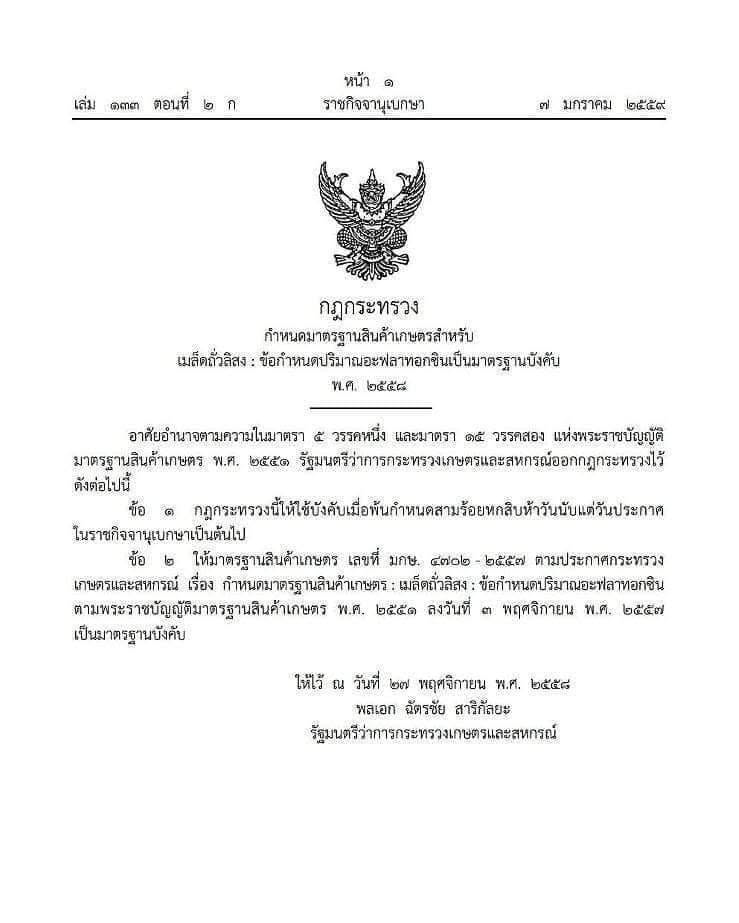
Unfortunately, Thai people have a high death rate from cancer, despite the enforcement of food safety laws regarding afla contamination...
Unfortunately, Thai people have a high cancer death rate despite the enforcement of food safety laws regarding aflatoxin contamination in food.
It is a matter of great concern that Thai people face a high rate of cancer. One important factor that contributes to this problem is aflatoxin contamination in food:
Aflatoxin contamination and its effects
Aflatoxin is a naturally occurring mycotoxin produced by certain fungi, primarily Aspergillus flavus and Aspergillus parasiticus.
These toxins can contaminate many types of dry food, including grains, nuts, and legumes.
Aflatoxin B1 (AFB1) is the most toxic form and is classified as a Group I carcinogen by the International Agency for Research on Cancer (IARC).
Chronic exposure to AFB1 is a major risk factor for hepatocellular carcinoma (HCC), the most common type of liver cancer.
in developing countries where aflatoxin exposure is widespread, HCC accounts for approximately 70% of cancer deaths.
Factors contributing to aflatoxin exposure
Food Consumption: Consumption of food contaminated with AFB1 is the main route of exposure to peanuts, corn, rice, and other dry foods. that contains aflatoxin
Geographic variation: developing countries Including Thailand often face higher aflatoxin exposure due to agricultural practices Storage conditions and climate
Synergistic effect: Chronic hepatitis B virus (HBV) infection and AFB1 exposure work together, resulting in an increased risk of HCC. HBV activates the enzyme that converts AFB1 to its mutated form. This leads to DNA damage in liver cells.
Aflatoxin contamination in Thailand
Research reports indicate that 38.9% of food samples in Thailand were highly contaminated with aflatoxins.
Commonly affected foods include peanuts, milk, and poultry.
Although the quality and safety of Thai rice meets the requirements for both export and domestic consumption, But careful inspection is essential to ensure safety.
Estimated AFB1 intake from rice consumption in Thailand ranges from 0.12 to 0.80 μg/kg of body weight per day.
Defense strategy
Chemoprevention: Researchers are exploring molecular targets (such as NF-kB and Nrf2) for chemoprevention agents to reduce the risk of HCC (new knowledge, resveratrol exposure Can reduce the toxicity of the carcinogen aflatoxin)
Food Regulation: Integrated efforts involving public health, agriculture, and the media are critical to reducing aflatoxin contamination in food.
Although the situation is challenging But continued efforts in food safety Awareness And research can help reduce the impact of aflatoxin exposure on cancer rates in Thailand.
#resveratroldrvee