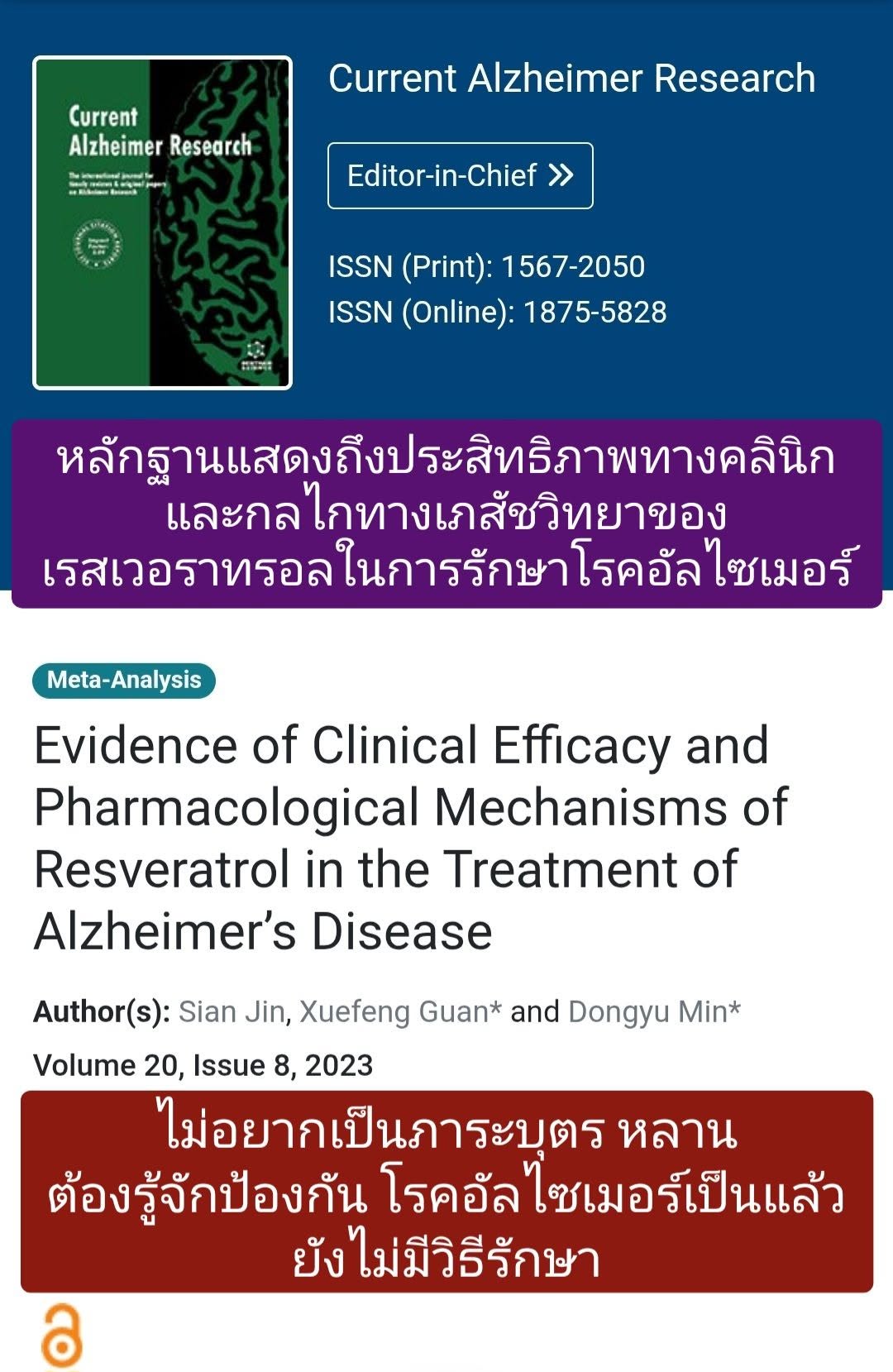
: Evidence of Clinical Efficacy and Pharmacological Mechanisms of Resveratrol in the Treatment of Alzheimer’s Disease
Article summary: Evidence of Clinical Efficacy and Pharmacological Mechanisms of Resveratrol in the Treatment of Alzheimer’s Disease
Resveratrol is a natural polyphenol found in grapes, berries, and mulberries, which has antioxidant and anti-inflammatory effects. The article, published in 2023 in the journal Current Alzheimer Research, analyzes data from clinical trials and examines the mechanism of action of resveratrol in treating Alzheimer's disease.
Objectives of the study
To evaluate resveratrol:
1. Is it clinically effective in helping Alzheimer's patients?
2. Is there any biological mechanism that helps slow down brain degeneration?
Method of study
The researchers used a combination of two methods:
1. Meta-analysis
Results from five randomized controlled trials (RCTs) included a total of 271 patients.
139 people received resveratrol, 132 people received placebo.
2. Network Pharmacology
Analysis of the biomolecular pathways and pharmacological targets through which resveratrol acts.
Clinically important results
1. Helps increase your ability to do daily activities.
ADCS-ADL scores improved significantly. It shows that the patient is able to take better care of himself and perform daily activities.
2. Benefits on Alzheimer's Biomarkers
Amyloid-beta 40 (Aβ40) levels in the blood and cerebrospinal fluid are increased. This may reflect changes in the elimination of disease-related proteins.
3. No obvious changes were found in the following areas.
MMSE (Memory and Perception Test) Score
Aβ42 levels
Brain volume from MRI
4. High security
No side effects were found to be significantly different from the placebo group.
Important mechanisms of action
☆ Analysis reveals that resveratrol may act through the PI3K signaling pathway, which involves:
☆ Neuron survival
☆ Reducing inflammation in the brain
☆ Reducing oxidative stress
☆ Inhibition of neuron death.
Important target genes
MAPK1
HRAS
EGFR
MAP2K1
Benefits of resveratrol for the brain
● Antioxidants
● Reduce damage from free radicals, which is a key factor in brain degeneration.
● Reduce inflammation.
● Protect cells.
● Helps reduce the accumulation of Amyloid-beta, which is one of the main causes of Alzheimer's disease.
Researcher's conclusion
Resveratrol is very safe and appears likely to help delay or alleviate the symptoms of Alzheimer's. Especially in daily life
Easy to understand summary
> “Resveratrol is a natural substance that has the potential to help protect the brain, reduce inflammation, and delay degeneration in Alzheimer's patients. Although the effect on memory is not yet clear. But there is evidence that it helps patients do their daily activities better and is very safe.”
Who is it suitable for?
- Elderly people who want to take care of their brains
- People with a family history of Alzheimer's
- People with early stages of memory loss
- Health lovers who want to prevent brain degeneration
“Resveratrol Mulberry Extract: A natural substance that clinical research shows has the potential to help protect the brain, reduce inflammation, and support cognitive function in older people.”