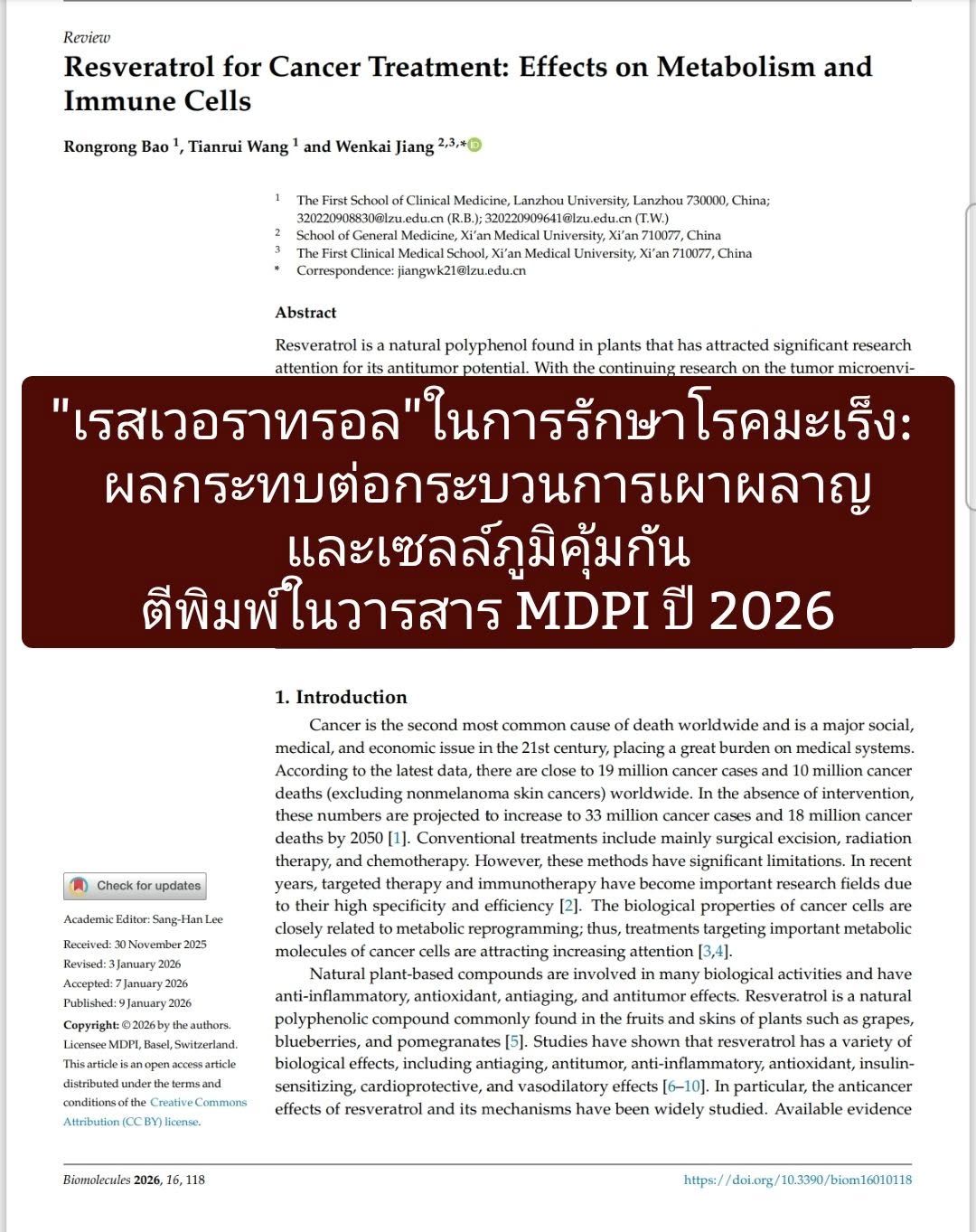
Academic title "Resveratrol for Cancer Treatment: Effects on Metabolism and Immune Cells" published in the MDPI journal (year ...
Summary of the academic article "Resveratrol for Cancer Treatment: Effects on Metabolism and Immune Cells" published in the MDPI journal (2026) is a collection and summary of recent advances in research on resveratrol, a natural polyphenol found in plants (such as red grapes and mulberries), and its potential use in cancer therapy. It focuses on controlling the metabolism of cancer cells and modifying the function of immune cells (Immune Cells). The main points are as follows:
1. Disruption of Tumor Metabolism
Cancer cells normally undergo metabolic reprogramming to help them grow and spread quickly (Metabolic Reprogramming). Resveratrol can inhibit these processes by:
* Inhibits the glycolysis process (Glycolysis): prevents the use of glucose as energy by cancer cells.
* Reduce the production of fatty acids (Fatty Acid Production): causing cancer cells to lack raw materials to build cell walls and grow.
* Stimulates SIRT1 and AMPK signaling pathways: which help improve mitochondrial function and maintain energy balance. This results in disruption of the cancer cell cycle and leads to cell death (Apoptosis).
2. Regulation and strengthening of immune cells (Regulation of Immune Cells)
Resveratrol improves the tumor microenvironment to increase the efficiency of the body's immune system in destroying cancer cells:
* Restores the function of CD8+ T cells: Through blocking the immune checkpoint axis (PD-1/PD-L1 checkpoint axis), T cells regain their power to destroy cancer cells.
* Modify the function of macrophages (Macrophage Polarization): Change the function of macrophages to the M1 Phenotype form, which is a group that helps resist and destroy tumors. through inhibiting signaling pathways IL-6/JAK/STAT3
* Increases the efficiency of natural killer cells (Natural Killer (NK cells): stimulates toxicity to cancer cells and secretion of IFN-γ to help destroy foreign substances.
3. Mechanism of cancer cell death (Apoptosis Regulation)
This substance plays an important role in regulating protein balance in cells by:
* Increases the activity of proteins that stimulate cell death. (Pro-apoptotic targets) such as Apoptosome, FADDosome and Caspases
* Reduced levels of proteins that resist cell death. (Anti-apoptotic proteins) such as Bcl-2, Survivin and XIAP cause cancer cells to atrophy and die naturally.
4. Opportunity for development into combination therapy
The article points out that In addition to resveratrol having its own anti-cancer effects (such as breast cancer, cervical cancer, ovarian cancer, stomach cancer and liver cancer) It also has great potential when used in combination with current chemotherapy drugs. By acting as Substances that increase sensitivity to chemotherapy drugs (Chmosensitizer) increases the efficiency of destroying cancer cells of the main drug. and may help reduce side effects or toxicity to various systems. of the body as well
Summary of the article: Resveratrol is considered a natural substance with great promise in the prevention and treatment of cancer. Because it has the ability to deal with cancer holistically Both the cutting of the vitreous pipe (inhibiting energy metabolism) and attacking (stimulates the immune system)