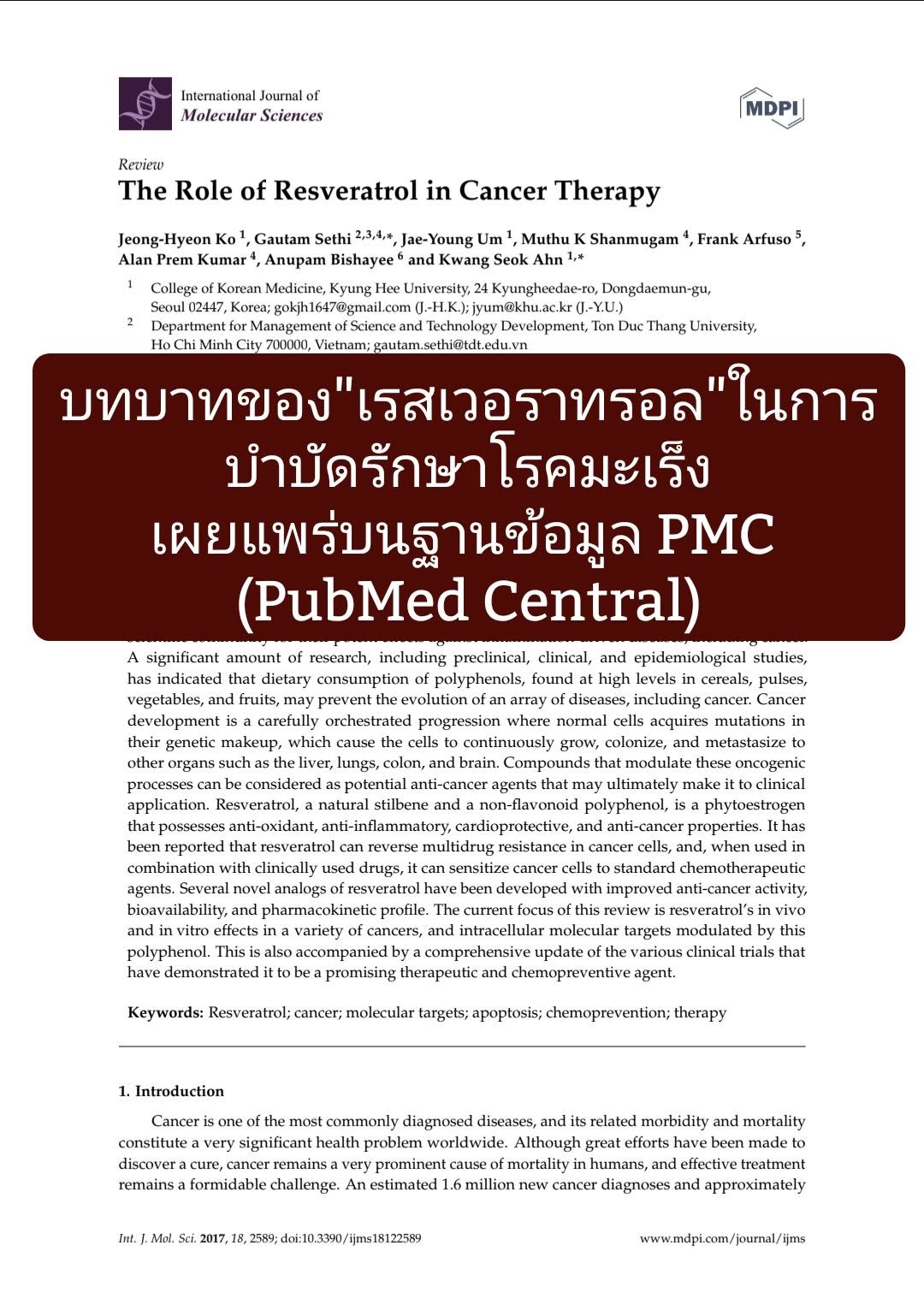
Academic title "The Role of Resveratrol in Cancer Therapy" (The Role of Resveratrol in Cancer Therapy) published on...
A summary of the academic article "The Role of Resveratrol in Cancer Therapy" published on the PMC (PubMed Central) database has the following important points:
1. What is Resveratrol?
Resveratrol is a natural polyphenol in the stilbene family and is a phytoestrogen. (Phytoestrogen) that is found in abundance in red grapes. Berries This type of substance has outstanding antioxidant properties. (Anti-oxidant), anti-inflammatory (Anti-inflammatory), protects the cardiovascular system and has significant anti-cancer effects
2. Anti-cancer mechanism of action**
The article describes the mechanism by which resveratrol inhibits cancer cells in both in vitro and in vivo experiments, covering the early stages to advanced stages:
* Inhibits the formation of cancer (Anti-Tumor-Initiation): Helps reduce oxidative stress (Oxidative Stress), prevents free radicals (ROS) from damaging DNA. It also helps inhibit certain enzymes (such as Cytochrome P450) that change chemicals in the body into carcinogens. and stimulates detoxifying enzymes to allow the body to expel those substances
* Controls cell growth and death: Resveratrol can stimulate the processes of cancer cell self-destruction (Apoptosis) and cell self-eating (Autophagy) as well as inhibit the division of cancer cells at the cell cycle level (Cell Cycle Arrest).
* Modify intracellular signaling cascades: Control important proteins and genes involved in carcinogenicity, such as p53 (cancer suppressor gene), STAT3, NF-κB, and Nrf2, which help prevent and slow down tumor growth.
3. Use in combination with main treatment (Combination Therapy)
One of the most interesting properties of resveratrol is that it Ability to reverse drug resistance (Multidrug Resistance) of cancer cells:
* When used together with chemotherapy drugs (Chemotherapy) or radiation (Radiotherapy) Resveratrol will act as Radio/Chemosensitizer or substances that increase the sensitivity of cancer cells to treatment This allows chemotherapy and radiation to destroy cancer cells more efficiently.
* Helps adjust the environment around the tumor (Tumor Microenvironment) to reduce inflammation and spread to other organs (Metastasis).