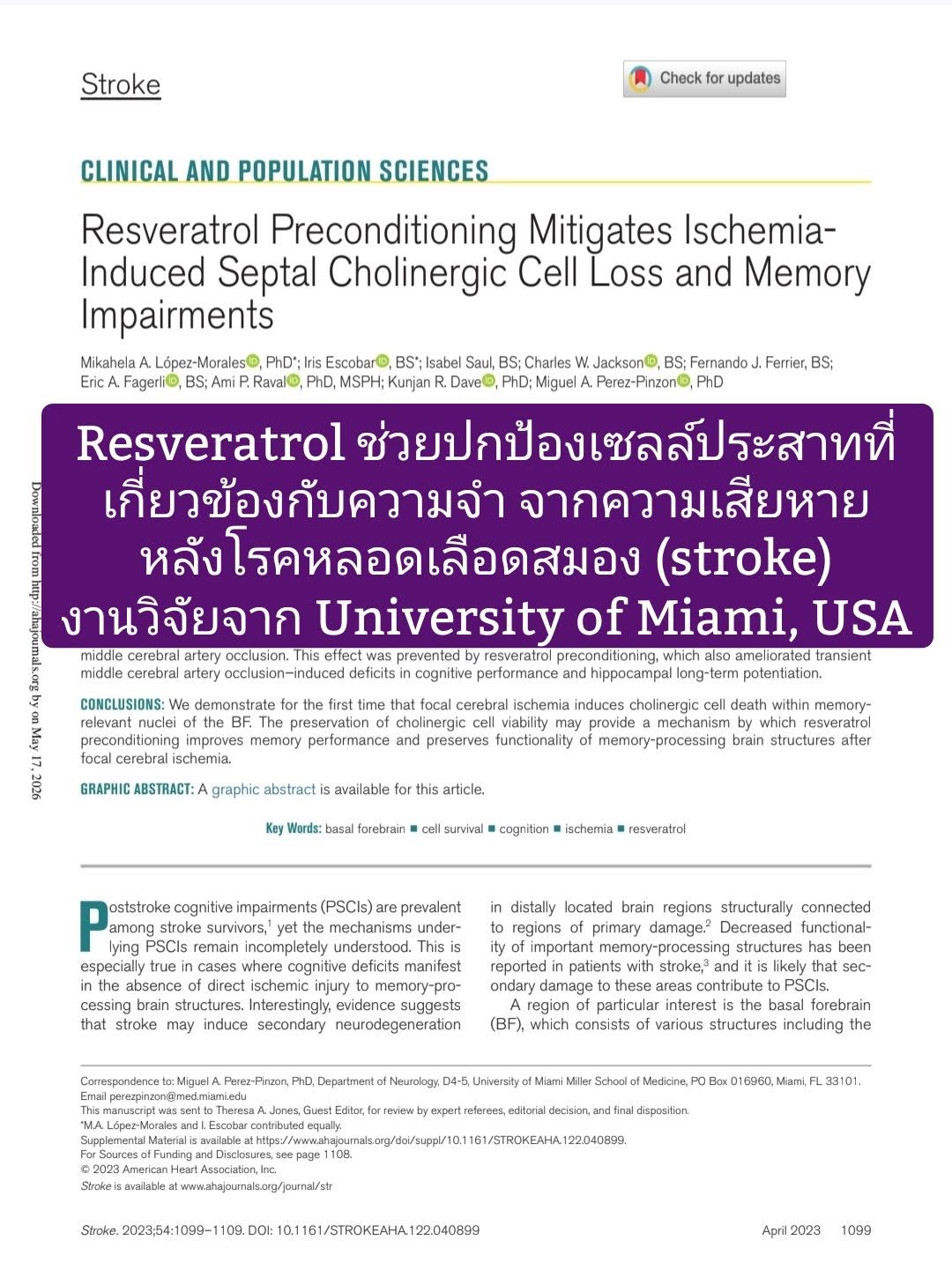
“Resveratrol Protects Septal Cholinergic Cells From Secondary Neurodegeneration Following Stroke” which was published in the journal...
A summary of the article “Resveratrol Protects Septal Cholinergic Cells From Secondary Neurodegeneration Following Stroke,” published in the American Heart Association journal, presents the results of an important study: Resveratrol (Resveratrol) can help protect neurons involved in memory from damage that occurs after a stroke.
The essence of the research:
After a stroke Brain cells are not only damaged in the area of direct ischemia, but also secondary neurodegeneration occurs. or the degeneration of nerve cells in other areas connected to the injured part of the brain.
One of the affected areas is the medial septum, which contains cholinergic neurons that produce the neurotransmitter acetylcholine. (Acetylcholine) that plays an important role in:
● Memory
● Learning
● Concentration
● Higher brain functioning.
If these cells degenerate Patients may experience memory decline or dementia after a stroke.
The role of Resveratrol
Resveratrol is a polyphenol:
Research has found that Resveratrol can:
- Reduce inflammation in the brain
- Reduce free radicals (Oxidative Stress)
- Reduces the death of nerve cells.
- Stimulates the cell defense system through SIRT1 and Nrf2.
- Maintains cholinergic nerve cells.
Brief study methods
Researchers used test animals that were induced to have an ischemic stroke, then given resveratrol before or during the experiment, and assessed:
- Number of cholinergic cells in the Medial Septum.
- Memory ability
- Learning and Behavior
Research results
Test animals given Resveratrol had the following effects:
- Significantly less cholinergic cell loss
- Improved memory and learning
- Brain damage is reduced
- Inflammatory processes and oxidative stress are reduced.
■ Clinical meaning
Studies suggest that Resveratrol may have the potential to:
● Prevent dementia after a stroke.
● Restores brain function.
● Reduce the deterioration of the nervous system.
● Support future treatments for brain diseases.
■ Who is it suitable for?
- People who have had a stroke
- Elderly people who need memory care
- People at risk of dementia
- People who want to protect brain cells in the long term
Brief summary
Resveratrol helps protect neurons involved in memory from damage after a stroke, reduces inflammation, and reduces free radicals. and helps maintain learning and memory abilities Therefore, it has the potential to reduce the risk of dementia after a stroke.