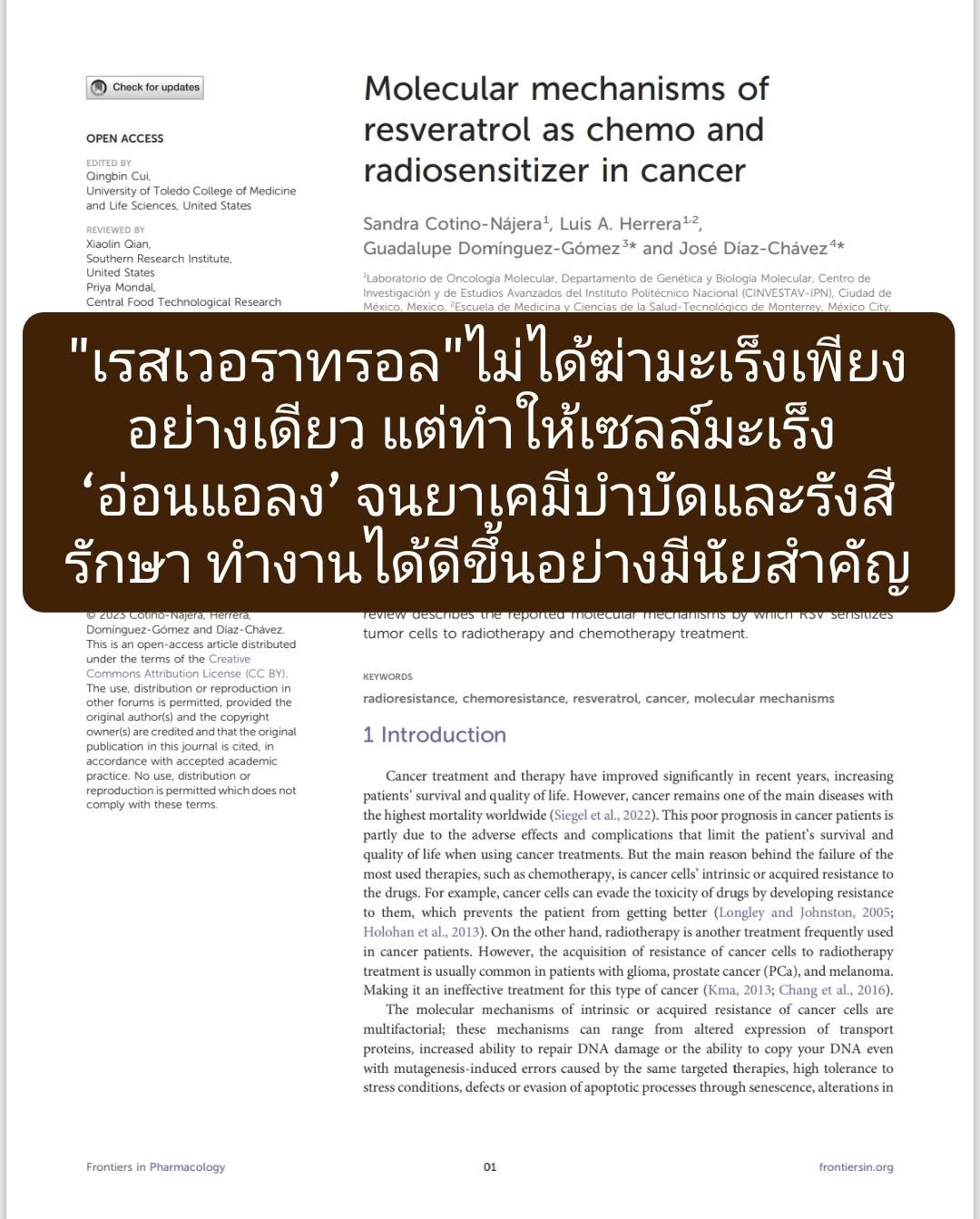
: Molecular Mechanisms of Resveratrol as Chemo- and Radiosensitizer in Cancer (Frontiers in Pharmacology, 2023)
Article summary: Molecular Mechanisms of Resveratrol as Chemo- and Radiosensitizer in Cancer (Frontiers in Pharmacology, 2023)
This article is an academic review that describes resveratrol (RSV), a natural polyphenol found in red grapes. and mulberry How can it help increase the efficiency of chemotherapy (Chemotherapy) and radiotherapy (Radiotherapy) in cancer patients? By reducing the resistance to chemotherapy and radiation of cancer cells.
What is Resveratrol?
Resveratrol is an antioxidant with many properties such as
- anti-inflammatory
- Protect the heart and brain
- Enhance immunity
- Inhibits cancer.
The main problem in cancer treatment: chemotherapy and radiation resistance.
Although chemotherapy and radiotherapy are the main methods of treating cancer, But cancer cells often develop mechanisms to survive, such as
- Removes drugs from cells (P-glycoprotein / MDR1)
- Repairs DNA more quickly
- Evade cell death (Apoptosis)
- Activates survival pathways such as NF-κB, PI3K/Akt/mTOR.
- Increase the number of Cancer Stem Cells
- EMT (Epithelial-Mesenchymal Transition) occurs, making it easier to spread.
Mechanisms by which Resveratrol enhances treatment efficacy
1. Stimulate the death of cancer cells (Apoptosis)
Resveratrol:
- Add Bax and Caspase-3
- Reduce Bcl-2 and Bcl-xL
Makes cancer cells enter the death process more easily
2. Inhibit NF-κB
NF-κB is a gene regulator that helps cancer cells survive and resist drugs. When restrained It will reduce inflammation and reduce drug resistance.
3. Inhibits PI3K/Akt/mTOR
This pathway helps cells grow and survive. Resveratrol inhibits this pathway. Makes cells more sensitive to drugs and radiation.
4. Reduce protein that drives drugs out of cells.
- MDR1 / P-gp
- MRP1
- BCRP
When these proteins decrease Chemotherapy drugs accumulate more in cancer cells.
5. Increase Reactive Oxygen Species (ROS).
Resveratrol in cancer cells can increase ROS, causing DNA damage and inducing cell death.
6. Inhibits DNA repair
This makes cancer cells unable to repair damage from radiation or drugs in time.
7. Reduce Cancer Stem Cells and EMT
Helps reduce recurrence spread and long-term treatment resistance
Examples of use with chemotherapy drugs
The article reports that Resveratrol can increase the effectiveness of medications such as:
◇ Paclitaxel
◇ Docetaxel
◇ Cisplatin
◇ Doxorubicin
◇ Temozolomide
It helps to use a smaller dose but gets better results. and reduce side effects
Effects on radiotherapy
Resveratrol makes cancer cells more sensitive to radiation.
☆ Increases DNA damage.
☆ Inhibit DNA repair
☆ stimulate apoptosis
☆ Reduces the survival of cancer cells.
It has been studied with many types of cancer, such as
■ Breast cancer
■ Prostate cancer
■ Lung cancer
■ Ovarian cancer
■ Brain cancer (Glioblastoma)
■ Colon cancer
Important conclusions
The article concludes that Resveratrol is a natural substance with great potential to increase the effectiveness of chemotherapy and radiotherapy. Through many mechanisms including:
● Stimulates the death of cancer cells.
● Reduce drug resistance.
● Reduce inflammation.
● Increased DNA damage.
● Inhibits the spread of cancer cells.
Therefore it is likely to help
- Increase the success rate of treatment
- Reduce the chance of it coming back again.
- Reduce side effects from high doses of medicine.
- Helps improve the quality of life of patients
Easy to understand summary
> “Resveratrol doesn't just kill cancer. But it makes cancer cells 'weaker' so that chemotherapy and radiotherapy work significantly better.”